


Chennai, Oct 30:
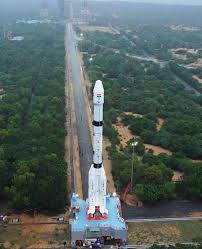
The 24-hour countdown for the launch of ISRO’s GSLV-F18 carrying the NVS-03 navigation satellite began at 11.51 pm on Thursday at the Satish Dhawan Space Centre in Sriharikota.
The crucial mission, aimed at strengthening India’s indigenous NavIC navigation system, is scheduled for launch at 11.51 pm on Friday.
“The 24-hour countdown for the launch has commenced and is progressing smoothly,” ISRO sources said on Friday morning. During the countdown, propellant-filling operations are being carried out in the three-stage, 50-metre-tall launch vehicle, which has a lift-off mass of 420 tonnes.
The GSLV-F18, carrying the 2,250-kg NVS-03 navigation satellite, will lift off from the Second Launch Pad at Sriharikota. After a flight of about 20 minutes, following the ignition and separation of all three stages, the rocket will inject the satellite into a Geosynchronous Transfer Orbit (GTO) with a perigee of 170 km, an apogee of 37,023 km and an inclination of 20.75 degrees. The spacecraft will subsequently be guided into its designated geostationary orbit by firing its onboard Liquid Apogee Motors (LAM).
The mission is considered significant as it will strengthen the NavIC constellation, India’s independent regional satellite navigation system. NavIC, initially known as the Indian Regional Navigation Satellite System (IRNSS), is designed to provide accurate Position, Navigation and Timing (PNT) services across India and an area extending approximately 1,500 km beyond the country’s borders.
NVS-03 is the third satellite in the second-generation NavIC series, which is intended to ensure continuity of navigation services provided by the first-generation IRNSS satellites. The satellite carries an indigenous atomic clock along with procured atomic clocks. It also introduces the L1 signal band in addition to the existing L5 and S bands, expanding its applications for civilian and strategic users.
NavIC provides two types of services: the Standard Positioning Service for civilian users and an encrypted Restricted Service for authorised users, including the armed forces. The system is important for military applications such as missile navigation, precise positioning, coordination of warships at sea and navigation support for troop movements and combat aircraft.
India has so far launched 11 navigation satellites. However, only three — IRNSS-1B, IRNSS-1L and NVS-01 — are currently providing the required navigation services. The NVS-03 satellite is expected to become the fourth operational satellite, meeting the minimum requirement for restoring standalone three-dimensional positioning services through NavIC.