


Barce, Oct 31:
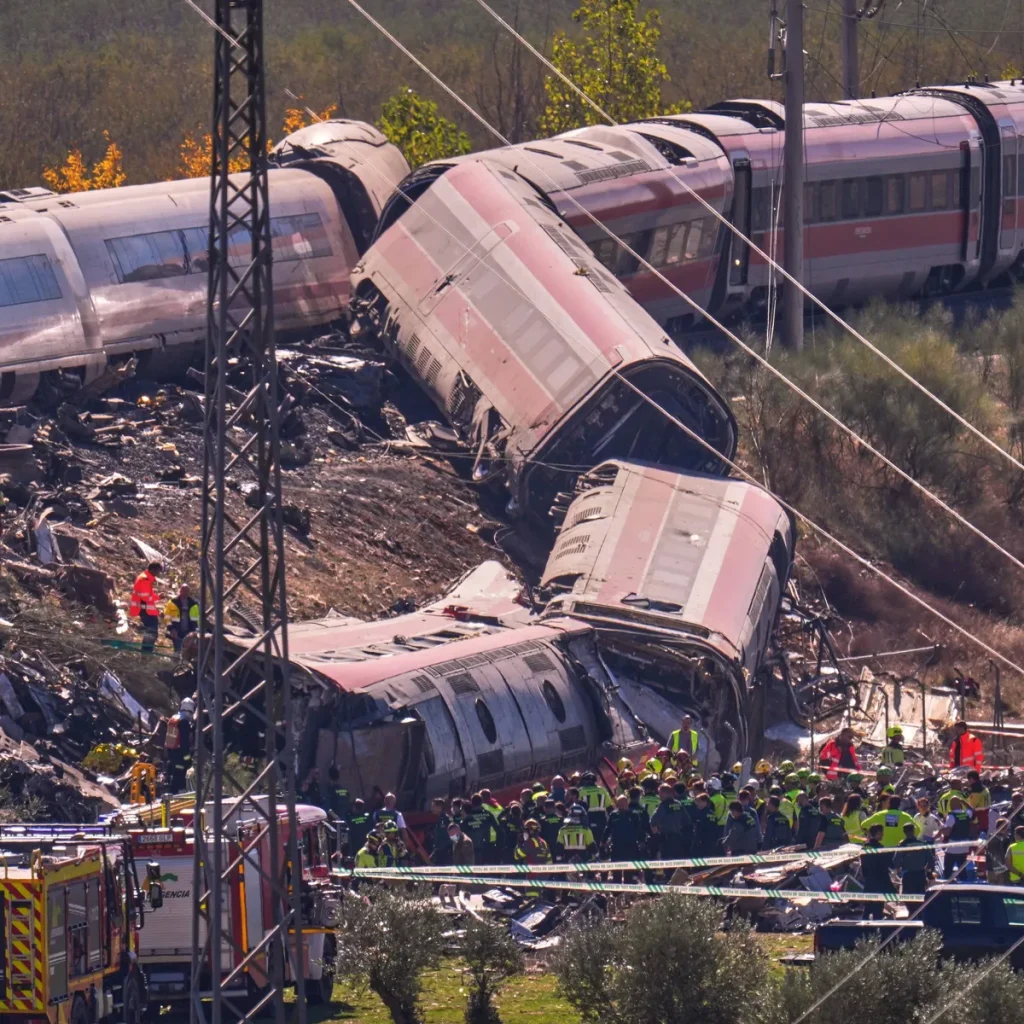
Spain’s latest deadly train collision, which claimed 69 lives in Toledo province, has triggered a debate over whether human error or systemic failures in the country’s railway network caused the disaster.
The accident occurred on Wednesday after a communication system linked to the railway safety mechanism failed. The LZB system, which monitors train positions and can automatically apply brakes to prevent collisions, went offline, leaving human controllers at a control centre in Madrid responsible for monitoring train movements along a 63-km stretch between Madrid and Seville.
According to the timeline released by authorities, a controller permitted a train operated by state-owned RENFE to resume normal-speed operations at 8.36 am. Another train, operated by private company IRYO and located about 25 km away, was also attempting to restart but could not override its automatic stop. The collision occurred at 8.53 am.
Transport Minister Óscar Puente described the decision to allow the RENFE train to resume its journey while the other train remained stopped as inexplicable and erroneous. He said the train should not have been cleared to move while a stop signal remained active.
Railway unions, however, have questioned the attempt to place the blame on an individual controller. They allege that staff shortages, increased workloads and repeated failures of safety systems have compromised railway operations. They have also pointed out that the three-decade-old LZB system has repeatedly malfunctioned and should have been replaced.
The crash was Spain’s second major railway disaster this year. In January, another collision on the Madrid-Seville line killed 46 people.
A judge and a special government commission are investigating the latest accident. Prime Minister Pedro Sánchez has promised a thorough inquiry. King Felipe VI, who visited injured passengers in hospital, said measures must be taken to prevent a recurrence.
Railway workers also went on strike on Thursday in a previously planned protest demanding improvements in safety conditions. Unions have raised concerns that the expansion of private operators and increased train services have placed additional pressure on infrastructure and maintenance.