


New Delhi, Nov 3:
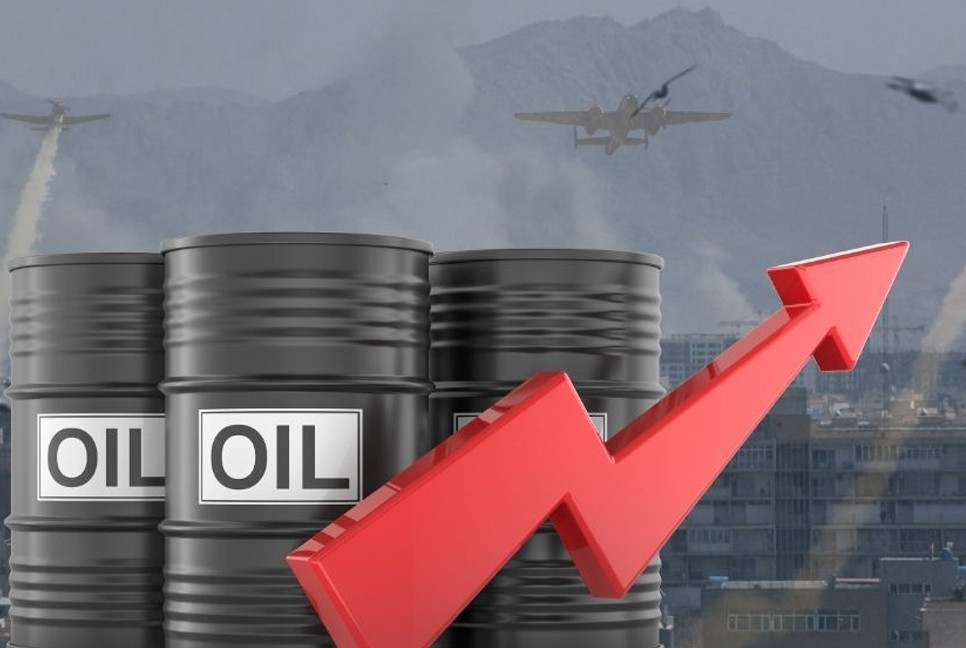
Global crude oil benchmarks moved higher on Tuesday morning following international news reports of United States military strikes targeting strategic assets on Iran’s Qeshm Island. Brent crude futures gained 48 cents, or 0.5%, climbing to $105.25 a barrel during early Asian trading hours, while US West Texas Intermediate (WTI) crude rose 47 cents, or 0.5%, to touch $96.93 a barrel.
The immediate price reaction reflected renewed investor anxiety over potential supply disruptions near the Strait of Hormuz, a critical maritime chokepoint through which approximately one-fifth of the world’s petroleum transit flows. Energy market participants noted that any direct escalation involving Iranian infrastructure risks expanding regional confrontation, which could disrupt crude tanker movements and offshore production installations across the Persian Gulf.
Market strategists and brokerage analysts highlighted that elevated crude levels pose significant headwinds for emerging market economies, particularly net oil-importing nations like India. Analysis from institutional brokers, including JM Financial, recently flagged the $105 per barrel threshold as a decisive level that strongly influences foreign institutional investor (FII) capital flows and domestic currency stability.
Energy desks anticipate that oil prices are likely to trade within an elevated band of $105 to $120 a barrel in the near term as geopolitical risks overshadow underlying physical demand dynamics. While diplomatic channels continue attempts to cool hostilities, ongoing military exchanges and refinery security concerns in West Asia are expected to keep a high risk premium embedded in energy contracts.