

Ariyalur: Stone, Sovereignty and a Minister’s Moral Stand

- Tamil
- Hindi
- Malayalam
- Kannada
- Telugu
Constituency No. 149 | Ariyalur District | General
Ariyalur is a constituency layered in stone and consequence. Beneath its soil lie fossil beds older than empires and limestone deposits that feed India’s cement industry.
Above that soil stand Chola-era monuments that speak of imperial ambition. And cutting through its modern memory is a night in 1956 when a bridge gave way, a train fell into floodwaters, and Indian politics witnessed an act of rare accountability.
Ariyalur is not merely industrial or agrarian. It is historical in geology, in temple architecture, and in public morality.
Empire in Stone
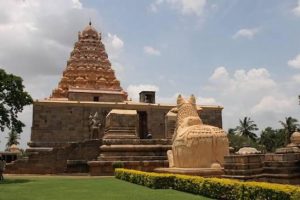
Few districts in Tamil Nadu carry the weight of medieval architecture as Ariyalur does. The majestic Gangaikonda Cholapuram Temple, built by Rajendra Chola I in the 11th century, stands as one of the great Brihadeeswara temples of the Chola era and a UNESCO-recognised monument. Though the temple lies within the district’s wider geography, its cultural aura defines Ariyalur’s identity.
Granite inscriptions, temple tanks and sculptural fragments surface across villages. This is land where history is excavated, not invented.
Ariyalur’s terrain itself is a geological archive. Fossil-rich limestone formations have drawn scientific attention for decades, giving the district a paleontological profile rare in Tamil Nadu.
History here is not a chapter. It is sediment.
The Night of 1956
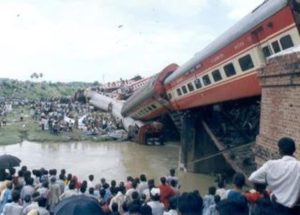
On 23 November 1956, torrential rains weakened the Marudaiyaru river bridge near Ariyalur. A passenger train running from Madras (Chennai) toward Tuticorin attempted to cross. The bridge collapsed. Several coaches plunged into the swollen river.More than 140 people were killed. Hundreds were injured. Rescue operations struggled against rain and darkness.
The disaster shocked a young republic still shaping its administrative standards.
At the time, Lal Bahadur Shastri was India’s Railway Minister. Though the accident was not personally his doing, he took moral responsibility and tendered his resignation. Prime Minister Jawaharlal Nehru initially hesitated but eventually accepted it.
It was a rare act of political accountability. Not compelled by court. Not forced by vote. Offered voluntarily.
For Ariyalur, the tragedy is remembered in human terms. For Indian politics, it became a benchmark of public ethics.
That memory remains part of the constituency’s narrative.
Limestone and Labour
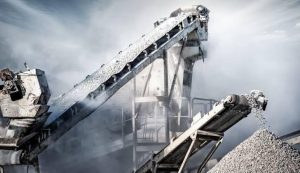
Modern Ariyalur’s economy revolves around limestone and cement. Major plants operate across the district, employing thousands and shaping ancillary transport networks.Mining roads carve through rural belts. Trucks move continuously. Dust control and groundwater protection are ongoing administrative concerns.
Industrialisation has brought wage stability to many households, yet it has also raised environmental debates. Water extraction, land-use change and transport congestion are not abstract policy issues here; they are daily experience.
Ariyalur’s politics balances employment and ecology.
The Electoral Ledger:
Ariyalur’s recent elections reflect competitive consolidation.
2011
Winner: Durai. Manivel (AIADMK) — 88,763 votes
Second: S. S. Sivasankar (DMK) — 78,911 votes
Third: R. Rajendran (DMDK) — 23,984 votes
Margin: 9,852 votes
2016
Winner: S. Rajendran (AIADMK) — 88523 votes
Second: S. S. Sivasankar (DMK) — 86480 votes
Third: Jayavel Rama (DMDK) — 13599 votes
Margin: 2043 votes
2021
Winner: Chinnappa K (DMK) – 1,03,975 votes
Second: Rajendran S (AIADMK) – 1,00,741 votes
Third: Suguna Kumar (Naam Tamilar Katchi – NTK) – 12,346 votes
Margin: 3,234 votes
The margin widened again. Consolidation returned decisively.
Ariyalur has shown readiness to recalibrate but rarely to fragment.
Agrarian Undercurrent
Beyond factories lies cultivation. Paddy and sugarcane fields stretch across canal-fed belts. Tank desilting and monsoon timing influence both yield and mood.
Farmers and factory workers often belong to the same families. Economic diversification shapes electoral judgement.
Rural road strength, drinking water reliability and crop insurance clarity remain persistent themes.
Cuisine and Community
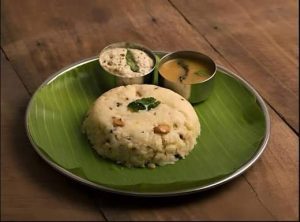
Ariyalur’s food culture reflects interior Tamil Nadu tradition — rice-based meals, country chicken gravies, lentil preparations and sweets prepared during temple festivals.
Tea shops near bus stands serve as informal civic forums where cement prices and political strategies are discussed in the same breath.
Lifestyle here is practical, rooted and observant.
What Decides Here
Three forces define Ariyalur’s electoral arithmetic:
Industrial Balance.
Employment must coexist with environmental protection.
Irrigation Stability.
Agrarian confidence sustains rural segments.
Administrative Credibility.
The 1956 memory reinforces expectation of accountability.
Ariyalur does not demand grandiosity. It demands seriousness.
Closing Frame
Ariyalur’s earth has witnessed Chola triumph, colonial consolidation, industrial rise and human tragedy. Its history is layered — sacred, geological, political.
On a rain-heavy night in 1956, a bridge collapsed and a minister chose responsibility over position. That moment still echoes in the republic’s conscience.
Today, Ariyalur continues to cast ballots with similar deliberation — not swayed by spectacle, but attentive to consequence.
In this constituency, history is not nostalgia. It is measure.