

Arani: Silk Threads and Stubborn Margins

- Tamil
- Hindi
- Malayalam
- Kannada
- Telugu
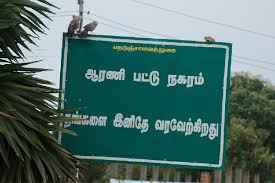
Constituency No. 68 | Tiruvannamalai District | General
Arani is not loud, but it is luminous. Known across Tamil Nadu for its silk weaving tradition, this constituency spins economy and identity from the same loom. Here, warp and weft are not metaphors alone; they are livelihood, inheritance and political signal.
If Kanchipuram claims ritual silk prestige, Arani claims craft precision. Its sarees travel to weddings and festivals across the state. Its weavers work in homes, sheds and cooperative units. Its politics, too, is tightly woven — structured, competitive and rarely casual.
Arani does not drift. It threads.
Silk Before Slogans
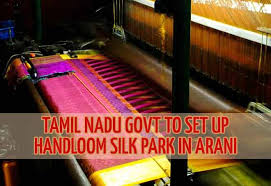
Arani’s defining industry is handloom silk weaving. Generations of artisan families sustain a craft that competes in quality and detail. Powerlooms exist, but the handloom identity remains strong.
Clusters of weaving streets, dyeing units and cooperative societies anchor the local economy. Small traders handle distribution; larger wholesalers link the town to Chennai markets.
The craft is seasonal and sensitive to demand cycles. Wedding seasons boost income. Slumps tighten belts. Government procurement schemes, cooperative support, and yarn pricing policies directly affect livelihoods.
In Arani, economic policy is tactile. It can be felt in thread thickness and daily wages.
Temples and Tanks
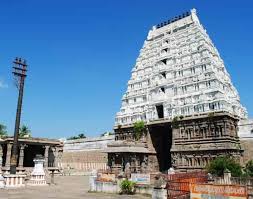
Arani’s cultural landscape is layered. The Arulmigu Arani Sri Kasi Viswanathar Temple anchors religious life. Smaller Amman temples dot neighbourhoods, drawing crowds during annual festivals.
The broader Tiruvannamalai district spiritual aura influences the constituency’s rhythms, though Arani retains its own identity distinct from the Annamalaiyar orbit.
Village tanks and agricultural patches beyond the weaving town sustain paddy and groundnut cultivation. Arani is not purely urban; it is semi-urban with agrarian edges.
Water management remains a quiet but persistent concern.
The Electoral Ledger:
Arani’s recent elections show competitive resilience.
20112011
Winner: S. Mohan (AIADMK) — 89,921 votes
Second: R. Sivanandam (DMK) — 77,314 votes
Third: K. Babu (DMDK) — 23,886 votes
Margin: 12,607 votes
2016
Winner: Ramachandran S (AIADMK) — 94074 votes
Second: Babu S (DMK) — 86747 votes
Third: Rajasekar S(PMK) — 12877 votes
Margin: 7327 votes
2021
Winner: S. Ramachandran (AIADMK) – 102,961 votes
Second: S.S. Anbalagan (DMK) – 99,833 votes
Third: D. Prakalatha (Naam Tamilar Katchi – NTK) – 10,491 votes
Margin: 3,128 votes
The axis shifted. The margin widened again.
Arani’s electorate has shown readiness to recalibrate, but within disciplined two-party competition.
Craft and Competition
Handloom weavers operate in a challenging environment:
Yarn cost volatility.
Competition from machine-made silk.
Access to credit.
Marketing support and branding.
Cooperative society efficiency.
Weaver distress can translate quickly into electoral discontent. Conversely, effective intervention strengthens loyalty.
Unlike purely agrarian seats, Arani’s economy depends on both craft skill and market access.
Food and Everyday Life
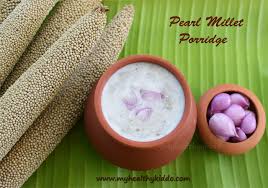
Arani’s culinary identity reflects interior northern Tamil Nadu. Kambu koozh in summer, coconut-based gravies, country chicken dishes during festivals, and sweet varieties prepared during temple celebrations sustain social bonds.
Street-side tiffin stalls and tea shops double as political discussion arenas. Weaver colonies often share meals during community events, reinforcing collective memory.
Lifestyle here is compact, industrious and community-centred.
Urban Services Under Strain
Semi-urban expansion has stretched civic systems.
Drainage capacity, solid waste management and road repair frequently surface in local debate. Water supply reliability remains seasonal. Residential growth around weaving clusters increases density pressure.
Arani expects delivery without drama.
What Decides Here
Three factors dominate Arani’s electoral calculus:
Weaver Welfare.
Subsidies, procurement, and policy clarity sustain trust.
Organisational Depth.
Close margins demand booth precision.
Civic Stability.
Drainage, water and road upkeep influence middle-class and artisan voters alike.
When these align, margins expand. When they strain, contests tighten.
Closing Frame
Arani’s looms move steadily. Threads cross with discipline. Patterns emerge slowly, but precisely.
Its politics follows the same logic — measured, competitive and crafted over time.
In this silk town, nothing is stitched loosely. Not fabric. Not loyalty. Not verdict.
And when ballots are counted, the result is rarely frayed.