

Karur: Textile Capital, Power Politics and the Stampede That Shook Tamil Nadu

- Tamil
- Hindi
- Malayalam
- Kannada
- Telugu
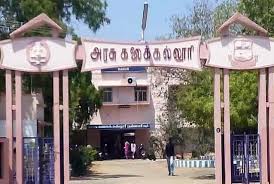
Constituency No. 135 | Karur District | General
Karur is one of those constituencies where commerce, politics and history constantly intersect. Located in central Tamil Nadu along the Amaravathi river basin, the town has grown from an ancient trading settlement into a globally connected textile export hub. Yet Karur’s name in recent political memory carries a darker echo — a tragic stampede during a political rally in September 2025 that forced the state to confront the dangers of uncontrolled mass mobilisation.
Few constituencies combine such economic strength with such dramatic political moments. Karur produces export consignments for global markets by day, but it has also produced controversies, investigations and turning points that ripple across Tamil Nadu’s political landscape.
In Karur, prosperity and politics often move side by side.
Temple Roots and Early Trade

Karur’s historical footprint stretches deep into Tamil civilisation. Archaeological finds and literary references connect the region to early Chera rule and ancient inland trade routes linking the Tamil country to maritime ports.
The spiritual centre of the town remains the Pasupathieswarar Temple, one of the oldest and most revered Shiva temples in the region. Devotees believe the shrine carries a lineage dating back centuries, and temple festivals continue to draw pilgrims from across neighbouring districts.
The Amaravathi river, flowing through the district before joining the Cauvery, has long sustained agriculture and settlement.
Karur therefore stands on the intersection of temple culture and riverine geography.
Global Textile Hub
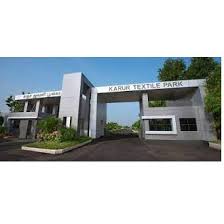
Modern Karur’s identity is dominated by its textile industry. The town has emerged as one of India’s major centres for home textile exports — producing bed linens, tablecloths, curtains, kitchen textiles and other household fabrics shipped to Europe, the United States and other global markets.
Hundreds of small and medium enterprises operate in the district, creating a tightly interlinked ecosystem of weaving units, dyeing facilities, stitching workshops and export houses.
Transport corridors, container movement and logistics networks form the backbone of this economy. Lorries loaded with textile consignments leave Karur daily for ports and distribution centres.
Economic policy therefore resonates strongly with Karur voters.
Agriculture Around the Town

Beyond the bustling industrial town, Karur’s rural belt sustains agriculture supported by river irrigation and groundwater sources. Paddy, sugarcane, banana and groundnut cultivation are common in surrounding villages.
Farmers frequently raise concerns regarding water availability, electricity for irrigation pumps and fair procurement prices.
The constituency therefore blends two economic worlds — industrial trade in the town and agrarian livelihoods in the countryside.
The September 2025 Stampede
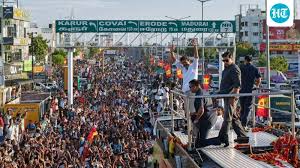
Karur entered a tragic chapter of Tamil Nadu’s political history on 27 September 2025 when a massive political rally addressed by actor-politician Vijay, founder of the Tamilaga Vettri Kazhagam (TVK), turned into disaster.
The event attracted an enormous crowd, far exceeding the capacity of the venue. Supporters surged forward to see the film star-turned-politician as he arrived and greeted the gathering. The sudden crowd movement triggered panic. Barricades collapsed and people fell in the crush.
The result was devastating.
More than forty people lost their lives, and dozens were injured in the stampede.
The aftermath was heartbreaking. Hospitals across the region treated the injured while families searched for missing relatives. Footwear, banners and personal belongings lay scattered across the rally grounds — grim reminders of a celebration that had turned into catastrophe.
The tragedy sparked statewide outrage and intense political debate. Questions were raised about crowd management, permissions, safety planning and police deployment at large campaign gatherings.
The incident quickly became one of the most widely discussed political events in the state.
Investigations and Political Fallout
Following the tragedy, inquiries were ordered and the matter soon escalated into a major legal and political issue. Investigations examined how the rally had been organised, whether safety measures were adequate and who bore responsibility for the crowd control failure.
The case eventually moved beyond state-level scrutiny, with national investigative agencies examining the circumstances of the stampede.
For Vijay’s emerging political movement, the Karur incident became a defining moment. Supporters continued to rally around him, but the episode forced a broader conversation about the risks of celebrity-driven mass mobilisation in Tamil Nadu politics.
Karur thus became more than a rally site — it became a symbol of the dangers of political spectacle without adequate safety planning.
Senthil Balaji and the Karur Power Centre

Karur’s political prominence also stems from the influence of V. Senthil Balaji, a major leader from the region who won the constituency in the 2021 Assembly election.
A key figure in Tamil Nadu politics, Senthil Balaji held ministerial office in the state government before stepping down amid an ongoing legal case connected to allegations surrounding recruitment irregularities in earlier years.
The investigation and court proceedings surrounding the case have kept Karur firmly in the centre of political discussion across Tamil Nadu.
For many voters, the episode reflects the complex relationship between regional political power and national investigative agencies.
Electoral Ledger:
Karur’s elections have been fiercely contested in recent years.
2011
Winner: V. Senthil Balaji (AIADMK) — 1,09,235 votes
Second: K. C. Palanisamy (DMK) — 74,122 votes
Third: N. Subash (DMDK) — 26,981 votes
Margin: 35,113 votes
2016
Winner: M. R. Vijayabaskar (AIADMK) — 81936 votes
Second: Subramanian Bank K (INC) — 81495 votes
Third: Ravi A (DMDK) — 6491 votes
Margin: 441 votes
2021
Winner: V. Senthil Balaji (DMK) — 1,01,757 votes
Second: M. R. Vijayabaskar (AIADMK) — 89,309votes
Third: Karuppaiya R (Naam Tamilar Katchi) — 7316 votes
Margin: 12,448 votes
Alliance arithmetic again reshaped the outcome.
Karur voters have shown they can swing decisively depending on political climate.
Cuisine and Local Flavour
Karur’s culinary culture reflects the Kongu belt’s robust flavours. Pepper-spiced meat dishes, rice meals and regional specialties dominate roadside eateries catering to traders and transport workers.
Food culture here mirrors the town’s energetic commercial life.
Political Temperament
Karur voters combine business pragmatism with strong political awareness. Industrial workers, textile exporters, farmers and transport operators all influence the constituency’s electoral behaviour.
The 2025 stampede tragedy and the Senthil Balaji controversy have further sharpened political consciousness in the region.
Karur now watches politics with unusual intensity.
What Decides Karur
Three factors shape the constituency’s electoral direction:
Industrial economy.
Textile exports and labour stability remain crucial.
Political credibility.
High-profile controversies influence voter perception.
Alliance dynamics.
Coalition alignments continue to affect margins.
Karur rarely produces a casual verdict.
Closing Frame
Textile looms thrum across the town while lorries carry export consignments toward distant ports. Temple bells ring through the streets at dawn. Farmers bring produce to markets along the Amaravathi basin.
Yet the memory of September 2025 lingers.
Karur is now both an industrial powerhouse and a constituency marked by tragedy — a place where politics, prosperity and public emotion collided with devastating consequences.
When Karur votes again, the mandate will carry the weight of both commerce and conscience.