

Salem (North): Steel City Heartland, Rajaji’s Political Footprints and the Urban Pulse of Western Tamil Nadu
 By Nandhini
- Tamil
- Hindi
- Malayalam
- Kannada
- Telugu

Constituency No. 89 | Salem District | General
Salem (North) lies at the centre of one of Tamil Nadu’s most historically and economically significant cities. Salem has long been known as the “Steel City” of the state, but its importance goes far beyond industry. The city stands at the crossroads of political history, commerce, education and transport networks that link western Tamil Nadu with the rest of the state.
The Salem (North) Assembly constituency covers some of the oldest neighbourhoods of the city where markets, temples and commercial streets developed during the colonial period and earlier. Dense urban settlements, busy roads and expanding residential areas define the character of the constituency today.
Salem has also produced towering political figures and movements that shaped the course of Tamil Nadu’s public life. Among them stands C. Rajagopalachari (Rajaji), one of India’s most respected statesmen, whose life and career were deeply connected with Salem district.
Thus Salem (North) represents a constituency where political legacy, industrial growth and urban dynamism intersect.
Rajaji and Salem’s Political Legacy
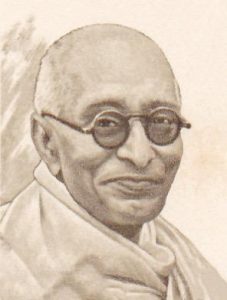
Few districts in Tamil Nadu can claim the political heritage associated with Salem. The region was closely linked to C. Rajagopalachari (Rajaji), freedom fighter, last Governor-General of India and later Chief Minister of Madras State.
Rajaji practised law in Salem early in his career and built strong political and social connections in the region. From Salem he entered the national movement, becoming one of the most prominent leaders of the Indian freedom struggle.
His intellectual influence and political leadership left a lasting imprint on the district. Even today Salem remembers Rajaji as one of the towering figures associated with its history.
This legacy adds a deeper political dimension to constituencies within the city, including Salem (North).
Steel City and Industrial Growth
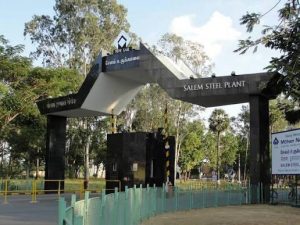
Salem’s reputation as a major industrial centre rests largely on the presence of the Salem Steel Plant, one of India’s important stainless steel manufacturing facilities. The plant and related industries have provided employment to thousands of workers and contributed significantly to the regional economy.
Industrial estates and manufacturing units have developed across the city, producing steel products, textiles and engineering goods.
These industries have helped transform Salem from a traditional trading town into a modern industrial city.
Workers, traders and entrepreneurs connected with these industries form an important part of the constituency’s electorate.
Markets and Commercial Streets
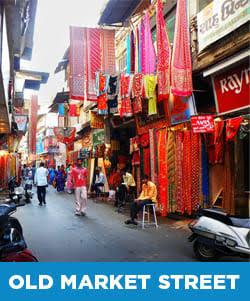
Salem has long been known for its vibrant commercial activity. Markets in the city trade agricultural produce from surrounding districts, including turmeric, tapioca and fruits grown in nearby regions.
Retail streets filled with textile shops, jewellery stores and small businesses attract customers from across western Tamil Nadu.
The commercial character of Salem (North) reflects this trading tradition, with bustling markets and commercial complexes dominating the urban landscape.
Temples and Cultural Landmarks
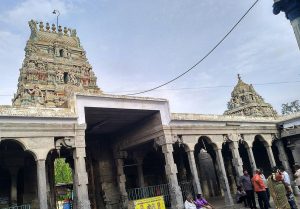

Despite its rapid urban growth, Salem retains strong cultural traditions rooted in its temples and festivals. One of the most prominent temples associated with the city is the Sugavaneswarar Temple, an ancient shrine dedicated to Lord Shiva located near the centre of Salem.
Nearby hills are crowned by the Kottai Mariamman Temple, a popular shrine visited by devotees from across the district.
These temples host large festivals that bring together communities from across Salem and neighbouring towns.
Such religious landmarks continue to anchor the cultural identity of the city.
Hills Surrounding the City


Salem’s geography is defined by the hills that surround it on several sides. The Shevaroy Hills, home to the famous hill station of Yercaud, rise to the northeast of the city.
These hills influence the climate and landscape of the region while also attracting tourists seeking cooler weather and scenic views.
The proximity of Yercaud makes Salem a gateway for travellers heading toward the hill station.
Transport and Urban Expansion
Salem occupies a crucial position in Tamil Nadu’s transport network. National highways from Chennai, Coimbatore and Bengaluru intersect near the city, making it an important road junction.
Railway lines also connect Salem with major cities across the state.
Because of this location, Salem has grown rapidly as a commercial and administrative centre serving the wider western region of Tamil Nadu.
Urban expansion continues to reshape neighbourhoods within the Salem (North) constituency.
Electoral Ledger
2011
Winner – R. Rajendran (AIADMK) – around 1,03,000 votes
Second – DMK candidate – around 92,000 votes
Third – DMDK candidate – around 18,000 votes
Winning Margin: about 11,000 votes
2016
Winner – R. Rajendran (DMK) – 86583 votes
Second – Saravanan KRS (ADMK)– 76710 votes
Third – Kathir Raasaratinam (PMK) – 7975 votes
Winning Margin: 9873 votes
2021
Winner – R. Rajendran (DMK) – 93432 votes
Second – G.Venkatachalam(ADMK) – 85,844 votes
Third – R.S.Guru Chakravarthy(MNM) – 10718 votes
Margin: 7588 votes
Electoral contests in Salem (North) often reflect broader political trends in western Tamil Nadu.
Civic and Development Concerns
Residents of Salem (North) commonly raise several issues:
• traffic congestion in busy commercial areas
• urban infrastructure and drainage improvements
• industrial employment opportunities
• environmental concerns linked to urban growth
Managing urban expansion while maintaining civic services remains a key challenge.
Political Temperament
The electorate includes traders, industrial workers, professionals and residents of long-established neighbourhoods.
Urban development, employment and infrastructure often dominate political discussions during elections.
Candidates with strong organisational networks and local visibility tend to gain support.
What Decides Salem (North)
Three factors often shape electoral outcomes:
Industrial economy – steel and manufacturing sectors influence employment.
Urban infrastructure – transport and civic services affect daily life.
Political legacy – the historical association with leaders like Rajaji gives the region strong political awareness.
Closing Frame
In Salem (North), the legacy of Rajaji’s political career meets the hum of modern industry and the bustle of urban markets. Steel plants, temples and commercial streets together shape the character of the constituency.
Surrounded by hills and linked by highways to the rest of Tamil Nadu, Salem continues to stand as one of the most important cities in the state.
When Salem (North) votes, it reflects the voice of a city where history, industry and politics have long moved together.