

Salem (South): Temple Hills, Trading Streets and the Expanding Urban Core of the Steel City
 By Nandhini
- Tamil
- Hindi
- Malayalam
- Kannada
- Telugu

Constituency No. 90 | Salem District | General
Salem (South) forms the vibrant southern half of one of Tamil Nadu’s most historically and economically important cities. Known widely as the Steel City, Salem has long stood at the intersection of industry, trade and politics in western Tamil Nadu. Within this landscape, Salem (South) captures the dynamic urban expansion of the city — a constituency where traditional temple streets meet modern commercial corridors and growing residential neighbourhoods.
The constituency covers significant parts of the central and southern urban stretch of Salem city. It includes bustling market zones, residential localities and educational institutions that together represent the everyday rhythm of city life. Over the decades, as Salem expanded beyond its older municipal boundaries, Salem (South) emerged as one of the most politically influential urban constituencies in the region.
With its mix of traders, industrial workers, professionals and students, Salem (South) reflects the broader economic and social energy that has made Salem a key urban centre of western Tamil Nadu.
Temple City Within the Steel City
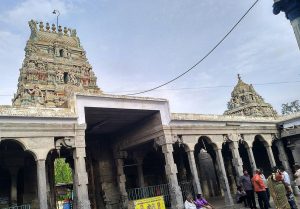
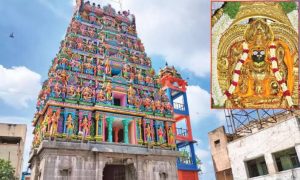
Though Salem is widely known for industry, its cultural identity is deeply tied to its temples. One of the most revered shrines in the region is the Sugavaneswarar Temple, an ancient Shiva temple located near the heart of the city. The temple’s long history and vibrant festivals continue to draw devotees from across Salem district.
Another important landmark visible from across the city is the Kottai Mariamman Temple, perched near the historic fort area. The temple festival attracts thousands of devotees every year and remains a major cultural event in Salem’s calendar.
These temples provide a strong cultural anchor for the residents of Salem (South), reminding them that the city’s identity extends beyond its industrial reputation.
Commercial Streets and Market Activity


Salem has long been known as a trading hub connecting agricultural districts of western Tamil Nadu. Markets in the city deal in commodities such as turmeric, tapioca, fruits and textiles brought from surrounding regions.
The commercial streets within Salem (South) bustle with retail shops, jewellery stores, textile outlets and wholesale businesses. Traders from neighbouring districts often travel to Salem for commercial transactions, reinforcing the city’s status as a regional trading centre.
This commercial vitality forms a significant part of the economic life of the constituency.
Industrial Influence
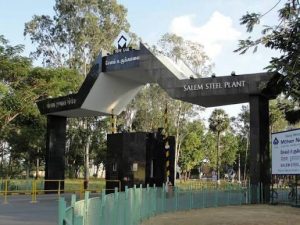
Salem’s industrial growth has shaped the economic landscape of the entire city. Though the famous Salem Steel Plant lies outside the immediate urban centre, the ripple effects of industrial activity extend across the city, including Salem (South).
Engineering workshops, small-scale manufacturing units and ancillary industries provide employment to many residents. Workers employed in nearby industrial estates often live in neighbourhoods within the constituency.
Industry therefore remains an important economic driver even within this urban seat.
Hills that Frame the City

Salem is uniquely surrounded by a ring of hills that form a striking natural backdrop. The Shevaroy Hills, home to the hill station of Yercaud, rise to the northeast of the city.
These hills influence the climate of the region and serve as an important tourism destination. Travellers heading toward Yercaud often pass through the city before beginning the ascent into the hills.
The presence of these hills gives Salem a distinctive geography rarely seen in major urban centres.
Education and Urban Institutions

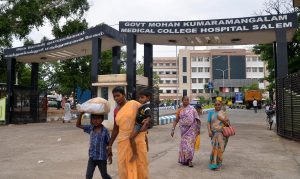
Salem (South) benefits from several educational institutions and civic facilities that serve the wider region. Schools, colleges and training centres attract students from across western Tamil Nadu.
Hospitals, government offices and public institutions located within the city also serve surrounding districts.
This concentration of institutions strengthens Salem’s role as an administrative and educational hub.
Transport and City Mobility
Salem’s strategic location has made it a major transport junction. National highways link the city with Chennai, Coimbatore and Bengaluru, while railway lines connect Salem with major cities across Tamil Nadu.
Within the city, roads passing through Salem (South) carry heavy traffic as commuters move between residential neighbourhoods and commercial zones.
Public transport networks and bus services play a crucial role in sustaining daily mobility across the constituency.
Electoral Ledger
2011
Winner – G. Venkatachalam (AIADMK) – around 1,02,000 votes
Second – DMK candidate – around 93,000 votes
Third – DMDK candidate – around 18,000 votes
Winning Margin: about 9,000 votes
2016
Winner – G. Venkatachalam (AIADMK) – around 1,06,000 votes
Second – DMK candidate – around 97,000 votes
Third – PMK candidate – around 12,000 votes
Winning Margin: about 9,000 votes
2021
Winner –E. Balasubramanian( ADMK) -97506 votes
Second – A.S. Saravanan (DMK) – 74,897 votes
Third – M.Prabhu Manikandan (MNM) – 10368 votes
Margin: 22,609 votes
The constituency frequently reflects the broader political balance of western Tamil Nadu.
Civic and Development Concerns
Residents of Salem (South) regularly raise several issues:
• traffic congestion along major commercial roads
• urban drainage and flood management
• expansion of public transport facilities
• infrastructure improvements in rapidly growing neighbourhoods
Balancing development with civic planning remains an ongoing challenge.
Political Temperament
The electorate consists of traders, industrial workers, professionals, students and residents of long-established neighbourhoods.
Urban development, infrastructure and employment remain key political themes during election campaigns.
Strong party organisation and local engagement often determine electoral success in this constituency.
What Decides Salem (South)
Three factors often shape electoral outcomes:
Urban commerce – traders and business communities influence local politics.
Industrial employment – jobs linked to Salem’s manufacturing economy matter to voters.
Infrastructure development – transport and civic services remain key concerns.
Closing Frame
Salem (South) captures the pulse of a city that has grown from a historic trading centre into a major industrial and commercial hub. Temple towers rise above crowded markets while highways carry goods and travellers across western Tamil Nadu.
Between the surrounding hills and the bustling streets lies a constituency that mirrors the growth of modern Salem.
When Salem (South) votes, it speaks for a city where tradition and industry continue to shape the future.