

Thiruparankundram: First Arupadai Veedu of Murugan, Sacred Hill and a Politically Sensitive Seat
 By Nandhini
- Tamil
- Hindi
- Malayalam
- Kannada
- Telugu
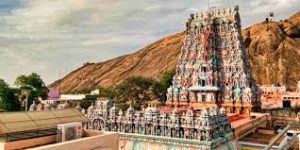
Constituency No. 195 | Madurai District | General
Thiruparankundram is one of the most spiritually charged constituencies in Tamil Nadu. Located on the southwestern edge of Madurai city, it is home to the famed Thiruparankundram Murugan Temple, revered as the first of the six Arupadai Veedu – the sacred abodes of Lord Murugan.
The shrine’s primacy is celebrated in the ancient Tamil classic “Thirumurugatrupadai” by the Sangam poet Nakkirar, which identifies Thiruparankundram as the foremost pilgrimage site in the Murugan tradition.
Thus the constituency is not merely a modern electoral division but a sacred landscape rooted deeply in Tamil literature, religion and culture.
The imposing hill temple dominates the skyline and shapes the social life of the town. At the same time, the constituency has in recent years emerged as one of the most politically sensitive seats in the state, where religious sentiment, administrative decisions and electoral competition intersect.
Thiruparankundram therefore represents a place where ancient devotion and contemporary politics often meet at the foot of a sacred hill.
First Arupadai Veedu of Murugan
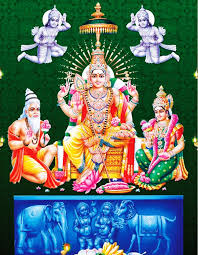
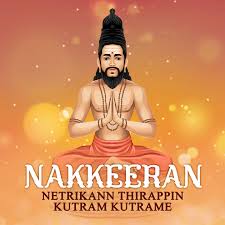
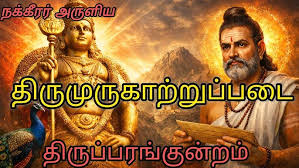
According to Nakkirar’s Thirumurugatrupadai, one of the great works of Sangam literature, Thiruparankundram is the first of the Arupadai Veedu, the six sacred battle camps or abodes associated with Lord Murugan.
Tradition holds that after defeating the demon Surapadman, Murugan married Deivayanai, daughter of Indra, at this very hill. The temple therefore commemorates the divine wedding and the triumph of Murugan.
Carved partly into the rock face of the hill, the temple reflects early Pandya architectural traditions. Its sanctum, pillared halls and cave-like interiors give the shrine a distinctive atmosphere different from many other temples of Tamil Nadu.
Pilgrims from across the state visit the shrine throughout the year, particularly during Skanda Sashti and other Murugan festivals.
Temple of Many Deities
The Thiruparankundram temple complex is remarkable for the presence of multiple shrines dedicated to various deities. Apart from Murugan and Deivayanai, the temple includes sanctums for Shiva, Vishnu, Durga and Vinayagar.
Such inclusion reflects the syncretic nature of Tamil temple traditions where different strands of worship coexist within the same sacred space.
The temple’s architectural layers also reveal contributions from several dynasties including the Pandyas and Nayaks, whose patronage expanded the complex over centuries.
Sacred Hill and Religious Coexistence
Thiruparankundram hill itself is regarded as sacred. Apart from the Murugan temple, the hill contains shrines and dargahs associated with Islamic traditions, reflecting the layered religious history of the area.
This coexistence has long been part of the cultural identity of the region, though at times it has also brought administrative and political questions regarding management of the sacred site.
The hill therefore stands as both a religious landmark and a symbol of the complex spiritual history of the region.
Recent Controversies and Political Sensitivity
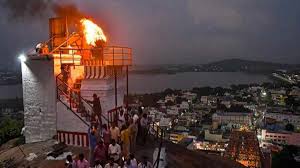
In recent years the hill temple has drawn statewide attention due to controversies surrounding lighting arrangements and infrastructure developments on the hill.
Disputes regarding these decisions moved beyond local administration and reached courts of law, while also becoming subjects of political discussion within the state government and the Secretariat.
Because the temple carries deep emotional significance for devotees, these issues triggered intense debate across political and religious circles. In political discourse the constituency is sometimes described as carrying
sensitivities comparable to an “Ayodhya of the South,” highlighting the strong sentiments attached to the sacred hill.
As a result, elections in Thiruparankundram attract considerable attention across the state.
Madurai’s Expanding Suburban Belt
Beyond the temple hill, the constituency forms part of the expanding urban edge of Madurai, one of the oldest cities of Tamil Nadu. Residential neighbourhoods have grown steadily as the city expanded outward.
Road links connect the constituency with southern districts such as Tirunelveli and Thoothukudi, making Thiruparankundram a key transit zone in the region.
The combination of pilgrimage tourism and suburban growth has significantly influenced the constituency’s development.
Agriculture and Local Economy
Villages in the constituency still depend on agriculture. Paddy cultivation, vegetable farming and small-scale agriculture remain common in rural pockets.
Temple tourism also supports local commerce through hotels, shops and services catering to pilgrims visiting the Murugan shrine.
Landmarks
Important landmarks of the constituency include:
• Thiruparankundram Murugan Temple – first Arupadai Veedu
• Thiruparankundram Hill – sacred landscape visible across Madurai
• Temple streets and pilgrim markets around the shrine
• Expanding suburban neighbourhoods connected with Madurai city
These landmarks define the physical and cultural geography of the constituency.
Electoral Ledger
2011
Winner – R. Rajan Chellappa (AIADMK) – 92,674 votes
Second – A. K. Bose (DMK) – 83,418 votes
Third – S. Pandiarajan (DMDK) – 20,621 votes
Winning Margin: 9,256 votes
2016
Winner – Seenivel S M (ADMK) – 93453 votes
Second – Manimaran M (DMK) – 70461 votes
Third – Kandasamy K (CPI) – 15275 votes
Winning Margin: 22992 votes
2021
Winner – Rajanchellappa V.V (ADMK) – 103683 votes
Second – Ponnuthai (CPI) – 74194 votes
Third – Revathi R. (Naam Tamilar Katchi) – 22722 votes
Winning Margin: 29489 votes
Civic Priorities
Residents frequently raise several development priorities:
• preservation of the sacred hill environment
• improved infrastructure for pilgrims
• urban facilities for expanding residential areas
• employment opportunities for youth
Balancing heritage preservation with modern urban growth remains a central concern.
Closing Frame
In Thiruparankundram, the sacred hill described by Nakkirar in Thirumurugatrupadai continues to draw devotees more than two millennia later. Pilgrims climb the slopes seeking the blessings of Murugan while political debates unfold in the town below.
Few constituencies combine such ancient literary memory with modern political intensity.
When Thiruparankundram votes, it speaks from a land where Tamil literature, temple tradition and democratic politics converge beneath one of the most revered hills in the state.