


Chennai, June 29:
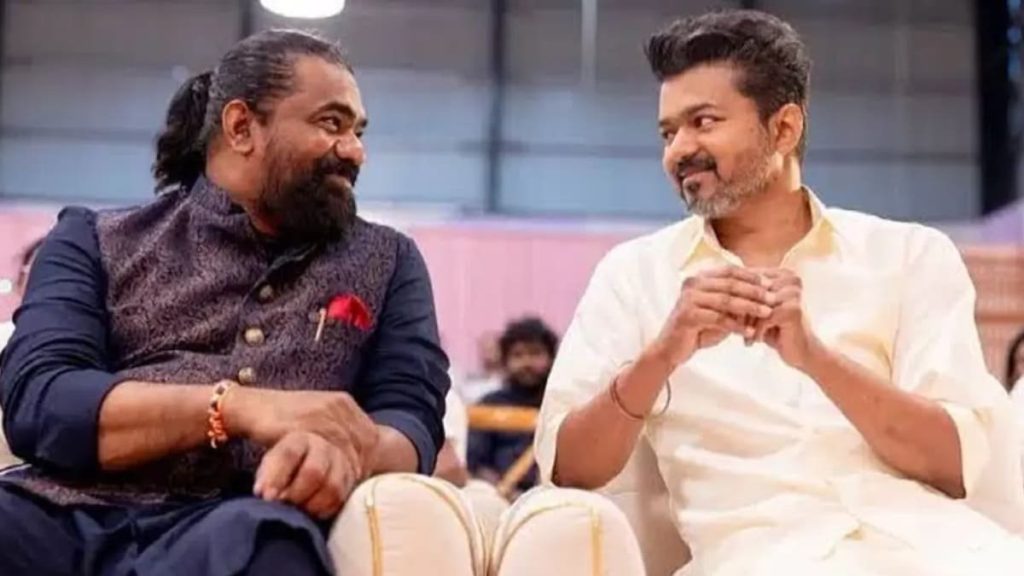
The Tamil Nadu government has appointed Venkata Narayana K., founder of KVN Productions and producer of Chief Minister C. Joseph Vijay’s film ‘Jana Nayagan’, as the State’s Special Representative in New Delhi.
The decision has triggered sharp political reactions, with critics pointing to his lack of administrative or political experience and his Karnataka origins.
A Bengaluru-based businessman and film producer, Venkata Narayana is the founder and chairman of the KVN Group, a diversified conglomerate with interests in real estate and entertainment. He previously served as CEO of Prestige Group, where he played a key role in expanding the company’s presence across India. In 2020, he founded KVN Productions, which has since grown into a pan-Indian banner backing high-profile projects across multiple languages, including films featuring stars like Yash. He is also professionally qualified as a chartered accountant, cost accountant, company secretary, and law graduate.
Venkata Narayana developed a close professional association with Chief Minister C. Joseph Vijay through KVN Productions, which produced Vijay’s political action thriller ‘Jana Nayagan’, directed by H. Vinoth. The film was widely seen as Vijay’s final project before his full-fledged political entry through Tamilaga Vettri Kazhagam (TVK). Over time, Venkata Narayana became part of Vijay’s inner circle and was frequently seen accompanying him and other TVK leaders during official engagements.
On June 23, 2026, the Tamil Nadu government formally appointed him as the State’s Special Representative in New Delhi for a period of one year, effective from the date he assumes office. The role involves acting as a liaison between the State and the Union government on administrative and policy matters.
The appointment, reportedly a personal choice of the Chief Minister, has drawn criticism from multiple quarters. Opponents argue that a sensitive role representing Tamil Nadu’s interests at the Centre should not be assigned to someone without relevant administrative experience, especially a person from a neighbouring state amid ongoing Cauvery water disputes between Tamil Nadu and Karnataka.
DMK leader Kanimozhi strongly criticised the move, questioning whether no qualified individual from Tamil Nadu was available for the role. She said, “In a governmental position that should advocate for Tamil Nadu’s rights in Delhi, the Union government has appointed someone from Karnataka to a role equivalent to that of a minister. In the Union government, is there not even one qualified person from Tamil Nadu for that responsibility? In matters concerning Tamil Nadu’s rights-related issues, including the Mekedatu dam construction matter, will the person currently selected act as a representative of Tamil Nadu? Or will they act as a representative of their home state, Karnataka?”
DMK MP P. Wilson also raised concerns, alleging that the Chief Minister had violated his oath of secrecy by allowing close aides from Andhra Pradesh to attend high-level government meetings. He referred to the presence of John Arockiasamy and Vishnu Reddy at cabinet meetings, review sessions, and other key deliberations.
“Thiru John Arockiasamy and Thiru Vishnu Reddy, both from Andhra Pradesh, are close aides and friends of Thiru C. Joseph Vijay, the CM of Tamil Nadu. It is not clear what official positions they hold in the government, but they have been allotted a chamber near the Chief Minister’s office at the Secretariat. If they are not government servants, in what capacity are they attending highly confidential meetings where secret documents are circulated?” Wilson wrote on X.
He further questioned whether involving such individuals complied with constitutional norms, the rules of business, and the Chief Minister’s oath of secrecy. “Let the CM reveal the official designations of these two individuals and clarify under what authority they are attending cabinet meetings and issuing directions to officials,” he added.
DMDK’s Premalatha also criticised the appointment, questioning whether a representative from another state could effectively safeguard Tamil Nadu’s interests. She described the decision as detrimental to the State’s rights and invoked Dravidian ideology and Tamil identity in her criticism.
The Communist Party of India (CPI) also urged Chief Minister Vijay to reconsider the decision, stating that it has sparked widespread debate. The party noted that the public may find it difficult to accept a representative lacking a deep understanding of Tamil Nadu’s political, economic, social, and cultural landscape.
At the same time, CPI acknowledged that the appointment falls within the prerogative of the ruling government. “We have no right to interfere in the government’s decision. However, it would have been better if a person born in Tamil Nadu had been appointed as the State’s representative,” the party said, while calling for a review.
In contrast, Viduthalai Chiruthaigal Katchi (VCK) president Thol Thirumavalavan dismissed the controversy, calling it an internal matter of the ruling TVK. Speaking to reporters in Tiruchi, he said the Chief Minister has full authority to make such appointments and that the decision would not affect governance or the State’s interests.
His remarks align with those of Electricity, Prohibition and Excise Minister R. Nirmalkumar, who stated that the appointment was based on the Chief Minister’s confidence in the individual and clarified that the role does not involve major administrative decision-making.
As the debate continues, the appointment of Venkata Narayana has emerged as a significant political flashpoint, reflecting broader concerns over representation, administrative experience, and regional sensitivities.