

Alangulam: Between Red Soil and Rising Sunlight

- Tamil
- Hindi
- Malayalam
- Kannada
- Telugu

Constituency No. 223 | Tenkasi District | General (Unreserved)
Alangulam sits in the southern stretch of Tamil Nadu where the Western Ghats soften into red soil plains, where temple chariots roll past paddy fields, and where politics travels through agrarian anxieties rather than urban agitation. It is not a metropolitan flashpoint. It is a constituency of steady rhythms — irrigation, harvest, pilgrimage, turnout.
In Alangulam, elections are measured in margins, but lived in monsoons.
Fields Under the Ghats
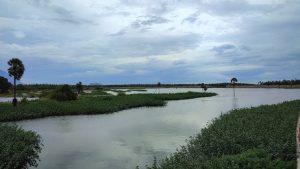
Alangulam lies in the Tenkasi region, within the influence of the Western Ghats and seasonal river systems. Agriculture dominates the economic structure. Paddy, pulses, groundnut and coconut cultivation sustain households across villages.
Irrigation tanks and minor canals determine confidence. When tanks fill, optimism rises. When they dry early, grievances gather quietly.
Here, water release schedules matter more than television debates.
Temple Town Cadence

Religious life structures the constituency’s social calendar. The Kasi Viswanathar Temple, though located in nearby Tenkasi town, exerts regional spiritual influence. Pilgrimage flows affect local commerce.
Village-level Amman temples dominate Alangulam’s internal cultural life. Mariamman festivals, fire-walking rituals and annual chariot processions draw widespread participation. Folk drumming and village theatre performances accompany these events.
Karuppasamy and Ayyanar shrines guard agricultural boundaries, their clay horses lined in quiet rows across hamlets.
Faith here is rural, rooted and rhythmic.
Red Soil Economy
Alangulam’s soil profile supports diverse cropping patterns. Small farmers dominate landholding patterns, making crop price stability and input costs central electoral themes.
Fertiliser availability, diesel rates and agricultural credit access shape political discourse. Cooperative banks and local self-help groups influence voter networks.
In Alangulam, economic discussion begins with seed and ends with market.
Roads, Bus Stands and Rural Mobility

The constituency connects villages to Tenkasi and Tirunelveli through arterial roads that witness daily bus movement. Road relaying and pothole repair after monsoon wear are recurring civic demands.
Transport access influences educational mobility, with students commuting to nearby colleges.
Mobility here is functional, not symbolic.
Folk Traditions and Pongal Spirit
Pongal celebrations mark the agrarian high point. Cattle decoration, kolam competitions and community feasts reinforce social cohesion. Village sports tournaments — kabaddi and volleyball — draw youth participation.
Temple car festivals remain community unifiers. Political outreach often aligns with such gatherings, without overwhelming them.
Tradition in Alangulam is not curated for tourism; it is lived.
The Electoral Ledger:
Alangulam has seen competitive bipolar contests.
2011
Winner: P. G. Rajendran (AIADMK) — 87,145 votes
Second: M. Poongothai (DMK) — 72,987 votes
Third: S. Rajkumar (DMDK) — 22,316 votes
Margin: 14,158 votes
2016
Winner: Dr. Poongothai Aladi Aruna(DMK) — 88891 votes
Second: K. Hepzi (ADMK) — 84,137 votes
Third:Rajendranath(DMDK)— 7,784 votes
Margin: 4754 votes
2021
Winner: P. H. Manoj Pandian (AIADMK) — 74,153 votes
Second: M. Poongothai (DMK) — 70,614 votes
Third: Hari Nadar (IND) — 37,727 votes
Margin: 3539 votes
The margin widened again under alliance consolidation.
No ministerial portfolio emerged from this seat in recent cycles, but the constituency remains politically active within district-level strategy.
Alangulam does not deliver landslides casually; it recalibrates.
Civic Expectations
Recurring public concerns include:
Irrigation tank restoration.
Drinking water assurance during summer.
Road strengthening for interior villages.
Access to primary healthcare facilities.
Public representatives are judged on field visits rather than press conferences.
Execution outweighs oratory.
Culinary Character

Cuisine reflects southern Tamil Nadu traditions — rice-based meals, tamarind gravies, coconut chutneys and country chicken preparations.
Street vendors during temple festivals sell sweet pongal and savouries prepared from local produce.
Food tastes of field and firewood smoke.
Social Composition and Voting Behaviour
Alangulam reflects structured rural social alignments. Booth-level mobilisation depends on kinship networks, farmers’ associations and local influencers.
Turnout is usually robust. Margins respond to micro-shifts rather than dramatic swings.
In this constituency, quiet organisation outperforms loud campaigning.
What Decides Here
Three determinants shape Alangulam’s electoral direction:
Irrigation Reliability.
Tank and canal confidence influences farmer sentiment.
Agricultural Price Stability.
Input costs and procurement determine economic mood.
Ground-Level Engagement.
Regular field presence earns loyalty.
Alangulam does not chase spectacle. It rewards steadiness.
Closing Frame
Red soil fields stretch beneath the shadow of distant hills. Temple drums echo at dusk. Farmers gather near tea stalls discussing canal flow and crop prospects. Buses depart toward Tenkasi at dawn.
Alangulam stands as a rural southern constituency — measured, watchful and grounded in agrarian rhythm.
When it votes, it does so with awareness that harvest and governance are both seasonal, both cyclical and both earned.
In Alangulam, mandate is cultivated — one season at a time.