

Anaikattu: Hills, Tanks and the Vellore Hinterland Pulse

- Tamil
- Hindi
- Malayalam
- Kannada
- Telugu

Constituency No. 44 | Vellore District | General (Unreserved)
Anaikattu lies in the western arc of Vellore district where rocky hillocks, irrigation tanks and agrarian settlements define the landscape. It is neither fully urban nor deeply remote; it is a hinge between Vellore town’s institutional influence and the quieter rural belts stretching toward the Andhra Pradesh border.
In Anaikattu, politics is shaped less by spectacle and more by soil, storage tanks and seasonal certainty.
Granite Ridges and Tank Networks
The constituency’s terrain is marked by low granite outcrops and scattered hill formations. Irrigation tanks — many centuries old — dot the villages, storing monsoon rain for paddy and groundnut cultivation. Desilting, bund strengthening and feeder channel maintenance are constant concerns.
Agriculture remains mixed: paddy in irrigated tracts, millets and pulses in drier pockets. Borewell dependence has increased in some areas, sharpening debates over groundwater management.
Water here is not an abstraction; it is survival arithmetic.
Temples and Village Guardians
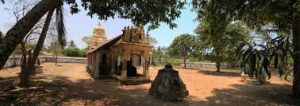
Anaikattu’s cultural life centres on village temples rather than grand pilgrimage sites. Mariamman shrines, Ayyanar temples and Draupadi Amman temples anchor annual festivals. Fire-walking rituals and chariot processions draw collective participation across caste and community lines.
In some villages, terracotta horse installations at Ayyanar shrines stand as silent sentinels at settlement boundaries — symbols of protection and continuity.
Religious expression here is intimate and localised.
Proximity to Vellore Institutions
Though primarily rural, Anaikattu sits within the larger orbit of Vellore’s educational and medical institutions. Residents often commute toward Vellore town for higher education, hospital access and government services.
Road quality and bus frequency therefore matter. Connectivity in practice — rather than in rhetoric — shapes daily mobility.
The constituency is rural in texture but semi-urban in aspiration.
Border Influence and Trade
The proximity to Andhra Pradesh introduces cross-border trade and linguistic familiarity. Telugu-speaking populations coexist alongside Tamil communities in some pockets.
Weekly markets trade vegetables, grains and livestock. Small traders and transport operators form active voter blocs.
Anaikattu balances field and frontier.
The Electoral Ledger:
Anaikattu has witnessed competitive bipolar contests.
2011
Winner: A. Kalaiarasu (PMK) — 79,345 votes
Second: V. K. Arjunan (AIADMK) — 73,012 votes
Third: S. Ravi (DMDK) — 25,603 votes
Margin: 6,333 votes
2016
Winner: A.P. Nandakumar (DMK) – 77,058 votes
Second: M. Kalaiarasu (AIADMK) – 68,290 votes
Third: Elavazagan K.L. (Pattali Makkal Katchi – PMK) – 24,711 votes
Margin: 8,768 votes
2021
Winner: A. P. Nandakumar (DMK) — 95,159 votes
Second: D.Velazhagan (ADMK) — 88,799 votes
Third: A.Sumithra(Naam Tamilar Katchi) — 8,125 votes
Margin: 6,360 votes
The axis shifted under alliance consolidation.
The constituency has not recently produced a Cabinet minister, but it remains strategically relevant within Vellore district calculations.
Margins fluctuate, but competition remains structured.
Civic and Agrarian Priorities
Key recurring concerns include:
Tank restoration and water security.
Road relaying to interior hamlets.
Drinking water supply during peak summer.
Access to government schools and primary healthcare centres.
Farmers monitor electricity supply for pump sets closely. Small traders look to stable transport regulation.
Delivery here is measured by maintenance, not announcement.
Folk Traditions and Community Rhythm

Village theatre performances during temple festivals, kabaddi tournaments and Pongal cattle decorations mark seasonal cycles. Community feasts reinforce kinship networks.
The cultural landscape is not commercialised; it is participatory.
Anaikattu’s social cohesion is built on repetition — festivals that return each year, tanks that fill and empty, votes that follow careful assessment.
Cuisine and Local Identity
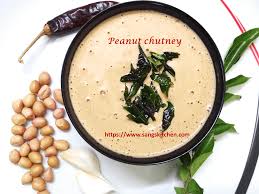
Food culture reflects northern Tamil Nadu’s agrarian palate — rice meals with brinjal gravies, groundnut chutneys and pepper-seasoned dishes. During festivals, sweet pongal and savouries prepared from locally harvested rice are common.
Meals are simple, robust and tied to field cycles.
What Decides Here
Three determinants shape Anaikattu’s electoral direction:
Water Management.
Tank desilting and irrigation assurance influence farmer confidence.
Road and Service Access.
Mobility to Vellore town matters.
Booth-Level Organisation.
Margins respond to disciplined mobilisation.
Anaikattu does not swing wildly. It recalibrates through practical judgment.
Closing Frame
Granite ridges catch the evening light. Irrigation tanks reflect monsoon clouds. Temple drums echo through villages at dusk. Buses depart toward Vellore at dawn.
Anaikattu stands as a Vellore hinterland constituency — measured, agrarian and attentive to delivery.
When it votes, it does so with the patience of a tank waiting to fill — cautious, observant and grounded in reality.
In Anaikattu, mandate is maintained — not manufactured.