

Aruppukkottai: Matchstick Sparks and Mandate Mathematics

- Tamil
- Hindi
- Malayalam
- Kannada
- Telugu
Constituency No. 207 | Virudhunagar District | General
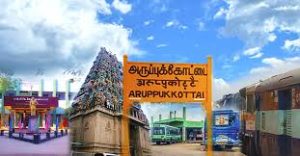
Aruppukkottai sits in the heart of Virudhunagar district — a land of dry fields, match factories, political memory and unforgiving electoral arithmetic. If this belt once defined the rise of giants like Kamaraj from neighbouring Virudhunagar, Aruppukkottai carries the same stern political temperament: practical, caste-aware, development-driven and rarely sentimental.
This is not coastal spectacle. Not temple-tourism grandeur.
This is industry in miniature and politics in focus.
Dry Plains, Hard Enterprise
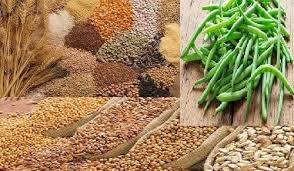
Aruppukkottai lies in the semi-arid stretch of southern Tamil Nadu. Rainfall is uncertain; agriculture depends heavily on borewells and tanks. Cotton, pulses and millets dominate cropping patterns, while livestock rearing supplements income.
But the constituency’s defining economic signature lies beyond fields — in small-scale industry. The wider Virudhunagar district is synonymous with match and fireworks industries, and Aruppukkottai shares in that industrial culture through ancillary units, trading networks and labour movement.
Entrepreneurship here is not flamboyant. It is frugal and persistent.
Temples and Town Identity

Religious life centres around local Amman temples and Murugan shrines that anchor the town’s calendar. The Sri Mariamman Temple and surrounding shrines host annual festivals marked by processions, folk drumming and communal feasts.
Village deities such as Karuppasamy and Ayyanar guard settlement edges. Fire-walking rituals and temple car festivals reinforce social cohesion across caste lines.
Temple grounds here double as civic discussion arenas during campaign season.
Faith and franchise intersect naturally.
Kamaraj’s Shadow Across Virudhunagar
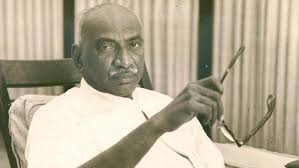
Though Kamaraj’s iconic defeat in 1967 occurred in neighbouring Virudhunagar, the political ethos of that event echoes across the district. The fall of a Chief Minister at the hands of a young student candidate reshaped Tamil Nadu’s political trajectory.
Aruppukkottai, sharing that district lineage, inherits the memory of how swiftly voter sentiment can turn — how even stalwarts can be tested.
In this district, political reverence is always conditional.
Roads, Markets and Labour Flow
Aruppukkottai connects to Madurai, Sivakasi and Virudhunagar through arterial roads that sustain trade and labour mobility. Daily wage earners commute across district lines. Transport infrastructure therefore carries economic weight.
Weekly vegetable markets and textile trading points animate the town centre. Small traders and workshop owners form influential voter blocs.
In Aruppukkottai, commerce is compact but constant.
The Electoral Ledger:
Aruppukkottai has experienced competitive contests with shifting margins.
2011
Winner: Vaigaichelvan (AIADMK) — 83,487 votes
Second: K. K. S. S. R. Ramachandran (DMK) — 72,181 votes
Third: M. Ramesh (DMDK) — 23,908 votes
Margin: 11,306 votes
2016
Winner: K. K. S. S. R. Ramachandran (DMK) —81485 votes
Second: Vaigaichelvan (AIADMK) — 63431 votes
Third: Senthil kumar S (CPI) — 9817 votes
Margin: 18054 votes
2021
Winner: K. K. S. S. R. Ramachandran (DMK) — 91040 votes
Second: Vaigaichelvan (AIADMK) — 52,006 votes
Third: Uma(Naam Tamilar Katchi) — 12,392votes
Margin: 39,034 votes
A decisive swing under alliance consolidation.
Ramachandran’s victory also carried district-level weight, given his senior political stature and cabinet association in subsequent government formation.
Aruppukkottai does not resist change; it registers it clearly.
Civic Demands and Industrial Safety
Key issues include:
Industrial safety norms in small-scale units.
Drinking water supply in summer months.
Road maintenance for heavy vehicle movement.
Employment stability in ancillary industries.
In a region accustomed to fireworks and match production risks, safety and regulation are not abstract policy matters. They are lived concerns.
Governance here must balance productivity with protection.
Folk Traditions and Pongal Pulse
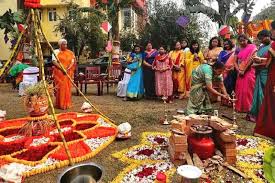
Pongal celebrations in Aruppukkottai retain strong rural texture. Cattle decoration, kolam competitions and temple gatherings reinforce agrarian continuity despite industrial diversification.
Village theatre performances and seasonal fairs animate evenings.
Youth sports tournaments draw participation from surrounding hamlets.
Cultural continuity steadies economic fluctuation.
Cuisine and Regional Taste
Southern Tamil Nadu flavours dominate — spicy gravies, kari kuzhambu, parotta stalls near bus stands and jaggery-based sweets during festivals.
Food here is bold, efficient and rooted in labour-intensive routines.
What Decides Here
Three determinants shape Aruppukkottai’s electoral direction:
Industrial Livelihood Stability.
Safety, wages and production cycles influence voter mood.
Water Assurance.
Dry belt anxieties remain constant.
District-Level Leadership Influence.
Senior political figures sway margin consolidation.
Aruppukkottai’s electorate is pragmatic. It votes for deliverables, not declarations.
Closing Frame
Match factories hum quietly in side streets. Temple drums echo during festival nights. Buses depart toward Madurai at dawn. Traders gather over tea discussing crop prices and campaign rumours.
Aruppukkottai stands as a constituency of spark and steadiness — industrial yet agrarian, cautious yet decisive.
When it votes, it does so with the discipline of a matchstick maker — precise, measured and aware that a small spark can alter the larger flame.
In Aruppukkottai, mandate is struck carefully — and it burns clearly.