

Coimbatore (North): Engines, Enterprise and the Western Battleground

- Tamil
- Hindi
- Malayalam
- Kannada
- Telugu

Constituency No. 118 | Coimbatore District | General
Coimbatore (North) is not merely an Assembly segment; it is a nerve centre of western Tamil Nadu’s industrial will and ideological contest. Located within Tamil Nadu’s second-largest city, this constituency blends textile wealth, engineering precision, temple tradition and an increasingly assertive urban middle class.
If Chennai shapes the state’s administrative pulse, Coimbatore shapes its industrial heartbeat. And Coimbatore (North) is one of its most watched battlegrounds.
Here, mandate is measured in machinery hum and micro-level mobilisation.
Manchester of the South — Urban Core
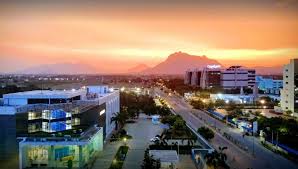
Coimbatore’s identity as the “Manchester of South India” rests on textile mills, pump manufacturing units, foundries and engineering clusters. Coimbatore (North) includes residential neighbourhoods, educational institutions, commercial corridors and industrial pockets that feed into this larger ecosystem.
The constituency benefits from proximity to major arterial roads and rail lines. Its voters include industrialists, traders, skilled labourers, IT professionals and students. Economic cycles — export orders, raw material prices, MSME credit flows — subtly influence political mood.
When industry thrives, confidence rises. When markets tighten, scrutiny sharpens.
Temple Tradition and Civic Identity
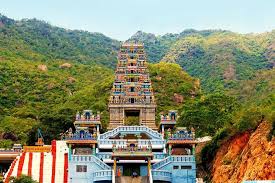
Spiritual life remains central. The nearby Marudamalai Murugan Temple, perched on a hill overlooking the city, shapes regional devotional culture. Though technically outside the precise constituency limits, its spiritual gravity permeates Coimbatore North’s social landscape.
Urban temples, Vinayagar shrines and Mariamman temples dot residential zones. Festival processions during Vinayaka Chaturthi and Panguni draw significant participation. Coimbatore’s culture is disciplined, devotional and distinctly Kongu.
Industry does not eclipse identity here; it coexists with it.
Educational and Entrepreneurial Hub

Coimbatore houses prominent engineering colleges, arts and science institutions and training centres. Students form a visible voter cohort. Startup ventures and MSME networks drive entrepreneurial discourse.
Policy conversations here often revolve around:
Industrial power tariffs.
GST impact on small units.
Ease of doing business.
Urban infrastructure expansion.
This is an electorate attuned to policy detail.
Electoral Ledger:
Coimbatore (North) has been a politically sensitive seat reflecting western Tamil Nadu’s strategic significance.
2011
Winner: S. P. Velumani (AIADMK) — 1,14,803 votes
Second: K. R. Ramasamy (DMK) — 78,421 votes
Third: R. Prakash (DMDK) — 28,934 votes
Margin: 36,382 votes
2016
Winner: Arun Kumar PRG (AIADMK) — 77540 votes
Second: S.Meenalogu (DMK) — 69816 votes
Third: Kannan Alias S.Devaraj (BJP) — 16741 votes
Margin: 7724 votes
2021
Winner: Amman K. Arjunan (AIADMK)-81,454 votes
Second: Shanmugasundaram V.M(DMK) — 77,453 votes
Third: Thangavelu R (MNM) — 26,503 votes
Margin: 4001 votes
The contest tightened sharply, reflecting multi-cornered competition and ideological crosscurrents in Coimbatore city.
Coimbatore (North) remains one of the western region’s most closely watched seats, given its role in broader ideological contestation.
Ideological Crossroads
Unlike many rural constituencies, Coimbatore city has seen visible presence of multiple political currents beyond the Dravidian binary. Organised cadre structures, religious mobilisation patterns and national political influences intersect here.
Urban voters in Coimbatore (North) weigh industrial growth, infrastructure expansion and ideological alignment simultaneously.
The seat is not predictable; it is layered.
Civic Demands and Urban Infrastructure
Key issues include:
Traffic congestion and flyover completion.
Drinking water augmentation.
Solid waste management in expanding residential zones.
Industrial electricity reliability.
Stormwater drainage performance during heavy rains has gained importance in recent years.
Urban voters here demand efficiency, not emotion.
Kongu Discipline and Booth Strategy
Western Tamil Nadu is known for booth-level organisational precision. Coimbatore (North) reflects that discipline. Campaigns here rely on micro-level voter outreach, industrial association networks and community groups.
Margins are often shaped by turnout efficiency rather than rhetorical spectacle.
This is electoral arithmetic in motion.
Cuisine and Kongu Identity

Coimbatore’s culinary identity reflects Kongu cuisine — arisi paruppu sadam, kola urundai, coconut-rich gravies and pepper-seasoned dishes. Upscale restaurants and modern cafés coexist with traditional eateries serving textile workers and students.
Food culture here mirrors economic diversity.
Economic Nerve Centre
MSMEs, pump manufacturers, auto-component workshops and textile exporters define employment patterns. Policy shifts affecting GST compliance, credit access and export incentives resonate directly.
Coimbatore (North) voters listen carefully when economic policy is discussed.
This is not an audience for slogans alone.
What Decides Here
Three determinants shape Coimbatore (North)’s trajectory:
Industrial Confidence.
Employment stability and MSME health influence sentiment.
Urban Infrastructure Delivery.
Traffic, drainage and water management carry electoral weight.
Organisational Precision.
Turnout management can tilt tight contests.
Coimbatore (North) does not drift passively; it calibrates.
Closing Frame
Factory sirens echo at dawn. Temple bells ring at dusk. Lorries move toward export hubs. College students gather in cafés debating policy and prospects.
Coimbatore (North) stands at the confluence of enterprise and ideology — a constituency where machines hum,
markets move and mandates are measured carefully.
When it votes, it does so with the discipline of an engineer — precise, calculated and attentive to performance.
In Coimbatore (North), mandate is manufactured — through organisation, aspiration and industrial confidence.