

Dharmapuri: Kottai Temple, Crops and the Northern Crossroads

- Tamil
- Hindi
- Malayalam
- Kannada
- Telugu

Constituency No. 52 | Dharmapuri District | General
Dharmapuri stands at the northern threshold of Tamil Nadu — where granite hills frame highways, where mango orchards stretch toward the horizon, and where temple towers rise above market bustle. It is a constituency of agriculture and administration, of pilgrim routes and political recalibration.
Named for dharma — righteousness — Dharmapuri has often reflected that sobriety in its verdicts: structured, competitive and rarely impulsive.
This is not a constituency of spectacle. It is one of grounded balance.
Temple and Town Centre
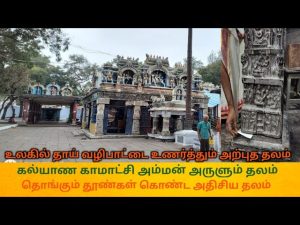
At the heart of Dharmapuri town lies the ancient Kottai Kalyana Kamakshi Amman Temple, commonly known as the Kottai Temple. The temple complex, with its granite architecture and fortified surroundings, anchors the town’s religious life.
Nearby shrines and neighbourhood temples dot the constituency, while mosques and churches reflect its layered social fabric. Temple festivals animate market streets, blending devotion and commerce.
Dharmapuri’s sacred geography remains central to its civic rhythm.
Water and the Hogenakkal Axis

Though the famed Hogenakkal Falls lies within the broader district geography, its presence shapes the constituency’s identity. The roaring Cauvery at Hogenakkal — often called the “Niagara of India” — attracts tourists year-round and sustains local livelihoods through coracle rides and small trade.
Closer to town, irrigation tanks and the Cauvery’s distributaries influence agricultural belts. Water supply schemes drawing from the river system have been central to regional planning debates.
In Dharmapuri, water is both spectacle and sustenance.
Mango and Market

Dharmapuri district is one of Tamil Nadu’s leading mango producers, and the constituency reflects this horticultural prominence. During harvest season, trucks laden with crates line roadside markets.
Mango cultivation — along with paddy and groundnut — forms the agricultural backbone. Price stability, transport access and cold storage capacity influence farmer sentiment.
Agrarian economics here is seasonal but decisive.
Rail and Road Junction
Dharmapuri town sits along key highway corridors connecting Bengaluru, Salem and Krishnagiri. The railway line linking Salem to Bengaluru passes through the district, with Dharmapuri railway station serving as a local hub.
This positioning as a transit node influences trade and mobility. Infrastructure upgrades along highways have altered commercial patterns.
Movement here is constant.
The Electoral Ledger:
Dharmapuri’s recent contests reflect northern Tamil Nadu’s competitive alignment.
2011
Winner: K. P. Anbalagan (AIADMK) — 1,03,827 votes
Second: K. Thamizharasan (DMK) — 81,234 votes
Third: S. Rajendran (DMDK) — 26,874 votes
Margin: 22,593 votes
2016
Winner: Subramani P (DMK) — 71056 votes
Second: Elangovan P D (ADMK) — 61380 votes
Third: Senthil R. DR (PMK) — 56727 votes
Margin: 9676 votes
2021
Winner: S. P. Venkateshwaran (PMK) — 1,05,630 votes
Second: P.Subramani (DMK) — 78,770 votes
Third: Rajendiran D.K (AMMMK) — 11226 votes
Margin: 26,860 votes
The axis shifted again, with a widened margin.
Dharmapuri alternates within structured bipolar competition. Third candidates register presence but rarely disruption.
Northern Social Texture
Northern Tamil Nadu carries layered caste alignments and political traditions distinct from delta or Kongu belts. Dharmapuri reflects that complexity. Organisational depth and local leadership credibility often determine margin width.
Campaigns here are ground-intensive. Voter engagement relies on direct outreach rather than spectacle.
Dharmapuri listens before it leans.
Education and Administration
As district headquarters, Dharmapuri houses government offices, courts and educational institutions. Administrative employment and public sector presence influence middle-class segments.
Healthcare infrastructure, especially access to government hospitals, remains a priority in surrounding rural belts.
Administrative visibility matters here.
Cuisine and Cultural Note
Dharmapuri’s culinary identity aligns with northern Tamil Nadu traditions — ragi kali, mango-based dishes during harvest season and pepper-spiced gravies. Mango pulp and pickles become seasonal staples.
While not branded like Ambur biriyani or Arcot sweets, mango remains Dharmapuri’s edible signature.
Civic Priorities
Recurring public themes include:
Irrigation stability and tank restoration.
Mango market support and transport facilitation.
Highway safety and road maintenance.
Drinking water distribution during peak summer.
Flood and drought cycles both influence public perception.
In Dharmapuri, governance is measured by preparedness.
What Decides Here
Three determinants shape Dharmapuri’s electoral direction:
Agrarian Confidence.
Mango and paddy stability influence margins.
Organisational Discipline.
Tight races demand booth precision.
Administrative Delivery.
District headquarters status raises expectations.
Dharmapuri does not swing casually. It recalibrates when conditions demand.
Closing Frame
Temple bells ring from Kottai precincts. Mango orchards glow under summer sun. The Cauvery roars at Hogenakkal beyond granite outcrops. Highways hum with traffic toward Bengaluru and Salem.
Dharmapuri stands as northern Tamil Nadu’s agrarian crossroads — rooted, resilient and politically attentive.
When it casts its ballot, it does so with the steadiness of orchard cycles and river flow.
And in that steadiness lies its mandate.