

Kolathur: Stalin’s Stronghold and the Urban Crucible of Chennai Politics

- Tamil
- Hindi
- Malayalam
- Kannada
- Telugu
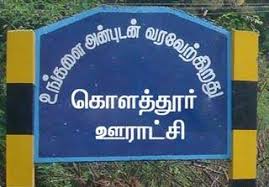
Constituency No. 13 | Chennai District | General
Kolathur is one of the most politically significant constituencies in Tamil Nadu. Situated in North Chennai, it represents a dense urban landscape of residential colonies, commercial streets, transport corridors and working-class neighbourhoods.
Yet its political importance goes far beyond geography. Kolathur has become synonymous with M. K. Stalin, the leader of the Dravida Munnetra Kazhagam and Chief Minister of Tamil Nadu.
Since the constituency emerged in its present form after electoral delimitation, Stalin has represented it in the Assembly elections of 2011, 2016 and 2021, turning Kolathur into one of the most recognisable political strongholds in the state. What was once an ordinary urban constituency has thus become a measuring ground for leadership, governance and electoral strength.
In Kolathur, local civic issues intersect with statewide political symbolism.
From Delimitation Seat to Political Citadel

Kolathur is a relatively new constituency in administrative terms. The present electoral boundaries took shape following delimitation, bringing together neighbourhoods that form part of Chennai’s northern residential belt.
espite its newness, the seat quickly gained prominence when M. K. Stalin chose to contest here.
His victory in 2011, achieved in a year when the DMK faced significant electoral setbacks statewide, gave Kolathur immediate political weight.
From that point onward, the constituency became closely associated with Stalin’s leadership journey.
For the DMK organisation, Kolathur evolved into a symbol of resilience and continuity.
Stalin’s Political Journey
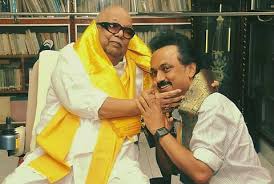
M. K. Stalin’s political career spans several decades. Beginning as a youth organiser within the DMK, he gradually built his reputation through organisational work and administrative roles.
His tenure as Mayor of Chennai during the late 1990s marked an important stage in his career, when civic improvements and urban initiatives enhanced his administrative profile.
He later served as minister and Deputy Chief Minister in the state government before eventually assuming leadership of the DMK following the passing of his father, the former Chief Minister M. Karunanidhi.
Kolathur became the constituency through which Stalin consolidated his electoral mandate and eventually ascended to the office of Chief Minister.
For many DMK supporters, the seat symbolises the transition from Karunanidhi’s era to Stalin’s leadership.
Campaign Presence and Family Support

Election campaigns in Kolathur have often drawn attention because of Stalin’s stature in Tamil Nadu politics. Campaign activities here typically involve large gatherings, door-to-door outreach and extensive local engagement.
Members of Stalin’s family, including his wife Durga Stalin, have also been visible during election campaigns, interacting with voters and supporting party workers. Such participation reflects the importance attached to the constituency by the party leadership.
Kolathur is therefore not merely another campaign stop; it is a constituency where organisational strength is demonstrated visibly.
Urban Landscape and Daily Realities

Kolathur reflects the realities of rapidly expanding urban Chennai. The constituency consists of densely populated residential areas, markets, transport corridors and educational institutions.
Residents face the familiar challenges of metropolitan life — traffic congestion, drainage issues during monsoon rains, pressure on drinking water supply and the need for improved civic infrastructure.
Urban planning and municipal governance therefore play a major role in shaping political debate in the constituency.
Kolathur’s electorate expects visible improvements in roads, drainage systems, parks, schools and public services.
Neighbourhood Temples and Community Networks
Although strongly urban in character, Kolathur maintains vibrant neighbourhood temple traditions. Vinayagar temples, Amman shrines and Murugan temples serve as focal points for community gatherings and annual festivals.
Such festivals strengthen neighbourhood networks and create opportunities for civic participation. Political leaders often interact with residents during these events, reinforcing local engagement.
Community institutions and resident associations also influence discussions on civic improvements.
Electoral Ledger:
Kolathur’s electoral history reflects Stalin’s growing political stature.
2011
Winner: M. K. Stalin (DMK) — 68,677 votes
Second: Saidai Duraisamy (AIADMK) — 65,943 votes
Third: R. Rajendran (DMDK) — 20,341 votes
Margin: 2,734 votes
2016
Winner: M. K. Stalin (DMK) — 91,303 votes
Second: J. C. D. Prabhakar (AIADMK) — 53573 votes
Third: Mathivanan P (DMDK) — 6276 votes
Margin: 37730 votes
2021
Winner: M. K. Stalin (DMK) — 1,05,522 votes
Second: Adhi Rajaram (AIADMK) — 35,138 votes
Third: A.Jagadeshkumar (MNM) — 14,210 votes
Margin: 70,384votes
This decisive victory coincided with Stalin’s ascent as Chief Minister of Tamil Nadu.
Across three elections, Kolathur has thus evolved from a competitive urban seat into a formidable political stronghold.
Civic Improvements and Development
Urban development initiatives in the constituency have focused on improving road infrastructure, drainage systems, public parks, schools and welfare facilities.
Housing schemes, educational infrastructure and local amenities form key components of governance expectations among residents.
As a major political constituency in Chennai, Kolathur often receives attention during state development initiatives aimed at strengthening urban infrastructure.
The electorate closely evaluates whether improvements are visible in daily life.
Political Temperament
Kolathur voters represent a cross-section of Chennai society — government employees, small business owners, workers, students and professionals.
Political mobilisation relies heavily on booth-level organisation, local networks and continuous interaction with residents.
Urban voters here tend to evaluate governance performance carefully.
Kolathur’s verdict therefore reflects both political loyalty and practical expectations.
What Decides Kolathur
Three factors usually shape electoral outcomes:
Urban infrastructure delivery
Roads, drainage and civic services matter deeply.
Leadership credibility
The stature and administrative record of candidates influence voter perception.
Party organisation
Strong grassroots networks remain crucial in a densely populated constituency.
Kolathur’s electorate weighs both leadership and local governance.
Closing Frame
Morning traffic flows through Kolathur’s busy streets while markets open and buses carry commuters across Chennai. Temple bells ring in neighbourhood shrines as schools and offices begin their day.
Kolathur is a constituency shaped by everyday urban realities — drainage lines, roads, housing blocks and crowded streets.
Yet it is also a place where Tamil Nadu’s political history has taken decisive turns.
When Kolathur votes, the verdict carries significance far beyond its boundaries.