

Kovilpatti: Matchsticks, Cadbury Chocolate and the Industrial Pulse of Southern Tamil Nadu

- Tamil
- Hindi
- Malayalam
- Kannada
- Telugu

Constituency No. 218 | Thoothukudi District | General
Kovilpatti stands out in southern Tamil Nadu as a town where industry grew out of dryland ingenuity. Located between the commercial centres of Madurai and Thoothukudi, the constituency is known for its match factories, firecracker units, peanut candy stalls and one of India’s most recognisable chocolate manufacturing plants.
What began as a modest trading settlement in the black-soil belt of the south gradually transformed into an industrial town with a distinctive economic character.
Yet Kovilpatti is not merely an industrial hub. Surrounding villages depend on rain-fed agriculture, while temple traditions and rural festivals continue to shape local identity.
The constituency therefore combines two different worlds — factory sirens in town and farming rhythms in nearby villages.
In Kovilpatti, the politics of labour, enterprise and rural livelihood intersect.
Match Industry Capital
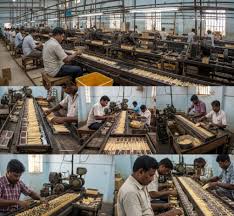
Kovilpatti earned its reputation through the match industry that flourished in the twentieth century. Hundreds of small units produced matchboxes that travelled across India. The industry provided employment to thousands of workers, especially women, and turned the town into a major manufacturing centre.
Although mechanisation and changing markets have reduced the number of units over time, the legacy of the match industry still defines the town’s economic memory. Even today, small workshops and associated businesses remain active.
Industrial labour issues, wages and safety regulations have often influenced political discussions in the constituency.
Chocolate Factory Landmark

Another widely known landmark of Kovilpatti is the chocolate manufacturing plant operated by Cadbury, which has functioned in the town for decades. The factory has become a symbol of modern industry in an otherwise dry agrarian landscape.
The presence of the plant created employment opportunities and strengthened the town’s reputation as a manufacturing centre. For many residents, the factory represents a link between the local economy and global consumer markets.
Industrial employment therefore remains an important aspect of Kovilpatti’s economic life.
Kadalai Mittai and Local Flavour

Kovilpatti is equally famous for its kadalai mittai, a traditional peanut candy made from roasted groundnuts and jaggery. Vendors selling neatly cut brown slabs of this sweet can be found across the town’s streets and bus stands.
The snack has become synonymous with Kovilpatti’s identity and is often purchased by travellers passing through the region. It reflects the agricultural roots of the area, where groundnut cultivation has long been common.
Cuisine here carries the taste of local fields.
Dryland Agriculture
The countryside around Kovilpatti lies within a semi-arid belt where rainfall is limited and agriculture depends heavily on monsoon patterns. Farmers cultivate millets, cotton, pulses and groundnut depending on seasonal conditions.
Water scarcity remains a persistent concern. Borewells and irrigation tanks support cultivation where possible, but uncertain rainfall often affects crop yields.
Agriculture therefore remains an important issue in the constituency’s political discourse.
In Kovilpatti, farmers watch the skies with the same attention they give to elections.
Temples and Rural Traditions

Religion and temple festivals play a vital role in the cultural life of the constituency. Village Amman temples and Murugan shrines host annual festivals that bring together residents from neighbouring areas.
One of the prominent spiritual landmarks in the region is the Kazhugumalai Murugan Temple, located within reach of the constituency. The temple hill, with its rock-cut architecture and historical significance, attracts devotees and visitors from across southern Tamil Nadu.
Temple festivals often feature traditional music, folk dances and communal feasts, reinforcing community ties.
Faith remains woven into everyday life.
Electoral Ledger:
Kovilpatti has witnessed closely fought electoral contests reflecting the political diversity of southern Tamil Nadu.
2011
Winner: Kadambur Raju C. (AIADMK) — 86,316 votes
Second: S. Srinivasan (DMK) — 74,989 votes
Third: T. Radhakrishnan (DMDK) — 25,874 votes
Margin: 11,327 votes
2016
Winner: Kadambur Raju C. (AIADMK) — 64514 votes
Second: A. Subramanian (DMK) — 64086 votes
Third: Vinayaka Ramesh (MDMK) — 28512 votes
Margin: 428 votes
2021
Winner: Kadambur Raju C. (AIADMK) — 68,556 votes
Second: T.T.V. Dinakaran (AMMK)— 56,153 votes
Third: K.Srinivasan (CPI) — 37,380 votes
Margin: 12,403 votes
Alliance shifts reshaped the constituency’s political alignment.
Civic and Development Concerns
Residents frequently raise issues such as:
Drinking water supply in a drought-prone region.
Infrastructure for small industries and workers.
Road connectivity for agricultural transport.
Employment opportunities for youth.
Industrial revival and water management remain key political priorities.
Political Temperament
Kovilpatti voters combine industrial labour interests with rural agricultural concerns. Factory workers, small traders and farmers all influence electoral outcomes.
Campaigns often revolve around employment generation, industrial support and water security.
The electorate values practical governance over rhetorical promises.
What Decides Kovilpatti
Three factors typically influence election results:
Industrial employment
Factory stability affects urban voters.
Agricultural conditions
Rainfall and crop prices shape rural sentiment.
Alliance dynamics
Coalition politics influence vote margins.
Kovilpatti’s verdict often reflects both economic and political currents.
Closing Frame
Factory whistles echo through Kovilpatti’s industrial streets while vendors sell kadalai mittai at busy bus stands. Farmers work dry fields beyond the town as temple bells ring during evening prayers.
Kovilpatti represents the resilience of southern Tamil Nadu — a constituency where industry, agriculture and tradition combine to shape political choices.
When Kovilpatti votes, the verdict reflects the energy of a town built on enterprise.