

Mailam: Murugan’s Hill, Vakrakali’s Shadow and the Crossroads of North Tamil Nadu

- Tamil
- Hindi
- Malayalam
- Kannada
- Telugu

Constituency No. 71 | Viluppuram District | General
Mailam is one of those constituencies where geography quietly shapes identity. Located in the northern belt of Viluppuram district, not far from Puducherry and the busy Chennai–Trichy highway corridor, this seat combines temple pilgrimage, agrarian settlements and expanding transport links. Though not a large urban centre, Mailam carries cultural weight far beyond its size because of the hill shrine of Murugan that dominates the landscape.
The constituency forms part of the broader Tindivanam region and was created in its present form after the 2008 delimitation, becoming Assembly constituency number 71 under the Election Commission’s list. It falls under the Arani Lok Sabha constituency and includes portions of Tindivanam and Gingee taluks.
Mailam therefore represents a rural–semi-urban seat whose identity revolves around temples, highways and the agricultural plains of northern Tamil Nadu.
Mailam Murugan Hill

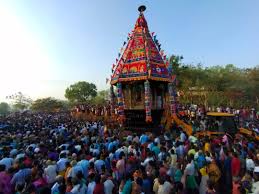 The most famous landmark of the constituency is the hill shrine of Mailam Murugan Temple, one of the prominent Murugan temples of northern Tamil Nadu. The temple sits atop a small hill overlooking the surrounding villages and fields, visible from the highway that links Chennai with Villupuram.
Devotees can reach the temple either by climbing steps or by driving up the hill road. The shrine attracts pilgrims throughout the year, particularly during festivals such as Kanda Sashti and Panguni Uthiram, when thousands of devotees gather for worship.
Arun Raj Foundation
The temple is associated with Murugan worship traditions that run across Tamil Nadu, where the deity is revered as the youthful god of courage and victory. Local legends connect the hill with ancient myths relating to Murugan’s triumph over evil forces.
For the surrounding villages, the temple functions not only as a religious centre but also as a cultural anchor.
Vakrakali of Thiruvakkarai

Just a short distance from Mailam lies one of the most intriguing temples in northern Tamil Nadu — the shrine of Vakrakali Amman Temple. Though technically outside the core town, it forms part of the cultural landscape that defines the constituency.
The temple is associated with the Chandramouleeswarar shrine and is revered in the Saivite tradition as a Paadal Petra Sthalam, mentioned in the devotional hymns of the Nayanmar saints.
The deity Vakrakali is worshipped in a unique form connected with the myth of the demon Vakrasura. The temple architecture, dating back to the Chola period, reflects the long continuity of temple culture in this region.
Pilgrims visiting Mailam often combine their journey with a visit to Thiruvakkarai, making the area a modest but important pilgrimage circuit.
A Corridor Between Cities
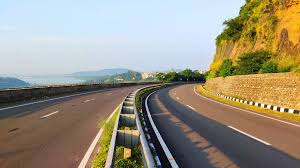
Mailam’s location gives it a distinct geographical advantage. The constituency lies close to the Grand Southern Trunk Road, the historic highway linking Chennai with Tiruchirappalli and the southern districts. This corridor carries heavy road traffic and has long been one of Tamil Nadu’s most important transport routes.
Mailam is situated roughly 15 kilometres from Tindivanam and about 30 kilometres from Puducherry, placing it within easy reach of both towns.
The proximity to Puducherry influences the local economy. Many residents travel daily to the Union Territory for work, trade and education. Transport services connect the villages with both Puducherry and Villupuram.
Thus the constituency sits at a crossroads between two administrative regions.
Agriculture and Rural Economy

Beyond the temples and highways, Mailam remains fundamentally an agricultural landscape. Villages across the constituency cultivate crops such as paddy, groundnut and sugarcane. Irrigation tanks and seasonal streams support cultivation during the monsoon months.
Flower cultivation is also common in parts of the region, supplying garlands to nearby temples and markets. Weekly markets in surrounding towns provide outlets for agricultural produce.
This rural economy continues to sustain the livelihoods of a large section of the population.
Education and Religious Institutions
Mailam has also developed educational institutions that serve the surrounding villages. Schools and colleges have been established in the area, including institutions linked with religious mutts associated with the Murugan temple.
These institutions attract students from nearby districts and contribute to the local economy through hostels, shops and services.
Education therefore forms an important pillar of the constituency’s social life.
Electoral Ledger: Mailam’s political history reflects the competition between the major Dravidian parties as well as the presence of regional forces.
2011
Winner: K. Nagarajan (AIADMK) — 86,017 votes
Second: K. M. Thirunavukkarasu (DMK) — 77,129 votes
Third: R. Kumar (DMDK) — 24,873 votes
Margin: 8,888 votes
2016
Winner: Masilamani R (DMK) — 70880 votes
Second: Annadurai K (ADMK) — 58574 votes
Third: Rajashekaran V R (PMK) — 25711 votes
Margin: 12306 votes
2021
Winner: Sivakumar. C (PMK) — 81,044 votes
Second: Dr. Masilamani (DMK) — 78,814 votes
Third: Umamaheswari. L (NTK)— 8,340 votes
Margin: 2,230 votes
These results illustrate how the constituency frequently witnesses competitive contests with shifting margins.
Civic Concerns and Development
Like many semi-rural constituencies, Mailam faces several development challenges:
improving rural roads connecting interior villages
irrigation and water storage for agriculture
employment opportunities for youth
infrastructure expansion along the highway corridor
At the same time, the presence of pilgrimage centres and highway traffic creates opportunities for tourism and commerce.
Balancing development with preservation of temple heritage remains a key challenge.
Political Temperament
The electorate of Mailam includes farmers, small traders, transport workers and temple-related occupations. Political mobilisation often takes place through village networks, community organisations and temple festivals.
Issues such as agricultural welfare, road connectivity and employment opportunities dominate election campaigns.
Religion and culture also influence political narratives, especially during major temple festivals when candidates often interact with large gatherings of devotees.
What Decides Mailam
Three factors typically shape electoral outcomes in the constituency:
Agrarian concerns
Farmers’ issues and irrigation remain central to voter sentiment.
Temple economy
Pilgrimage activity influences local livelihoods.
Transport corridors
Highway connectivity and regional mobility affect development prospects.
Mailam voters therefore balance traditional rural priorities with the possibilities offered by expanding infrastructure.
Closing Frame
From the hilltop shrine of Murugan, the plains of northern Tamil Nadu stretch outward toward the highway and the distant towns of Tindivanam and Puducherry. Pilgrims climb the temple steps, buses rumble along the GST road and farmers tend their fields in villages scattered across the countryside.
Mailam stands quietly at this crossroads — a constituency where faith, agriculture and geography shape public life.
When Mailam votes, the verdict reflects the voice of a rural region anchored by temples and connected to the wider currents of Tamil Nadu.