

Manamadurai: Vaigai Plains, Potters’ Kilns and the Gateway to Ramanathapuram

- Tamil
- Hindi
- Malayalam
- Kannada
- Telugu

Constituency No. 187 | Sivaganga District | Scheduled Caste (Reserved)
Manamadurai sits on the historic corridor that links Madurai with the Ramanathapuram coast and the pilgrimage island of Rameswaram. Located along the banks of the Vaigai river in Sivaganga district, the constituency combines fertile agricultural villages, traditional craft settlements and an important transport junction that has served travellers for generations.
Though quieter than the bustling temple city to its west, Manamadurai has long been known for two distinctive features: its pottery craft and its strategic location on the Madurai–Rameswaram route. Clay pots produced here have travelled across Tamil Nadu, while trains and buses passing through the town carry pilgrims and traders toward the eastern coast.
Manamadurai therefore represents a constituency where craft traditions, agriculture and transport routes come together in a landscape shaped by the Vaigai river.
Gateway on the Rameswaram Road

Manamadurai occupies a key position on the historic route from Madurai to Rameswaram, one of the most important pilgrimage journeys in Tamil Nadu. Travellers heading toward the sacred island town of Rameswaram traditionally passed through this belt of villages before continuing eastward across Ramanathapuram district.
The town’s railway junction strengthened this role. Lines branching toward Rameswaram and Karaikudi meet here, making Manamadurai an important node in the railway network of southern Tamil Nadu. Pilgrims, traders and passengers travelling between interior districts and the coast often change trains at this station.
Because of this position, the constituency has always maintained a strong connection with the wider transport geography of the region.
The Vaigai River Landscape

The Vaigai river flows close to Manamadurai, shaping the agricultural character of the constituency. Though the river’s flow varies depending on monsoon conditions and upstream releases, it has historically supported cultivation in surrounding villages.
Farmers in the region cultivate crops such as paddy, millets, pulses and groundnut depending on seasonal rainfall and irrigation availability. Tanks and canals linked to the Vaigai system help sustain agriculture across parts of the constituency.
The presence of the river has therefore influenced settlement patterns and rural livelihoods for generations.
Even today, the Vaigai remains a defining feature of Manamadurai’s landscape.
Manamadurai’s Famous Clay Pots
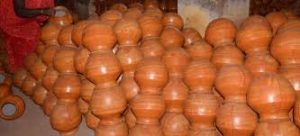
Perhaps the most distinctive cultural identity of the constituency lies in its traditional pottery craft. Manamadurai clay pots, known locally as manpaanai, have earned recognition across Tamil Nadu for their durability and distinctive reddish colour.
Potters in the town and surrounding villages shape these vessels using locally available clay. The pots are fired in kilns and then transported to markets across the state where they are used for cooking, storing water and preparing traditional dishes.
In earlier decades, clay vessels from Manamadurai were widely used in households and restaurants before metal and plastic utensils became common. Even today the craft survives, supported by cultural preference for earthen cookware and traditional culinary practices.
The pottery trade therefore remains an important symbol of the constituency’s artisanal heritage.
Temples and Sacred Traditions

Religion continues to shape the cultural landscape of Manamadurai’s villages. Numerous temples dedicated to Shiva, Amman and Murugan serve as centres of local devotion and community gatherings.
One of the prominent shrines in the town is the Anjaneya Temple, visited by devotees seeking blessings for strength and protection.
The wider region also lies close to several historically important Saivite temples, including the ancient shrine at Pushpavaneswarar Temple, a Paadal Petra Sthalam celebrated in the devotional hymns of the Nayanmar saints. Pilgrims travelling through Manamadurai often visit these nearby temples, linking the constituency to the larger sacred geography of the Vaigai basin.
Temple festivals in the villages feature processions, music and community feasts that reinforce traditional bonds.
Agrarian Villages and Rural Life
Much of the constituency consists of rural settlements where agriculture remains the principal occupation. Farmers cultivate crops suited to the semi-arid conditions of Sivaganga district, including millets and pulses that require relatively less water.
Livestock rearing also supplements agricultural income, particularly in villages where grazing lands are available. Weekly markets allow farmers to sell produce and livestock to traders from nearby towns.
Village life revolves around agricultural cycles, temple festivals and local community institutions.
Despite gradual modernisation, Manamadurai retains a distinctly rural character.
Electoral Ledger:
Manamadurai has witnessed closely fought electoral contests reflecting the political dynamics of southern Tamil Nadu.
2011
Winner: M. Gunasekaran (AIADMK) — 83,456 votes
Second: K. R. Periakaruppan (DMK) — 75,238 votes
Third: R. Kumar (DMDK) — 23,714 votes
Margin: 8,218 votes
2016
Winner: S. Mariappan Kennedy (AIADMK) — 89893 votes
Second: Chitra selvi S (DMK) — 75004 votes
Third: Deepa Anbalagan (VCK) — 7493 votes
Margin: 14889 votes
2021
Winner: Tamilarasi. A (DMK) — 89,364 votes
Second: S. Nagarajan (AIADMK) — 75,273 votes
Third: Shanmugapriya. M (Naam Tamilar Katchi) — 23,228 votes
Margin: 14,091 votes
The seat has therefore alternated between major Dravidian parties depending on statewide political currents.
Civic and Development Concerns
Residents of the constituency frequently highlight several development priorities:
improved irrigation facilities linked to the Vaigai river
support for traditional pottery artisans
road infrastructure connecting villages with Madurai and Sivaganga
employment opportunities for young people
Reviving traditional crafts while strengthening rural infrastructure remains an important challenge for policymakers.
Political Temperament
The electorate of Manamadurai includes farmers, pottery artisans, traders and transport workers. Political mobilisation often occurs through village networks and community organisations.
Issues such as agricultural welfare, rural employment and infrastructure development dominate election campaigns.
Local leadership and accessibility frequently influence voter preferences in this rural constituency.
What Decides Manamadurai
Three factors typically shape electoral outcomes:
Agriculture and water availability
Farmers’ livelihoods remain central to political sentiment.
Craft economy
Pottery artisans represent a unique occupational community.
Transport corridor
The Madurai–Rameswaram route influences trade and mobility.
Manamadurai voters therefore balance economic concerns with community interests when casting their ballots.
Closing Frame
At dawn in Manamadurai, potters prepare clay for the day’s work while farmers head toward their fields along the Vaigai plains. Trains halt at the junction carrying pilgrims bound for the eastern coast.
The constituency stands quietly on this ancient travel route, where craft traditions and rural life continue to endure.
When Manamadurai votes, the verdict reflects the voice of a region shaped by river, road and the enduring artistry of its people.