

Padmanabhapuram: Travancore’s Palace Capital, Temple Legacy and the Southern Gateway of Tamil Nadu
 By Nandhini
- Tamil
- Hindi
- Malayalam
- Kannada
- Telugu

Constituency No. 232 | Kanyakumari District | General
Padmanabhapuram is one of the most historically rich constituencies in Tamil Nadu. Located in the western part of Kanyakumari district close to the Kerala border, the town once served as the capital of the powerful Travancore kingdom. Even today the constituency carries the architectural and cultural imprint of that royal past.
Unlike many constituencies whose identity rests mainly on agriculture or trade, Padmanabhapuram derives much of its prestige from history. The extraordinary Padmanabhapuram Palace, one of the finest surviving wooden palace complexes in India, stands as a reminder of the days when Travancore kings governed the region from this seat of power.
The constituency also reflects the unique cultural blend of the Kanyakumari region — where Tamil traditions coexist with historical influences from Travancore and Kerala. Temples, churches and old royal buildings together shape the character of this historically layered landscape.
Capital of the Travancore Kingdom
Padmanabhapuram served as the capital of the Travancore kingdom from the 16th century until the late 18th century. The rulers of Travancore administered their territories from here before shifting the capital to Thiruvananthapuram.
During its time as the royal seat, the town developed administrative buildings, palace complexes and temples that reflected the architectural style of the region.
Even after the capital moved, Padmanabhapuram retained its symbolic importance as the historical centre of Travancore’s political power.
This legacy continues to shape the cultural identity of the constituency.
Padmanabhapuram Palace

The Padmanabhapuram Palace remains the most celebrated landmark of the constituency. Built primarily of wood and laterite, the palace complex represents a remarkable example of traditional Kerala-style architecture adapted to the climate of the region.
The palace contains several courtyards, audience halls and royal chambers. Intricately carved wooden pillars, polished floors and traditional murals illustrate the craftsmanship of the era.
Visitors walking through the palace corridors encounter structures such as the Mantrasala (council chamber), the king’s bedroom and open courtyards where royal ceremonies once took place.
Today the palace stands as one of the most important heritage monuments in southern India.
Temples of the Region
Padmanabhapuram and its surrounding areas contain several important temples that reflect the religious traditions of the region.
Among the prominent shrines nearby is the Thiruvattar Adikesava Perumal Temple, one of the revered Divya Desams dedicated to Lord Vishnu. This ancient temple is believed to predate the famous Padmanabhaswamy temple of Thiruvananthapuram and remains an important pilgrimage centre.
The region also contains numerous Amman and Shiva temples that host annual festivals and community gatherings.
Temple traditions therefore remain an important part of the cultural life of the constituency.
Churches & Cultural Diversity

Like much of Kanyakumari district, Padmanabhapuram reflects a diverse religious landscape. Churches and Christian institutions stand alongside temples across the constituency.
Missionary activity during the Travancore period contributed to the spread of education and social development in the region. Several schools and colleges established by Christian organisations continue to serve local communities.
This coexistence of religious traditions has long been a defining feature of the district.
Agriculture & Rural Economy
Beyond its historical landmarks, the constituency includes fertile agricultural villages where farmers cultivate crops such as coconut, banana, rubber and paddy.
The region benefits from relatively higher rainfall compared to many parts of Tamil Nadu due to its proximity to the Western Ghats.
Agriculture therefore continues to support the livelihood of many families across the constituency.
Tourism & Heritage Economy
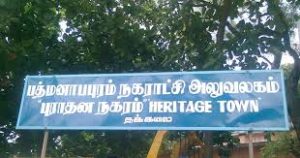
Tourism linked to Padmanabhapuram Palace forms an important part of the local economy. Visitors from across India come to explore the palace complex and nearby temples.
The town also serves as a gateway for travellers heading toward other attractions in Kanyakumari district.
Hotels, shops and local businesses benefit from the steady flow of tourists visiting the historic sites.
Heritage tourism thus provides an additional economic dimension to the constituency.
Electoral Ledger:
2011
Winner — Pushpa Leela Alban (DMK) — 73,145 votes
Runner-up — J. K. Kannan (AIADMK) — 69,874 votes
Third — S. Suresh (BJP) — 12,964 votes
Winning Margin — 3,271 votes
2016
Winner — Mano thangaraj (DMK) — 76249 votes
Runner-up — Rajendra prasad K P (AIADMK) — 35344 votes
Third — Sheeba Prasad S U (BJP) — 31994 votes
Winning Margin — 40905 votes
2021
Winner — Mano Thangaraj, T. (Dravida Munnetra Kazhagam – DMK) – 87,744 votes.
Runner-up — John Thankam, D. ( AIADMK) – 60,859 votes
Third — Seelan (Naam Tamilar Katchi – NTK) – 13,899 votes.
Winning Margin — 26885 votes
The constituency has seen strong contests involving national and regional parties due to the unique political dynamics of Kanyakumari district.
Civic and Development Concerns
Residents frequently highlight several development priorities:
preservation of heritage monuments
expansion of tourism infrastructure
improvement of rural roads and transport links
employment opportunities for young people
Balancing heritage conservation with modern development remains an important challenge.
Political Temperament
The electorate of Padmanabhapuram includes farmers, traders, tourism workers and professionals. Political mobilisation often reflects the religious diversity and historical consciousness of the region.
Campaigns frequently focus on infrastructure development, education and employment opportunities.
The constituency’s political debates often mirror the broader issues affecting Kanyakumari district.
What Decides Padmanabhapuram
Three factors usually shape electoral outcomes here:
Historical identity
The Travancore legacy remains a powerful cultural influence.
Religious diversity
Different communities shape political alliances.
Tourism and development
Economic opportunities linked to heritage sites influence voter expectations.
Padmanabhapuram voters therefore balance historical pride with contemporary development needs.
Closing Frame
Within the wooden halls of Padmanabhapuram Palace, centuries-old craftsmanship tells the story of a kingdom that once ruled this region. Outside, farmers cultivate fields and pilgrims visit temples that continue ancient traditions.
The constituency stands as a living museum of history — where royal memory, religious devotion and rural life coexist.
When Padmanabhapuram votes, the verdict carries the voice of a region shaped by kings, temples and the enduring legacy of Travancore.