

Pappireddippatti: Hill Shadows, Pennaiyar Basin and the Quiet Strength of Dharmapuri’s Countryside
 By Nandhini
- Tamil
- Hindi
- Malayalam
- Kannada
- Telugu

Constituency No. 60 | Dharmapuri District | General
Pappireddippatti lies in the rugged northern landscape of Dharmapuri district, a constituency where hill ranges, dryland agriculture and small market towns define the rhythm of life. Situated between Dharmapuri and Salem districts, the region sits close to the foothills of the Eastern Ghats, giving it a terrain quite different from the river-fed deltas of Tamil Nadu.
The countryside here is marked by rocky outcrops, scattered forests and agricultural fields that depend largely on rainfall and groundwater. Farmers cultivate hardy crops suited to the semi-arid climate, while village markets sustain local trade.
Despite its quiet rural character, Pappireddippatti occupies an important place in the geography of northern Tamil Nadu. Roads connecting Dharmapuri with Salem and interior hill regions pass through the constituency, linking villages to larger commercial centres.
The constituency therefore represents the resilient rural landscape of Dharmapuri — a region shaped by hills, farming and strong community networks.
Eastern Ghats Landscape
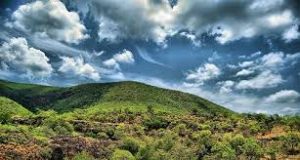
The terrain around Pappireddippatti is influenced by the Eastern Ghats, whose scattered hill ranges extend across northern Tamil Nadu.
These hills create a rugged environment with patches of forest, rocky slopes and valleys where villages have developed over centuries. Streams flowing from the hills feed irrigation tanks that support seasonal agriculture.
The natural landscape provides not only scenic beauty but also grazing grounds and forest resources used by rural communities.
The presence of the Eastern Ghats gives the constituency a distinct geographical character.
Dryland Farming Economy


Agriculture in Pappireddippatti reflects the dry conditions of Dharmapuri district. Farmers cultivate crops such as millets, ragi, groundnut and pulses, which require relatively less water.
Seasonal rains determine the success of cultivation, making water conservation and tank management essential for farmers.
Livestock rearing, especially goats and cattle, also contributes significantly to rural livelihoods.
This blend of crop farming and animal husbandry has sustained village economies across the constituency for generations.
Village Temples and Traditions
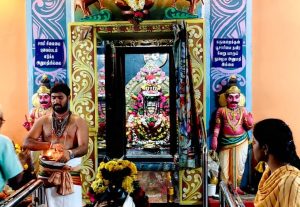
Religious life in the constituency centres around temples dedicated to Amman, Shiva and Murugan. These shrines remain important social gathering points for surrounding villages.
One of the notable temples in the region is the Kariyaperumal Temple Pappireddippatti, which attracts devotees during annual festivals.
Amman temple festivals, in particular, bring together large crowds for processions, music and traditional rituals. These celebrations strengthen community ties and preserve the cultural traditions of rural Dharmapuri.
Temple festivals therefore remain key events in the social calendar of the constituency.
Markets and Rural Trade
Weekly markets in Pappireddippatti function as trading hubs where farmers sell agricultural produce, livestock and household goods. Traders from neighbouring towns purchase these goods for distribution across the district.
Small shops, agricultural supply centres and local transport services support the rural economy.
Though modest compared to large urban markets, these trading networks are essential for sustaining livelihoods across the constituency.
Roads and Regional Link
Pappireddippatti lies along road routes connecting Dharmapuri with Salem and interior hill regions. These roads enable farmers and traders to transport produce to larger towns.
Bus services connect villages with district headquarters, providing access to schools, hospitals and government offices.
Improving road infrastructure remains a key development demand among residents.
Electoral Ledger:
2011
Winner — A. Govindasamy (AIADMK) — 95,381 votes
Runner-up — K. R. Thiyagarajan (DMK) — 78,964 votes
Third — S. Ramesh (DMDK) — 24,667 votes
Winning Margin — 16,417 votes
2016
Winner — Palaniappan P (AIADMK) — 74234 votes
Runner-up — Sathyamoorthy A (PMK) — 61521 votes
Third — Prabhu rajasekar M (DMK) — 56109 votes
Winning Margin — 12713 votes
2021
Winner — A. Govindasamy (AIADMK) — 114507 votes
Runner-up — Prabhu Rajasekar (DMK) — 77,564 votes
Third — Palaniappan.P (AMMK)— 15863 votes
Winning Margin — 36943 votes
The constituency has witnessed competitive elections reflecting the broader political dynamics of Dharmapuri district.
Civic and Development Concerns
Residents frequently highlight several priorities:
improved irrigation and water conservation
better road connectivity for rural areas
employment opportunities for youth
expansion of educational and healthcare facilities
Water management remains the most pressing concern for farmers.
Political Temperament
The electorate consists largely of farmers, agricultural labourers, traders and small business owners. Political mobilisation often occurs through village networks and community organisations.
Campaigns frequently focus on agricultural support schemes, infrastructure development and rural welfare programmes.
Candidates with strong local connections often gain an advantage in the constituency.
What Decides Pappireddippatti
Three factors usually shape electoral outcomes here:
Dryland agriculture
Farmers depend heavily on rainfall and tank irrigation.
Village networks
Community relationships influence political mobilisation.
Infrastructure needs
Roads, water supply and employment opportunities matter to voters.
Pappireddippatti voters therefore prioritise practical development concerns alongside traditional loyalties.
Closing Frame
Across the rocky plains of Pappireddippatti, farmers cultivate fields beneath the shadow of the Eastern Ghats while temple festivals fill village streets with colour and music. Weekly markets bustle with trade as buses carry residents toward Dharmapuri and Salem.
The constituency stands as a resilient rural landscape of northern Tamil Nadu.
When Pappireddippatti votes, the verdict reflects the voice of a region where hills, farming and community traditions continue to shape political life.