

Poonamallee: The Western Gateway of Chennai, Where Highways Converge and the City Begins
 By Nandhini
- Tamil
- Hindi
- Malayalam
- Kannada
- Telugu
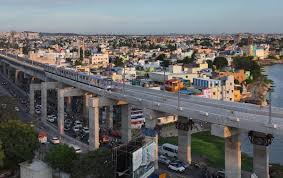
Constituency No. 5 | Tiruvallur District | Reserved (SC)
Poonamallee stands at one of the most strategic entry points into Chennai. For centuries travellers approaching the city from the western districts have passed through this town before entering the metropolitan expanse of the capital. Today the constituency represents the western gateway of Chennai, where highways, transport corridors, educational institutions and expanding residential suburbs converge.
Once a modest town surrounded by agricultural fields, Poonamallee has rapidly transformed into a bustling urban corridor shaped by Chennai’s outward expansion. Major national highways, industrial routes and suburban road networks meet here before diverging into different parts of the city.
The constituency’s importance lies not merely in its geography but in its role as a transport hub connecting Chennai with the western districts of Tamil Nadu and neighbouring states.
Poonamallee therefore represents a constituency where historical routes, modern infrastructure and urban growth intersect in powerful ways.
Meaning Behind the Name
The name “Poonamallee” carries a long historical lineage. Scholars often trace it to the Tamil expression “Poovirundhavalli”, meaning “the place where flowers flourished.” Over time the name evolved through linguistic changes to become Poonamallee.
Another interpretation links the name to temple traditions and ancient settlements in the region that were associated with flower cultivation and temple offerings.
Whatever its precise origin, the name reflects the agrarian past of a town that once lay amid fertile countryside before becoming part of Chennai’s expanding urban region.
Where Highways Meet
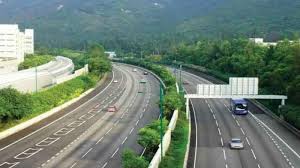
Poonamallee occupies a critical position at the junction of several major highways. The Chennai–Bengaluru national highway corridor passes through the constituency, carrying thousands of vehicles every day between the capital and the western districts.
From Poonamallee, roads branch toward multiple directions — into the heart of Chennai through Koyambedu and Anna Nagar, toward Tiruvallur and interior districts, and toward industrial zones along the western corridor.
Because of this strategic location, the town has historically functioned as a gateway where travellers entering Chennai first encounter the city’s outer suburbs.
Today it remains one of the busiest road junctions in the metropolitan region.
Flyovers and Transport Infrastructure
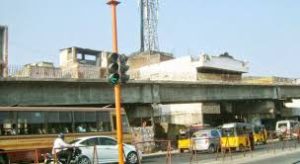
The rapid growth of traffic led to the development of large flyovers and junction improvements in Poonamallee. These structures help manage the heavy flow of buses, trucks and private vehicles moving toward Chennai.
The town also serves as a major bus transit point where long-distance buses and suburban transport networks intersect.
Transport infrastructure in the constituency continues to expand as Chennai grows further westward.
These improvements reflect the area’s importance in the city’s mobility network.
Metro Rail Expansion
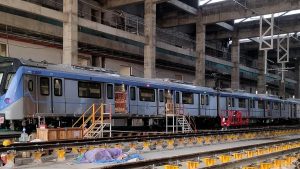
A significant new development transforming the constituency is the extension of the Chennai Metro Rail toward Poonamallee.
The metro expansion project aims to connect western suburbs directly with the city’s core urban areas. Once operational, the line will dramatically improve commuting options for residents travelling to workplaces across Chennai.
Metro stations along this corridor are expected to stimulate further residential and commercial development.
For Poonamallee, the metro project marks another stage in its evolution from a historic gateway town into a fully integrated urban suburb.
Educational and Institutional Presence
Over the years Poonamallee and its surrounding areas have developed into an educational corridor hosting several colleges and training institutions. Students from neighbouring districts travel here for higher education.
Schools, technical institutes and professional colleges contribute to the constituency’s social and economic activity.
Educational institutions have also encouraged the growth of hostels, residential apartments and small businesses catering to students and staff.
This academic presence adds another dimension to the town’s urban growth.
Temples and Historic Shrines
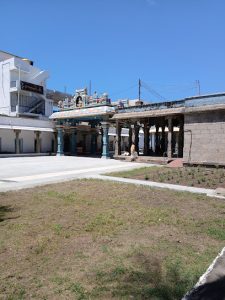
Despite rapid urbanisation, Poonamallee retains important temple traditions. One of the prominent shrines in the region is the Varadaraja Perumal Temple Poonamallee, which attracts devotees during festival seasons.
Amman temples and local shrines across surrounding neighbourhoods continue to host vibrant festivals featuring processions, music and community celebrations.
These temples preserve the cultural heritage of a town that once stood as a rural settlement before becoming part of Chennai’s metropolitan landscape.
Residential Expansion
As Chennai expanded outward, Poonamallee gradually evolved into a major residential suburb. Apartment complexes, gated communities and commercial buildings have risen along the highway corridors.
Workers employed in nearby industrial areas and professionals commuting to central Chennai increasingly choose the suburb as a residential base.
The transformation reflects the broader pattern of urban expansion across the Chennai metropolitan region.
Electoral Ledger:
2011
Winner — R. Manimaran (AIADMK) — 93,604 votes
Runner-up — T. A. Elumalai (DMK) — 76,763 votes
Third — A. Rajendran (DMDK) — 24,145 votes
Winning Margin — 16,841 votes
2016
Winner — T. A. Elumalai (AIADMK) — 103952 votes
Runner-up — Paranthamen I (DMK) — 92189 votes
Third — Parthasarathy C (PMK) — 15827 votes
Winning Margin — 11763 votes
2021
Winner — A. Krishnaswamy (DMK) — 1,49,578 votes
Runner-up — Rajamannar S.X (AIADMK) — 55,468 votes
Third — Manimekalai A (Naam Tamilar Katchi) — 29,871 votes
Winning Margin — 94,110 votes
Urban infrastructure and suburban development often dominate electoral debates in the constituency.
Civic and Development Concerns
Residents frequently highlight several priorities:
traffic congestion at highway junctions
drainage and flood management in expanding suburbs
improved public transport and metro connectivity
planned urban development for new residential areas
Managing rapid urban growth remains a key challenge.
Political Temperament
The electorate consists largely of urban residents, commuters, traders and workers employed in nearby industrial areas. Issues related to infrastructure, transport and housing strongly influence voter sentiment.
Campaigns frequently focus on urban planning, road improvements and public transport expansion.
Because of its gateway location, development debates in Poonamallee often centre on mobility and connectivity.
What Decides Poonamallee
Three factors usually shape electoral outcomes:
Urban infrastructure
Roads, flyovers and metro expansion dominate public discussion.
Residential growth
Housing and civic amenities influence voter expectations.
Transport corridors
The town’s gateway status keeps mobility issues central to politics.
Poonamallee voters therefore prioritise development that keeps pace with rapid urban expansion.
Closing Frame
At Poonamallee, the highways of Tamil Nadu converge before spreading into the streets of Chennai. Buses, trucks and metro lines carry thousands of people each day through this historic gateway.
The town that once welcomed travellers into Madras now stands as one of the city’s fastest-growing suburbs.
When Poonamallee votes, the verdict reflects the voice of a constituency that sits at the threshold of Chennai — where the road to the city truly begins.