

Royapuram: Harbour Heritage, Rail Beginnings and the Northern Gateway of Chennai
 By Nandhini
- Tamil
- Hindi
- Malayalam
- Kannada
- Telugu

Constituency No. 17 | Chennai District | General
Royapuram is one of the oldest and historically richest constituencies in Chennai. Situated along the northern coastline of the city, it carries the memory of colonial trade, railway history and the evolution of modern Chennai. Long before the city expanded southward into sprawling suburbs, Royapuram formed one of the earliest urban settlements that shaped the city’s maritime and commercial identity.
The constituency lies close to Chennai’s harbour and has historically served as a gateway through which goods, people and cultures entered the city. Fishing communities, traders, dock workers and railway employees have all contributed to the social fabric of the area.
Royapuram is therefore not merely another city constituency; it is one of the foundational neighbourhoods that helped build Chennai’s economic and cultural character.
Birthplace of South India’s Railways
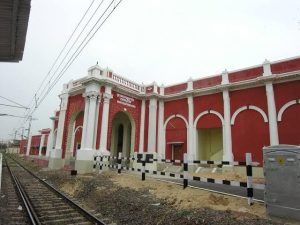
Royapuram occupies a unique place in India’s railway history. The historic Royapuram Railway Station, built in the mid-nineteenth century, is one of the oldest surviving railway stations in the country.
It served as the terminus of the first railway line in South India connecting Madras with Arcot. The station’s elegant colonial architecture still stands as a reminder of that pioneering moment when rail transport first arrived in the region.
For decades Royapuram station functioned as an important transport hub linking the port city with the interior of the Madras Presidency.
This legacy has made the station a heritage landmark within Chennai.
Neighbourhood of the Harbour



The constituency lies adjacent to the Chennai Port, one of India’s major maritime gateways. The harbour has shaped the economy and demography of Royapuram for generations.
Dock workers, shipping employees and port-related businesses have long formed a significant segment of the local workforce.
The movement of cargo ships, cranes and containers is a daily sight along the waterfront, reminding residents of the constituency’s deep connection with maritime trade.
Fishing communities along the coast also contribute to the vibrant life of the neighbourhood.
Fishing Villages and Coastal Culture

Royapuram’s shoreline remains home to traditional fishing communities whose presence predates modern Chennai. Early morning fish markets and coastal settlements reflect a culture that has existed here for centuries.
Fishing boats line the coast while traders transport fresh catch to markets across the city.
The sea continues to influence everyday life, shaping livelihoods as well as cultural traditions in the constituency.
Churches, Temples and Community Landmarks
Royapuram reflects the religious diversity typical of old Madras neighbourhoods. Among the most prominent places of worship is the St. Peter’s Church, a historic church associated with the Anglo-Indian community that lived in the area during the colonial period.
Temples dedicated to Amman and Murugan are scattered across the locality, while mosques serve the Muslim communities of the neighbourhood.
These institutions highlight the cultural pluralism that has characterised Royapuram for generations.
Railway Colonies and Old Madras Streets
The growth of railways and port activities led to the creation of residential colonies for railway employees and harbour workers. Many of these neighbourhoods still retain their traditional street layouts and old buildings.
Markets, schools and public institutions developed around these colonies, gradually transforming Royapuram into a densely populated urban area.
Despite the pressures of modern urbanisation, parts of the constituency still preserve the character of historic Madras.
Electoral Ledger
2011
Winner – D. Jayakumar (AIADMK) – around 88,000 votes
Second – DMK candidate – around 79,000 votes
Third – DMDK candidate – around 15,000 votes
Winning Margin: about 9,000 votes
2016
Winner – D. Jayakumar (AIADMK) –55205 votes
Second – Manohar R (INC) – 47174 votes
Third – Syed Rafi Basha H (SDPI) – 4345 votes
Winning Margin: 8031 votes
D. Jayakumar later served as a senior minister in the AIADMK government, increasing the political prominence of the constituency.
2021
Winner – I. Dream Murthy (DMK) – 64424 votes
Second – D. Jayakumar (AIADMK) – 36645 votes
Third – Gunasekaran. S (MNM) – 8166 votes
Margin: 27,779 votes
The election marked a significant shift in the constituency’s political representation.
Civic and Development Concerns
Royapuram faces several urban challenges typical of older city neighbourhoods:
• housing and redevelopment in densely populated areas
• coastal protection against erosion
• sanitation and infrastructure upgrades
• livelihood support for fishing communities
Improving civic amenities while preserving historic neighbourhoods remains a key concern.
Political Temperament
The electorate includes fishing communities, harbour workers, traders, railway employees and residents of long-established neighbourhoods.
Political mobilisation often revolves around local issues such as housing, employment and urban infrastructure.
Leaders with strong grassroots connections and familiarity with community networks often gain support.
What Decides Royapuram
Three factors often influence electoral outcomes:
Harbour economy – port and fishing livelihoods shape local concerns.
Urban infrastructure – housing and civic services remain critical issues.
Historic neighbourhood identity – long-standing communities play a major political role.
Royapuram voters therefore evaluate candidates through the lens of both livelihood security and urban development.
Closing Frame
Royapuram is a neighbourhood where the past and present of Chennai converge. The old railway station recalls the dawn of rail transport in South India, while the nearby harbour continues to drive the city’s maritime trade.
Fishing boats, colonial buildings and bustling markets together tell the story of a locality that helped build modern Chennai.
When Royapuram votes, it reflects the voice of one of the city’s oldest and most storied quarters — a place where history still walks the streets.