

Singanallur: Coimbatore’s Eastern Engine, Lake Landscape and the Industrial-Urban Crossroads
 By Nandhini
- Tamil
- Hindi
- Malayalam
- Kannada
- Telugu

Constituency No. 121 | Coimbatore District | General
Singanallur sits on the eastern flank of Coimbatore city, a constituency that captures the transition of the region from textile town to diversified industrial metropolis. Located along the important Coimbatore–Tiruchirappalli highway corridor, the area has evolved into one of the city’s busiest residential and commercial zones. What was once a cluster of villages and wetlands has gradually become an urban constituency where industry, transport and residential growth intersect.
The defining natural landmark of the area is the Singanallur Lake, one of the largest water bodies in the Coimbatore region. The lake has historically supported agriculture and irrigation in surrounding villages. Today it stands as an ecological lung for the rapidly expanding city, attracting migratory birds and serving as an important environmental buffer amid urban growth.
Singanallur therefore reflects a constituency where urbanisation is reshaping landscapes that once belonged to fields and wetlands.
Industrial and Commercial Growth
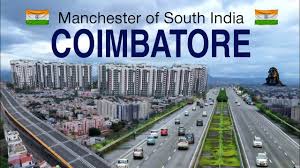
Coimbatore’s reputation as the “Manchester of South India” has long been tied to textiles and engineering industries, and Singanallur sits squarely within this industrial ecosystem. Workshops, small manufacturing units and industrial estates across the constituency supply machinery, components and services to larger industries in the city.
Engineering units, pump manufacturers and small-scale fabrication workshops form a large part of the economic activity in the area. The proximity to Coimbatore’s industrial clusters has created employment for thousands of workers.
Commercial activity has grown alongside industry. Retail shops, automobile showrooms and business establishments line the main roads connecting Singanallur to the rest of Coimbatore.
Transport and Urban Gateway

Singanallur’s location has made it one of the major transport nodes of Coimbatore. The constituency lies close to the Coimbatore International Airport, making it a gateway for travellers entering the city from eastern and southern districts.
Major arterial roads converge here, carrying traffic toward the central city, Tiruppur, Pollachi and the highway routes leading to Tamil Nadu’s interior districts. Bus routes and suburban traffic create a constant movement of people and goods.
This connectivity has accelerated the growth of residential neighbourhoods and commercial infrastructure across the constituency.
Residential Expansion
The rapid economic growth of Coimbatore has triggered a steady expansion of housing in Singanallur. Apartment complexes, independent houses and gated communities have spread across former agricultural lands.
Many residents are professionals working in engineering industries, textile companies and service sectors. Educational institutions and hospitals have also expanded in response to this growing population.
The constituency therefore represents a modern urban residential belt within the greater Coimbatore metropolitan area.
Temple and Cultural Landscape

Despite the urban expansion, Singanallur retains elements of its traditional temple culture. Shrines dedicated to Shiva, Amman and Murugan remain active centres of worship for long-time residents of the area.
Temple festivals continue to bring together communities through processions, music and communal gatherings, preserving cultural traditions even as the neighbourhood evolves into a modern urban suburb.
Environmental Concerns
The presence of Singanallur Lake has drawn increasing attention to environmental issues in the constituency.
Urban expansion, sewage inflow and encroachment pressures have raised concerns about preserving the lake’s ecological balance.
Citizen groups and environmental activists have often highlighted the need to protect wetlands and improve water management in the area.
Balancing development with environmental conservation remains a key challenge for the constituency.
Electoral Ledger
2011
Winner – R. Chinnaswamy (AIADMK) – 93,241 votes
Second – K. Subramanian (DMK) – 85,812 votes
Third – S. Sivakumar (DMDK) – 19,463 votes
Winning Margin: 7,429 votes
2016
Winner – Karthik N (DMK) – 75459 votes
Second – Singai Muthu N (ADMK) – 70279 votes
Third – Nandakumar C R (BJP) – 16605 votes
Winning Margin: 5180 votes
2021
Winner – K. R. Jayaram (ADMK) – 81244 votes
Second – Karthik N(DMK) – 70390 votes
Third – Mahedran R (MNM) – 36855 votes
Winning Margin: 10845 votes
Civic Priorities
Residents of Singanallur frequently raise issues related to:
• lake conservation and drainage management
• road congestion and traffic regulation
• urban infrastructure such as sewage and water supply
• expansion of public transport and civic amenities
As the population grows, urban planning has become a central political concern.
Political Character
Singanallur reflects the political patterns of Coimbatore city where industrial workers, middle-class professionals and traditional communities together form the electorate. Campaigns often revolve around infrastructure, employment and urban governance.
The constituency’s evolving demographic profile continues to shape electoral outcomes.
Closing Frame
In Singanallur the waters of a historic lake mirror the changing skyline of Coimbatore. Factories, homes and highways now surround wetlands that once nourished fields and villages.
The constituency stands at the crossroads of industry, ecology and urban life.
When Singanallur votes, it echoes the aspirations of a growing city that must balance economic progress with environmental responsibility.