

Virudhunagar: Kamaraj’s Defeat, Trade Memory and the Hard Politics of Southern Tamil Nadu
 By Nandhini
- Tamil
- Hindi
- Malayalam
- Kannada
- Telugu

Constituency No. 206 | Virudhunagar District | General
Virudhunagar is one of those constituencies whose significance far exceeds its physical size. It is not merely a district-town seat. It is a place of trading memory, nationalist legacy, educational ambition, commercial grit and sharp political symbolism. In the history of Tamil Nadu politics, Virudhunagar carries one especially dramatic distinction: it is the constituency where the towering K. Kamaraj, one of the greatest leaders in modern Indian politics, suffered his famous defeat at the hands of a young DMK student leader, P. Srinivasan, in the 1967 election. That result was not just a local upset. It became one of the defining moments in the transfer of political power from the Congress era to the Dravidian era.
That single electoral memory still gives Virudhunagar unusual political weight. But the constituency matters for much more than that. It belongs to a wider southern belt known for trade, industry, education-minded communities, political awareness and strong associational life. Its identity is tied to markets, small enterprise, transport movement and the broader commercial culture of the Virudhunagar-Sivakasi-Sattur region.
This is a town that thinks in ledgers, not just slogans.
The Kamaraj Shock of 1967

No discussion of Virudhunagar can begin anywhere else. In 1967, Kamaraj, already one of the most respected political figures in India and a former Chief Minister of Madras State, faced defeat here to P. Srinivasan, a young DMK candidate associated with student politics. The result reverberated across Tamil Nadu and beyond. Kamaraj was no ordinary leader. He was a national figure, an architect of Congress strategy and one of the strongest symbols of the old political order.
For him to lose in Virudhunagar was historically explosive. It captured the mood of a changing Tamil Nadu — impatient, regionally assertive and increasingly drawn to the Dravidian idiom. The defeat became larger than one constituency. It marked the end of an era and the arrival of another.
That memory still shadows the seat. Virudhunagar is one of the places where Tamil Nadu’s political transition became dramatically visible.
A Town of Trade and Enterprise
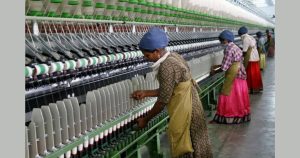
Virudhunagar’s social character is shaped by commerce. For generations, the town has been associated with trading communities, market activity, oil, commodities, groceries, textiles and business networks that extended beyond the district. It developed a reputation as a place of practical intelligence, thrift, organisation and commercial discipline. The merchant culture of the town left a lasting mark on its civic personality.
This business-mindedness also shaped politics. Constituencies like Virudhunagar do not respond only to emotion. They often weigh administration, credibility, delivery and economic climate in practical terms. That is one reason the seat has always had more political sharpness than its size might suggest.
Industry in the Wider Belt


While Virudhunagar town itself is not identical to the industrial image of nearby Sivakasi, it belongs to a wider economic region driven by matches, fireworks, printing, oil trade, transport, agro-commerce and ancillary businesses. The constituency benefits from the larger district economy, in which commerce and industry reinforce each other. The result is a population accustomed to work, enterprise and economic competition.
The wider district’s industrial culture gives the constituency a more dynamic economic environment than a simple municipal-town label would suggest.
Temples, Faith and Civic Culture

Virudhunagar is not a temple-dominated constituency in the manner of a major pilgrimage town, yet religion and local shrines remain important to social life. Temples dedicated to Amman, Shiva, Murugan and Vishnu, along with churches and mosques in the wider urban belt, form part of the town’s lived religious landscape. Festival days, local observances and neighbourhood rituals continue to structure social belonging.
This is typical of many southern Tamil Nadu towns: commercially alert, politically charged, but still deeply rooted in everyday religious and community life.
Education and Social Mobility

One of the strong features of the Virudhunagar region is its long-standing respect for education as mobility. The town and surrounding district have produced generations of students, professionals, traders and public figures who saw schooling not as ornament but as advancement. Educational institutions, coaching culture and the district’s wider social ambition all feed into the constituency’s character.
This matters politically because education-minded constituencies often evaluate governments through employment, student opportunity, infrastructure and administrative seriousness.
Cuisine and Everyday Urban Life
Virudhunagar’s food culture reflects the larger southern Tamil Nadu pattern: robust tiffin culture, mess life, tea-stall politics, sweets, savouries and the practical food economy of a working town. This is not a constituency defined by leisure dining, but by the energetic eating habits of traders, workers, students and travellers. Market-town cuisine, in places like this, is part of the civic rhythm.
Road, Rail and Connectivity

Virudhunagar’s importance is strengthened by connectivity. It lies in a region that links Madurai, Sattur, Sivakasi, Tirunelveli and the southern interior. Road and rail access help sustain trade, student movement, medical travel and district-level administration. The constituency benefits from being part of a highly networked southern belt where movement of goods and people is constant.
This connectivity reinforces its commercial function and keeps it politically relevant.
Political Character of the Seat
Virudhunagar has long been a politically conscious constituency. The Kamaraj memory alone would guarantee that, but the deeper reason is its social composition: traders, workers, students, salaried households and politically alert communities. This is not a sleepy seat. It belongs to a district where electoral contests are followed closely and where public memory runs deep.
The seat tends to be shaped by a mix of factors: administrative performance, economic conditions, party structure, community equations, candidate familiarity, and the symbolic weight of the constituency itself.
Electoral Ledger
2011
Winner – M. Pandiarajan (DMDK) – 56,379 votes
Second – K. K. S. S. R. Ramachandran (DMK) – 53,186 votes
Third – M. Murugan (AIADMK) – 32,490 votes
Winning Margin: 3,193 votes
2016
Winner – A. R. R. Seenivasan (DMK) – 65499 votes
Second – Kalanithi K (AIADMK) – 62629 votes
Third – Syed Kaja Shareef M (DMDK ) – 10127 votes
Winning Margin: 2870 votes
2021
Winner – A. R. R. Seenivasan (DMK) – 73,297 votes
Second – Pandurangan G (BJP) – 51958 votes
Third – Selvakumar V R (Naam Tamilar Katchi) – 14311 votes
Winning Margin: 21339 votes
What Decides Virudhunagar
Several themes tend to influence the constituency strongly:
Political memory. Kamaraj’s legacy and the town’s larger public culture still matter.
Commerce and livelihood. Trade, small industry and market conditions shape voter mood.
Education and youth aspiration. Employment and upward mobility are key concerns.
Urban infrastructure. Roads, drainage, water supply and town management matter in a commercial centre.
Candidate stature. In a politically alert seat, personality and credibility count.
Virudhunagar often votes like a constituency that takes politics seriously — not ceremonially, but structurally.
Closing Frame
Virudhunagar is one of the great reminder-seats of Tamil Nadu politics. It reminds the state that no leader, however tall, is bigger than a turning tide. It reminds observers that trade towns can be politically ruthless. And it reminds voters themselves that history is not something that happened elsewhere; it happened here.
Between market streets, political memory and the legacy of the Kamaraj defeat, Virudhunagar remains far more than a district-town constituency. It is one of the places where Tamil Nadu changed course.
When Virudhunagar votes, it does so with memory in its bones and politics in its bloodstream.