


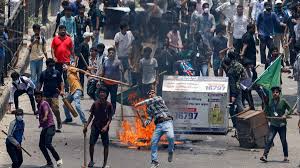
 Dhaka, July 29: Student protests in Bangladesh have escalated into a widespread movement challenging Prime Minister Sheikh Hasina’s authoritarian regime. Initially sparked by opposition to a controversial reintroduction of job quotas favoring war veterans’ descendants, the protests have grown into a broader outcry against Hasina’s 15-year rule.
The government’s violent crackdown on demonstrators, including the use of live ammunition and tear gas, has resulted in over 200 deaths and thousands of injuries, intensifying the public’s frustration and dissent.
The violence has galvanized the protest movement, with many now viewing the demonstrations as a fight against a tyrannical government rather than just the job quota issue. Reports from the ground describe brutal confrontations between protesters, pro-government student groups, and security forces. The UN has called for an independent investigation into the abuses, as the
government’s response has been marked by increased repression, including mass arrests and alleged torture of detainees.
As the government scales back the job quotas in response to the unrest, the protests have paused, but activists warn that the movement is far from over. With the government imposing a curfew and restricting communications, the situation remains volatile. Analysts suggest that the intensity of the crackdown reveals the regime’s nervousness and the crumbling of its climate
of fear, potentially marking the beginning of a significant challenge to Hasina’s rule.