


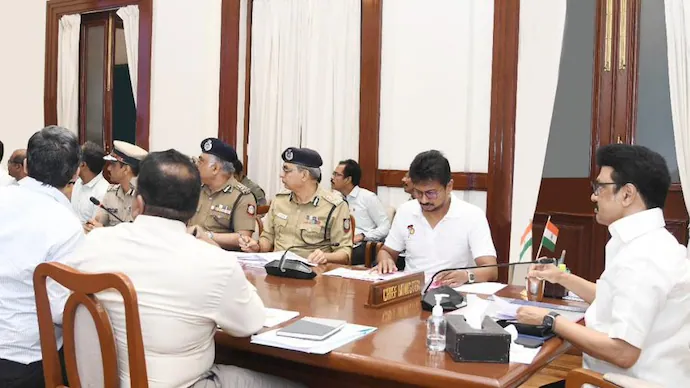
Chennai: During a review meeting regarding the heavy rain alert, Tamil Nadu Chief Minister M.K. Stalin issued several important instructions to ensure preparedness and minimize disruption. Here are the key directives provided by the Chief Minister:
Schools and colleges in Chennai, Thiruvallur, Kanchipuram, and Chengalpattu districts will remain closed on October 15. Private IT companies have been advised to allow employees to work from home from October 15 to 18.
The National Disaster Response Force (NDRF) and Tamil Nadu Disaster Response Force (TNDRF) should be deployed in advance to vulnerable areas.
Rescue boats must be stationed today in flood-prone regions.
District monitoring officers are instructed to visit their assigned districts and coordinate preparation, rescue, and relief operations with district authorities. To ensure public convenience, metro rail and local train services should be increased in frequency.
The Food Department must take steps to prevent price hikes for essential commodities. Aavin should ensure uninterrupted supply of milk and dairy products.
Sufficient food supplies should be stocked at homes for the elderly and orphanages. Relief camps should be prepared, and residents from high-risk areas should be relocated to the camps in advance.
Bread and bottled water should be stocked in relief centers today, along with necessary medical facilities. Wheelchairs must be provided for the disabled. In case of disruptions in transportation due to rain and floods, alternative routes should be immediately arranged for public use.
Reflective tapes and safety barriers should be installed at ongoing roadwork sites in all districts to ensure safety at night. Additional staff should be deployed at control centers to ensure uninterrupted power generation and distribution.
Machines should be made available to remove obstacles to water flow at key points such as Muttukadu, Buckingham Canal, and Okkiyam Madavu. Water management should be monitored in dams by closely observing rainfall levels and inflows.
Special priority should be given to elderly, disabled, pregnant, and breastfeeding women in affected areas to ensure their safety and accommodation. Rescue tools, including water pumps, woodcutters, and JCB machines, must be kept ready for operations.
Adequate generators should be available to ensure uninterrupted drinking water supply. Public health should be safeguarded by taking necessary measures to prevent health issues caused by rain.