


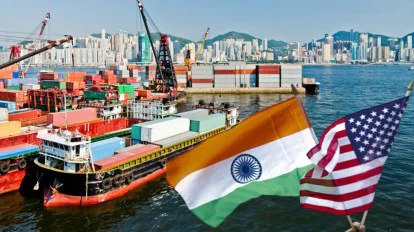
 India and the United States have resumed trade talks on Tuesday. This is the first round of discussions since US President Donald Trump announced heavy tariffs on Indian goods.
The move came after India bought crude oil and military equipment from Russia. As a penalty, the US imposed 25% duty on Indian exports from August 7. Another 25% duty is set to start from August 27. Together, this means Indian exports to the US will face 50% tariffs.
The US has also been urging India to open up its agriculture and dairy markets. India has strongly refused, saying such steps will harm small farmers and cattle rearers.
The US delegation has now arrived in New Delhi after several delays. Officials say the talks mark a positive turn after weeks of tension and criticism from Washington. Trump too has softened his stand in recent days, showing willingness to rebuild ties with India.
Despite the tariff clash, trade between the two countries has been growing. Data from the commerce ministry shows India’s exports to the US rose by 21.64% to USD 33.53 billion between April and July 2025. Imports from the US also went up by 12.33% to USD 17.41 billion in the same period.
The United States remained India’s largest trading partner during this time. Bilateral trade between the two nations touched USD 12.56 billion.
Both countries have agreed to conclude the first phase of a Bilateral Trade Agreement (BTA) by the fall of 2025. Their long-term goal is to increase overall trade from USD 191 billion to USD 500 billion by 2030.
Reacting to Trump’s decision of extra tariffs, Prime Minister Narendra Modi spoke firmly during his Independence Day address. He said India must rely more on “swadeshi” or locally made products. He added that his government would not accept any policy that harms Indian farmers, fishermen, or livestock rearers.
“Modi is standing like a wall against harmful decisions. There will be no compromise when it comes to protecting farmers, fishermen and cattle rearers of India,” he declared.
The trade talks are expected to be tough, but both nations hope to move forward while protecting their interests.