


Tehran, May 21:
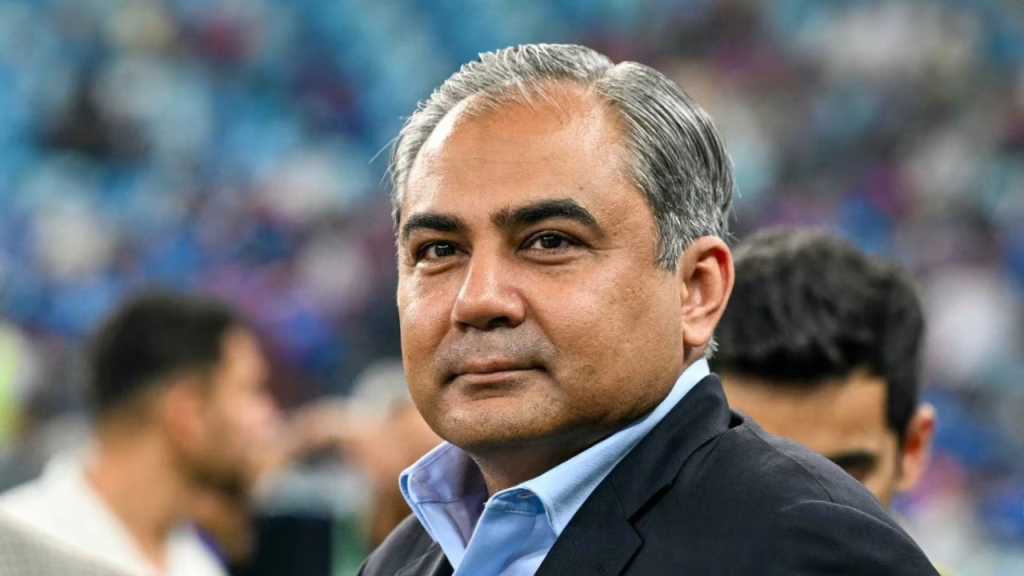
Pakistan’s Interior Minister Mohsin Naqvi travelled to Tehran for the second time within a week as Islamabad intensified diplomatic efforts to mediate between Iran and the United States amid rising tensions in West Asia.
According to Geo News and Iranian state media, Naqvi is expected to meet senior Iranian officials to discuss the stalled US-Iran negotiations, although Pakistan has not issued an official statement.
His repeated visits come at a sensitive time, with shifting signals from Washington and Tehran over the possibility of renewed conflict.
Former US President Donald Trump recently warned that military strikes could resume within days if a deal is not reached, while Gulf countries reportedly urged restraint.
Iranian Foreign Minister Abbas Araghchi warned that a return to war would bring “many more surprises,” and Iran’s Revolutionary Guards threatened wider regional escalation.
In contrast, US Vice President JD Vance expressed optimism that diplomatic talks were making progress.
Naqvi has already held meetings with Iran’s top leadership, including President Masoud Pezeshkian, Foreign Minister Araghchi, Parliament Speaker Mohammad Bagher Ghalibaf, and Interior Minister Eskandar Momeni.
His role is viewed as significant due to his close association with Pakistan’s military leadership, particularly Field Marshal Asim Munir, and his involvement in earlier Tehran visits linked to Iran-US dialogue efforts.
Separately, Chinese President Xi Jinping called for an immediate end to hostilities in West Asia during talks in Beijing with Russian President Vladimir Putin.
Xi described the situation as having reached a “critical juncture” and stressed the importance of continued negotiations to avoid further destabilisation of global energy supplies, trade routes, and supply chains.
The Xi-Putin meeting followed Trump’s recent visit to China and included discussions on regional conflicts, including Iran-related tensions and the Strait of Hormuz.
Both leaders pledged closer coordination and agreed to extend their long-standing cooperation treaty.
Xi criticised rising unilateralism and called for a more balanced global governance system, while Putin highlighted growing bilateral trade exceeding USD 200 billion and deeper coordination through platforms such as the UN, Shanghai Cooperation Organisation, and BRICS, describing ties as at an “unprecedented level.”