


Chennai, July 20:
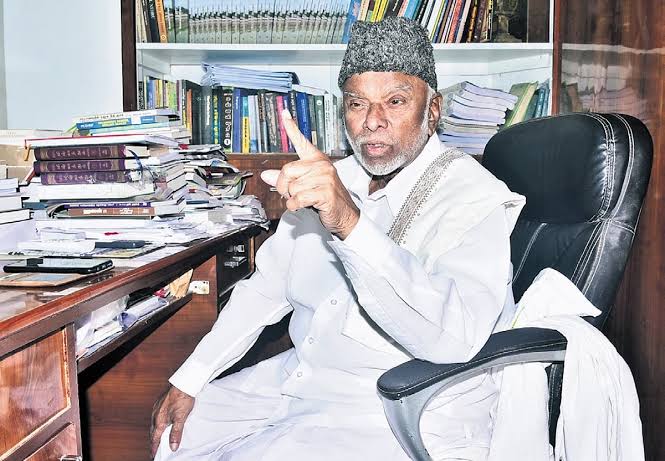
Indian Union Muslim League (IUML) national president KM Khader Mohideen on Sunday said it was too early to judge the performance of the new government led by Chief Minister C Joseph Vijay, even as he welcomed its stated commitment to provide a corruption-free administration.
Addressing reporters after a lung care and anti-drug awareness camp organised by the IUML and a private healthcare firm in Royapettah, Khader Mohideen said, “It may not be possible to claim that corruption has been completely eradicated, but it is significant that a Chief Minister has openly promised a corruption-free government. That itself is a positive development.”
He said the government, which has been in office for less than two months, should be given adequate time to deliver, recalling that leaders in the past had advocated a grace period of at least six months to assess a new administration. “So far, several measures taken by the government are being welcomed by the people,” he noted.
Highlighting the growing menace of substance abuse, the IUML leader stressed that government action alone would not suffice to curb the problem. “People’s mindset must change. Awareness is crucial. Many crimes, including murder, sexual assault and theft, are often linked to substance abuse,” he said.
Khader Mohideen welcomed the reported closure of over 700 liquor outlets in the State and expressed hope that more such steps would follow. He also referred to coordinated anti-drug initiatives across southern States, including efforts in Kerala, and said Tamil Nadu should play a leading role in creating a drug-free society.
Speaking at the event, IUML general secretary KM Mohamed Abubacker, a former MLA, raised concerns over the alleged spread of narcotics among youth, including students. He cited inputs suggesting that drug distribution networks were targeting crowded public places and educational institutions.
Khader Mohideen also shared his personal experience of quitting smoking after decades, underscoring how addiction affects both the body and mind. He emphasised that harmful habits, once ingrained, are difficult to overcome, but can be reversed with awareness, discipline and medical guidance.
On broader social concerns, he said substance abuse remained a key factor behind social crimes and reiterated the need for collective responsibility to build a healthy and progressive society.
Responding to questions on issues such as liquor policy, anti-drug campaigns and constituency delimitation, he said decisions must be guided by fairness and public welfare, adding that Parliament would ultimately determine the course on national matters.