


Chennai, Aug 20:
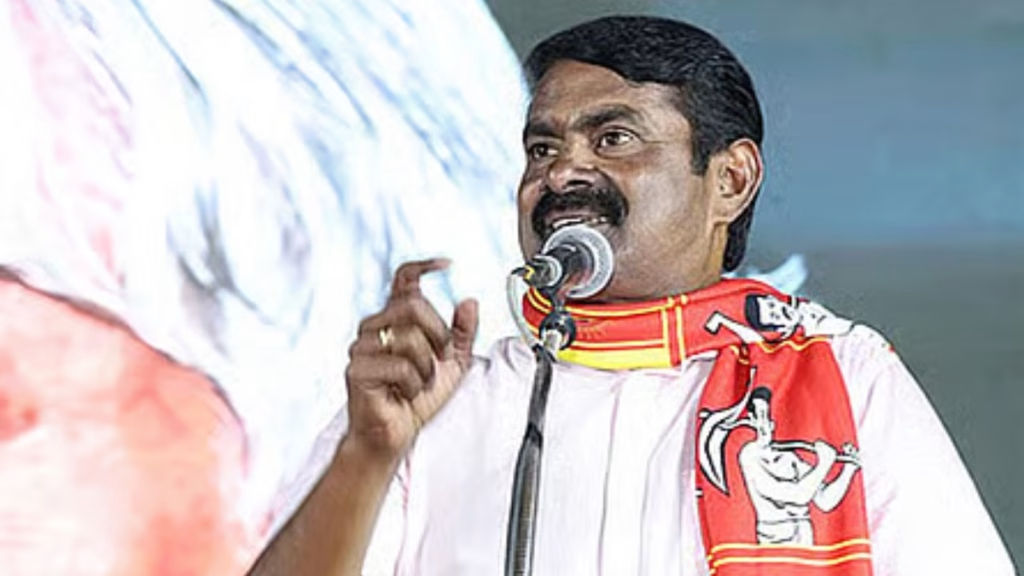
Naam Tamilar Katchi (NTK) chief coordinator Seeman has strongly opposed the Tamil Nadu government’s decision to provide free cars to all legislators, questioning the need to spend public money on the scheme when several welfare measures for the people are still pending.
In a statement, Seeman said it was shocking that Chief Minister Vijay had announced under Rule 110 in the Tamil Nadu Assembly that all MLAs would be provided free cars, along with an additional monthly payment of Rs 1 lakh towards the salary of a personal assistant and driver and fuel expenses.
Seeman said providing government vehicles to MLAs who did not own cars could be justified. However, he questioned the need to provide new cars to all legislators when 190 of the currently elected MLAs had already declared in their election affidavits that they owned cars.
He estimated that if each vehicle cost at least Rs 30 lakh, the government would have to spend around Rs 70 crore on the purchase of cars. In addition, providing Rs 1 lakh every month to 234 MLAs would cost another Rs 28 crore annually. Fuel, maintenance and repair expenses would further increase the burden on the State exchequer, he said.
Seeman questioned whether such expenditure could be justified when the State was already borrowing heavily. He pointed out that MLAs were already receiving salaries and allowances, including a monthly vehicle allowance of Rs 25,000, and questioned the need for an additional Rs 1 lakh every month.
He also questioned the need to provide government-funded vehicles to wealthy ministers and legislators. Referring to Public Works Minister Aadhav Arjuna and Finance Minister Marie Wilson, among others, Seeman said legislators who genuinely required vehicles could be provided them at the expense of their own party or through their personal resources rather than using taxpayers’ money.
Seeman further alleged that providing benefits to legislators across party lines could weaken the Opposition’s ability to question the government. He questioned whether the scheme could indirectly discourage legislators from criticising the government and described it as potentially resembling a form of inducement.
He also compared the expenditure with the government’s response to farmers’ problems. Seeman said farmers were struggling to protect paddy harvested after great effort because adequate storage facilities were unavailable, forcing stocks to be kept in the open and exposed to damage.