


London, Sept 9:
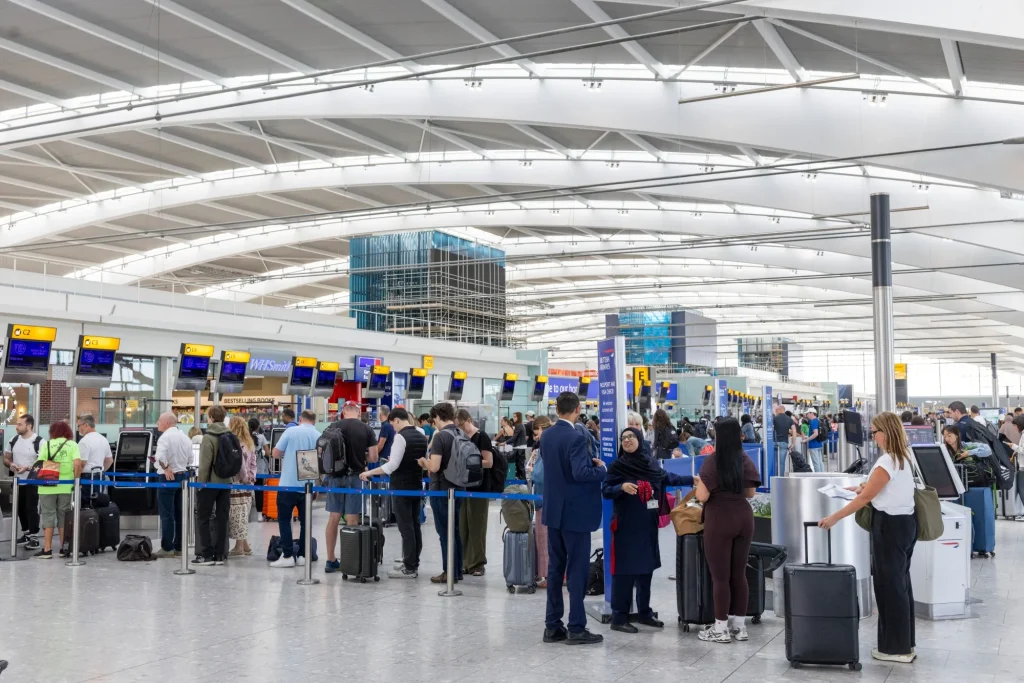
More than 1,000 flights were cancelled at airports across the UK on Tuesday after a technical failure in the country’s air traffic control system triggered widespread delays and disrupted the travel plans of tens of thousands of passengers.
The problem affected the flight-processing system operated by National Air Traffic Services (NATS), Britain’s air traffic control provider. NATS initially said its engineers were investigating a technical issue that was disrupting departures before confirming that the fault had been identified in its flight-processing system.
Although British airspace remained open and flights continued to operate, restrictions on the movement of aircraft created a rapidly growing backlog. Flight-tracking website Flightradar24 reported that more than 1,000 flights to and from UK airports had been cancelled by Tuesday evening. Hundreds of other flights were delayed.
Major airports affected
The disruption was reported at several of Britain’s busiest airports, including Heathrow, Gatwick, Manchester, Stansted, Birmingham, Bristol, London City, Luton, East Midlands, Edinburgh and Aberdeen.
Heathrow, the UK’s largest airport, was particularly affected. The airport initially said arriving flights were not affected, but later confirmed that both arrivals and departures were being disrupted across UK airports. Passengers were advised to check directly with their airlines before travelling to the airport.
The disruption also spread beyond Britain. Dublin Airport reported that more than 70 flights, including arrivals and departures, had been cancelled as a result of the UK air traffic control problem.
Airlines hit
Several major airlines were affected, including British Airways, easyJet, Ryanair, Wizz Air and Lufthansa.
British Airways said the disruption was outside its control and that its teams were working to get affected passengers moving as quickly as possible. easyJet said the technical problem was causing delays across its European network. Ryanair cancelled dozens of flights and sharply criticised NATS over the disruption.
The impact was not limited to passengers already at British airports. Aircraft and crews were also displaced as flights were cancelled or delayed, creating a knock-on effect that could continue even after the technical problem itself was resolved.
NATS implements a fix
NATS later announced that it had implemented a fix and that its flight system was beginning to recover.
The organisation said it was working with airlines and airports to clear the backlog and apologised for the disruption. However, restoring the timetable to normal was expected to take several hours because aircraft, crews and passengers had already been affected by the earlier cancellations and delays.
UK Transport Secretary Heidi Alexander welcomed the resolution of the technical problem but warned that it would take time for flights to return to normal. She also said she was seeking assurances that lessons would be learned and that systems supporting British aviation were sufficiently reliable.
Renewed questions over NATS
The latest failure has renewed concerns over the resilience of Britain’s air traffic control infrastructure.
It follows a major NATS failure in 2023 involving the automatic processing of flight plans, which caused widespread disruption and cost airlines more than £100 million in refunds and compensation. Britain’s aviation regulator subsequently required NATS to review its contingency arrangements. Another radar-related technical problem disrupted flights for several hours in July 2025.
Airlines have now called for greater scrutiny of NATS and improvements to the system’s resilience. Ryanair chief Michael O’Leary called for the resignation of NATS chief executive Martin Rolfe, while other airlines also questioned whether the UK’s air traffic control infrastructure was sufficiently robust.
Disruption may continue
Even after the technical fault was fixed, passengers were warned that delays and cancellations could continue because of the backlog.
Airports urged passengers to check their flight status with airlines before setting out. Manchester Airport said it expected to operate its full schedule on Wednesday but warned that it could be busier than normal because of rescheduled flights. Other airports also cautioned passengers to expect continuing disruption.
The incident has once again highlighted how a failure in a single critical aviation system can quickly affect airports across an entire country and create disruption well beyond national borders.