


Chennai, Oct 13:
The festive markets are brimming with colourful and creative return gifts as households gear up for Navarathri golu, with the age-old tradition of offering thamboolam to guests now getting a contemporary makeover.
Inviting women and girls to visit homes to see the golu dolls is an integral part of Navarathri celebrations in Tamil Nadu. Guests are traditionally offered thamboolam, comprising betel leaves, areca nuts, turmeric, kumkum and other auspicious items, as a mark of respect and goodwill. However, the practice of adding fancy return gifts to the traditional offering has gained popularity in recent years, opening up a flourishing market for festive products.
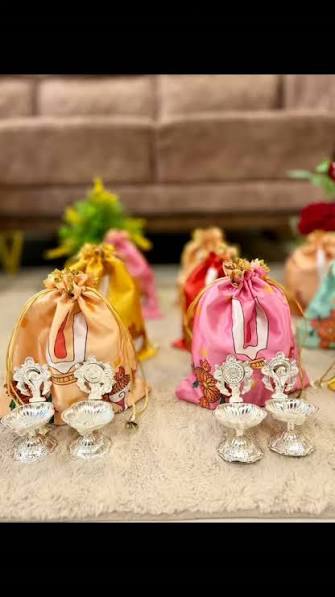
From miniature brass lamps and decorative kumkum containers to jewellery boxes, handbags, kitchen accessories and handcrafted curios, shops are displaying an assortment of gifts to suit different budgets. The choices range from simple, useful household items to intricately designed decorative pieces that reflect the festive spirit.
“Thamboolam is an inseparable part of our tradition, and we make sure that every guest receives it. Fancy gifts have become an additional attraction, particularly when we invite a large number of people during Navarathri,” said a homemaker in Chennai.
The trend has encouraged retailers to stock products specifically for the golu season. Small pooja accessories, traditional dolls, decorative trays, scented candles, compact mirrors, pen stands, keychains and utility products are among the items being picked up by customers. Gift sets combining kumkum containers, small lamps and other auspicious articles are also attracting buyers.
Retailers said customers often look for gifts that are attractive, affordable and useful. While some prefer traditional items associated with worship and auspicious occasions, others opt for contemporary products that recipients can use in their everyday lives.
“Customers want something different every year. They look for gifts that are reasonably priced but also look special when presented along with thamboolam. We are seeing interest in both traditional and modern products,” said a retailer selling festive gift articles.
The variety available in the market has also made it easier for families to select gifts according to their guest lists and budgets. Those inviting several hundred visitors often prefer lightweight, inexpensive items that can be purchased in bulk, while others choose personalised or premium gifts for close friends and relatives.
The return-gift culture has also encouraged small businesses and artisans to introduce new designs ahead of the festival. Decorative products featuring traditional motifs, floral patterns and bright colours are finding space alongside mass-produced gift articles. Attractive packaging has become another selling point, with many stores offering ready-to-distribute gift sets.
For many families, however, the significance of the practice goes beyond the material value of the gifts. Navarathri invitations provide an opportunity for relatives, neighbours and friends to meet, exchange greetings and strengthen social bonds. The return gift is seen as a token of affection and appreciation for those who visit.
“People may come to see the golu for a few minutes, but the visit is also about sharing the festive spirit. Giving something as a token of remembrance makes the occasion more special. At the same time, we continue to offer the traditional thamboolam,” said another resident.
With festive shopping gaining momentum, the market for Navarathri return gifts has expanded well beyond the conventional packet of auspicious items. Yet, amid the growing range of fancy products, the underlying custom remains unchanged: welcoming guests with warmth and sending them home with a gesture of goodwill.
As the golu season unfolds, the combination of traditional thamboolam and modern return gifts reflects how a cherished cultural practice is adapting to changing tastes without losing its essence.