


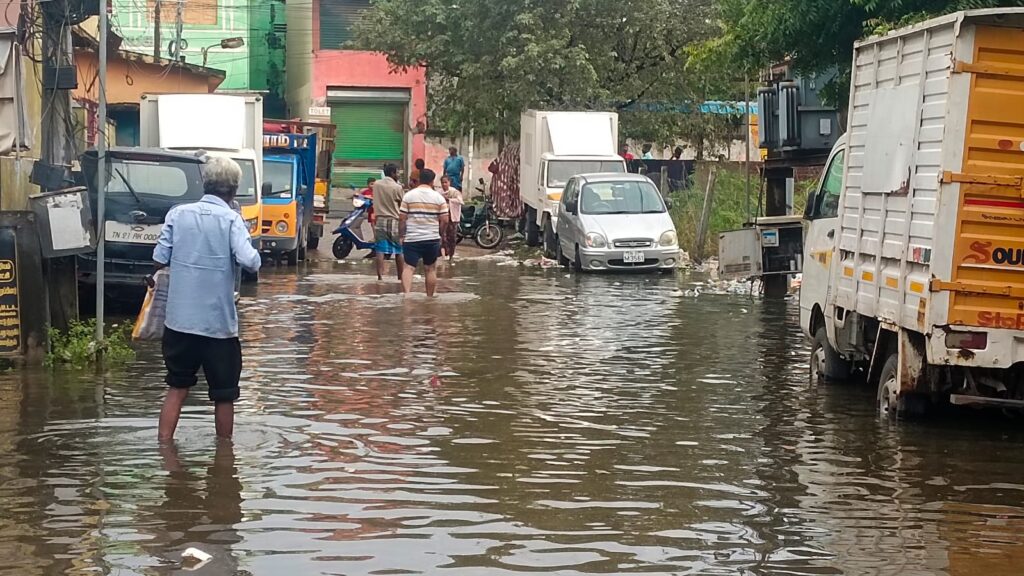
Chennai often faces waterlogging issues in its suburbs during the monsoon season. This phenomenon is a result of various factors, including rapid urbanisation, poor drainage infrastructure, and geographical characteristics. Several areas including Madipakkam, Pallikkaranai, Mudichur, Varadarajapuram, West Tambaram saw knee-deep water following recent rains.
Speaking to News Today, Sanjay, an environmentalist says, ‘As
Chennai’s suburbs witness rapid urban development, the increase in impervious surfaces such as concrete roads and buildings reduces natural water absorption. This leads to surface runoff, overwhelming drainage systems and causing waterlogging.’
‘The insufficient drainage infrastructure in many suburbs exacerbates the problem. Outdated or poorly designed stormwater drains cannot handle the volume of rainwater, resulting in streets and low-lying areas being inundated.’
On his part, professor Krishnan, a resident of Tambaram, says, ‘Chennai’s topography plays a crucial role in waterlogging. Some suburbs are situated in low-lying areas or areas prone to flooding, making them more susceptible to water accumulation during heavy rains.’
‘Poor maintenance of existing drainage systems further compounds the issue. Clogged drains, improper waste disposal, and lack of regular cleaning contribute to the ineffectiveness of the drainage network.’
Azhagar Samy, who runs an NGO in Porur, says, ‘Changing weather patterns, possibly influenced by climate change, lead to more intense and concentrated rainfall. The existing drainage systems may not be designed to handle such extreme weather events, resulting in increased instances of waterlogging.’
Addressing waterlogging in Chennai’s suburbs requires a multi-faceted approach, including urban planning reforms, infrastructure upgrades, and community involvement. By understanding the interconnected factors contributing to waterlogging, authorities can develop sustainable solutions to mitigate the impact of heavy rains on suburban areas.