


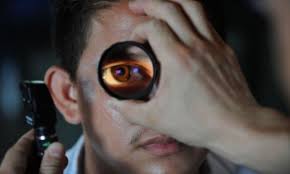
 Routine eye tests can accurately predict a person’s risk of stroke, according to an international research team on Tuesday.
The research, led by the Centre for Eye Research Australia (CERA) in Melbourne, Australia identified a blood vessel “fingerprint” at the back of the eye that can be used to predict a person’s stroke risk as accurately as traditional risk factors, but without the need for invasive tests, Xinhua News agency reported.
The research found that the fingerprint consists of 118 indicators of vascular health and can be analyzed from fundus photography, a common tool used in routine eye tests.
The team used a machine learning tool called the Retina-based Microvascular Health Assessment System (RMHAS) to analyse fundus photos of the eyes of 45,161 people in the UK with an average age of 55.