


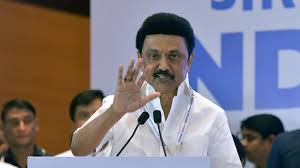
 Tamil Nadu Chief Minister M.K. Stalin has issued a sharp rebuttal to Prime Minister Narendra Modi’s widely promoted “double engine government” slogan, asserting that the states where this model has not taken root are actually excelling in development. Stalin’s comments, made amid heightened campaign rhetoric ahead of the 2026 Tamil Nadu Assembly elections, underline an ongoing political debate about governance and growth across Indian states.
At a recent rally in Madurantakam, where Prime Minister Modi pitched the BJP‑led National Democratic Alliance’s “double engine” model as a formula for progress — signalling a state government aligned with the Centre — Stalin dismissed the idea as a “Dappa engine” (literally a substandard, non‑functional engine) that would “not run in Tamil Nadu.” He argued that the Chief Minister’s vision of parallel governance with the Centre, as suggested by the slogan, has failed to deliver meaningful outcomes in states it governs.
Stalin pointed to development indicators, saying that states such as Tamil Nadu, Kerala, Telangana, Karnataka and West Bengal — where BJP’s “double engine” governance model has not been implemented — are “soaring high in development”, in contrast to BJP‑ruled states like Uttar Pradesh, Madhya Pradesh and Bihar. “Think about it a little… the states where your dummy engine hasn’t entered are the ones flying high in development,” he said in a post on X (formerly Twitter).” The Chief Minister also claimed that Tamil Nadu has achieved historic growth despite what he described as deliberate obstacles placed by the BJP‑led Union government.
Beyond the political rhetoric, Stalin’s critique reflects deeper tensions between the state government’s pursuit of development and its relationship with the Centre. He accused the BJP of allegedly undermining Tamil interests, including issues related to language and federal rights, and stressed that people in Tamil Nadu would not forget what he termed as “betrayals” by the central leadership. The exchange between the two leaders underscores how development narratives are increasingly intertwined with election strategy and federal dynamics ahead of one of the most closely watched state polls in southern India.