


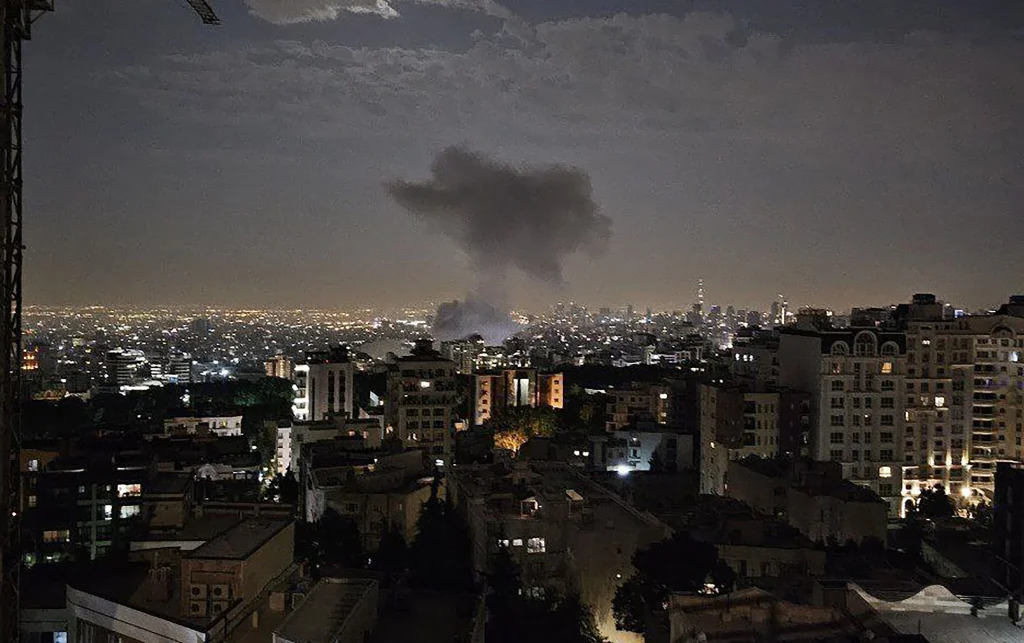
The conflict between Israel and Iran intensified sharply on Monday, with air raid sirens blaring across Tel Aviv and explosions reported in major Gulf cities including Dubai, Abu Dhabi, Doha, and Manama.
Iranian missile and drone strikes targeted Israeli territory in retaliation for recent attacks by Israel and the United States on Iranian sites.
Residents in Tel Aviv and nearby areas were forced to seek shelter as Israeli defence systems intercepted several incoming missiles. The alerts highlighted growing civilian concern amid the escalation.
In the Gulf, emergency warnings urged residents in Dubai and other cities to take immediate shelter and avoid windows. Debris from intercepted drones caused minor injuries in residential areas, and explosions were heard across Doha and Manama as air defence systems responded to threats.
The recent hostilities follow a coordinated US and Israeli military campaign against Iran’s strategic and nuclear sites, which prompted retaliatory strikes from Iran’s forces. The conflict has now expanded beyond Israel and Iran, affecting civilian life and air travel in the wider Middle East.
Authorities in the UAE and other Gulf states have temporarily closed airspace over key cities, intercepted missiles, and deployed emergency response measures. Flights to and from major airports have been delayed or cancelled, and smoke plumes and fires at strategic sites have been reported.
Global attention is focused on the region as diplomatic efforts intensify to prevent the conflict from escalating into a wider regional war. Analysts warn that the coming days will be critical in determining the trajectory of the hostilities.
Saudi Aramco has temporarily shut its Ras Tanura refinery after the facility was struck by Iranian drones. The strike on Ras Tanura — one of Saudi Arabia’s key refining hubs — adds to fears of broader disruption in the region’s energy infrastructure.
The attack comes at a moment of extreme strain for the global oil market. Crude prices have logged their steepest four-year surge as the widening Iran conflict has effectively paralysed shipping through the Strait of Hormuz, the narrow passage that handles nearly 20% of the world’s daily oil flows.
As the American and Israeli airstrikes continued, top Iranian security official Ali Larijani vowed defiantly on X that “we will not negotiate with the United States.”
In Iraq, a pro-Iranian militia claimed a drone attack targeting US troops at the Baghdad airport, the day after it said it fired at a US base in Irbil in the north, and Cyprus said a drone attack targeted a British base on the Mediterranean island nation.
Israel and the US bombed Iranian missile sites and targeted its navy, claiming to have destroyed its headquarters and multiple warships. More than 200 people have been killed since the start of the strikes, according to Iranian leaders.
As the bombardment continued, Hezbollah said it fired missiles from Lebanon into Israel early Monday in response to the killing of Iranian Supreme Leader Ali Khamenei and “repeated Israeli aggressions,” the first attack the militant group has claimed in more than a year. There were no reports of injuries or damage, and Israel said that it had intercepted one projectile while several fell in open areas.
Israel retaliated with strikes on Beirut and urged civilians in nearly 50 villages in eastern and southern Lebanon to evacuate ahead of more possible attacks, sending people fleeing.
The weekend attacks were the second combined strikes in eight months from the US and Israel against Iran. In the 12-day war last June, Israeli and American strikes greatly weakened Iran’s air defences, military leadership and nuclear program. But the killing of Khamenei, who ruled Iran for more than three decades, creates a leadership vacuum, increasing the risk of regional instability.