

Avanashi: Temple Echoes, Textile Energy and the Reserved Mandate

- Tamil
- Hindi
- Malayalam
- Kannada
- Telugu
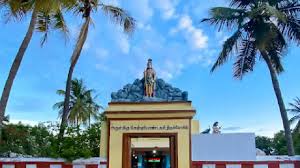
Constituency No. 112 | Tiruppur District | Scheduled Caste (Reserved)
Avanashi stands on the eastern edge of Tiruppur district, where the hum of textile looms meets the chant of ancient temple hymns. It is a constituency where history precedes industry, where a temple legend predating modern Tamil politics coexists with export-driven growth and social justice arithmetic.
Reserved for Scheduled Castes, Avanashi reflects both aspiration and assertion — an arena where representation carries layered meaning.
Here, devotion, development and dignity intersect.
Avinashiappar and the Crocodile Legend
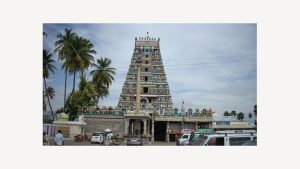
The constituency draws identity from the historic Avinashiappar Temple, dedicated to Lord Shiva. The temple’s mythology recounts the miracle associated with the saint Sundarar, who is believed to have restored a child swallowed by a crocodile in the temple tank. This legend, immortalised in Saivite lore, places Avanashi within Tamil devotional history.
The temple’s towering gopuram and intricate stone carvings reflect Chola-era architecture. During annual festivals, particularly Panguni and Maha Shivaratri, devotees converge in large numbers. Temple car processions animate the town’s streets, fusing religious fervour with civic presence.
Avanashi’s political narrative unfolds beneath this devotional canopy.
Textile Orbit and Industrial Linkages
Though smaller than neighbouring Tiruppur city, Avanashi lies firmly within the textile and garment export ecosystem that defines western Tamil Nadu. Power looms, knitting units and garment-related workshops dot its economic landscape.
Young workers commute toward Tiruppur’s industrial clusters. Road networks connecting Avanashi to Tiruppur and Coimbatore are vital for labour mobility and goods movement. Employment stability in textile markets directly influences voter mood.
When export orders surge, optimism rises. When markets tighten, unease spreads quickly.
Industry here shapes aspiration.
Agrarian Roots in a Growing Belt
Beyond its temple town core, the constituency retains agrarian pockets. Coconut groves, maize cultivation and vegetable farming persist. Borewell irrigation supplements tank-fed tracts.
Rural and semi-urban voters coexist, creating a layered electoral profile. Agricultural loan access, electricity supply for looms and water security are equally relevant.
Avanashi is not singular in economy; it is blended.
The Electoral Ledger:
Reserved status has framed its contests within the broader Dravidian bipolar structure.
2011
Winner: A. A. Karuppusamy (AIADMK) — 1,02,271 votes
Second: R. Dhanapal (DMK) — 82,127 votes
Third: K. Ramasamy (DMDK) — 27,618 votes
Margin: 20,144 votes
2016
Winner: Dhanapal P (AIADMK) — 93366 votes
Second: Anandhan E (DMK) — 62692 votes
Third: Arumugam M (CPI) — 15016 votes
Margin: 30674 votes
2021
Winner: P. Dhanapal (AIADMK) – 117,284 votes
Second: R. Athiyamaan Raju (DMK) – 66,382 votes
Third: Shoba (NTK) – 13,256 votes
Margin: 50,902 votes
The swing reflected alliance consolidation and western recalibration.
The seat has occasionally produced figures who later held ministerial responsibilities, reinforcing its relevance beyond district arithmetic.
Avanashi’s electorate responds to representation with scrutiny.
Social Justice and Representation
As a Scheduled Caste-reserved constituency, Avanashi carries layered expectations. Representation is not symbolic alone; it is measured against delivery in housing schemes, educational access, welfare distribution and employment facilitation.
Caste dynamics operate quietly but decisively in booth-level mobilisation. Community associations influence turnout and margin shaping.
Social justice here is not a slogan; it is performance-tested.
Civic Demands and Infrastructure Focus
Key concerns include:
Road maintenance linking Avanashi to Tiruppur and Coimbatore.
Drinking water supply amid industrial growth.
Textile sector employment stability.
Drainage and waste management in expanding semi-urban zones.
Residents evaluate MLAs on accessibility and intervention in industrial or labour disputes.
Delivery here must straddle temple town and textile town.
Folk Traditions and Festival Life
Temple festivals remain central. The Avinashiappar car festival draws crowds across caste lines. Amman temple rituals in surrounding villages reinforce seasonal unity.
Pongal celebrations include cattle decoration and rural sports. Cultural continuity balances industrial expansion.
Avanashi’s social rhythm blends loom and liturgy.
Cuisine and Kongu Influence
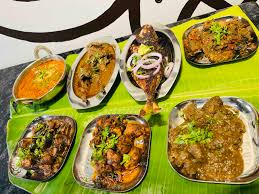
Being in the Tiruppur belt, Avanashi’s culinary palette reflects Kongu cuisine — arisi paruppu sadam, coconut-rich gravies and pepper-seasoned meat dishes. Small eateries near the bus stand serve textile workers and pilgrims alike. Food here is functional, flavourful and rooted in labour.
Political Temperament
Western Tamil Nadu is known for organisational discipline. Avanashi reflects that pattern. Campaigns emphasise booth management and coalition arithmetic rather than rhetorical flourish.
The electorate values stability, employment assurance and visible welfare delivery.
Avanashi does not react impulsively; it aligns strategically.
What Decides Here
Three determinants shape Avanashi’s trajectory:
Industrial Employment Confidence.
Textile health shapes urban voter sentiment.
Welfare Delivery.
Reserved status heightens scrutiny on scheme implementation.
Alliance Arithmetic.
Western consolidation can swing margins sharply.
Avanashi stands at the intersection of devotion and development.
Closing Frame
The gopuram of Avinashiappar rises against the western sky. Power looms hum in side streets. Pilgrims and textile workers share tea stalls at dusk. Buses depart toward Tiruppur at dawn.
Avanashi is temple echo and textile energy — a constituency where ancient legend and modern labour coexist.
When it votes, it does so with awareness of both its sacred past and economic present.
In Avanashi, mandate is reserved — but never routine.