

Ambur: Leather, Labour, Logistics and the Legacy Biriyani

- Tamil
- Hindi
- Malayalam
- Kannada
- Telugu
Constituency No. 48 | Tirupattur District | General
Ambur is known first by taste, then by trade. Before one speaks of leather exports and electoral margins, one must acknowledge the unmistakable fragrance that drifts across highways and railway platforms — Ambur biriyani.
This is a constituency where industry feeds livelihood and cuisine feeds identity. Where tanneries line the road and biriyani vessels simmer beside them. Where export consignments leave for Europe even as travellers halt for a plate of rice that has travelled far further in reputation.
Ambur does not separate economy from culture. It blends them.
The Biriyani That Built a Brand

Ambur biriyani is not just food. It is a brand ecosystem.
Cooked traditionally with seeraga samba rice, slow-fire technique, measured spice, and distinct gravy absorption, it differs from its richer Hyderabad cousin and its heavier Dindigul counterpart. The rice is lighter. The spice is precise.
The flavour lingers without overwhelming.
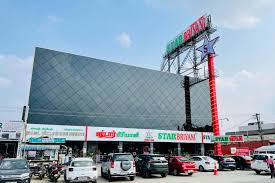
Small family-run outlets evolved into national chains.
Highway eateries became culinary landmarks. Political leaders, cinema figures, and travellers alike have paused here.
Food entrepreneurship has generated employment, tourism spillover, and civic pride.
In Ambur, even cuisine is organised.
Leather and Logistics

Parallel to the biriyani kitchens run the tanning drums.
Ambur is one of India’s most significant leather-processing hubs. Tanneries and footwear units export globally. Skilled labour, machine operators, quality inspectors and logistics workers form the backbone of its workforce.
Environmental compliance remains central. Effluent treatment plants and regulatory oversight are constant features of industrial life. Employment stability depends on export demand and policy clarity.
Ambur’s economy is not abstract. It is shift-based. Production-linked. Wage-driven.
Mosques, Markets, Mobility

Ambur’s social fabric is tightly woven. A substantial Muslim population shapes neighbourhood life and political arithmetic. Mosques stand at street corners; temple complexes serve older settlements; markets hum late into the night.
Key public anchors include:
Masjid-e-Akbar, a central congregational mosque.
Ambur railway station connecting Chennai and Bengaluru.
National Highway 44, carrying cargo and customers alike.
Leather markets and biriyani clusters lining the main roads.
Faith, food and freight define daily rhythm.
The Electoral Ledger:
Ambur’s voting pattern reflects structured consolidation.
2011
Winner: Aslam Basha A. (Manithaneya Makkal Katchi – DMK alliance) — 71,874 votes
Second: V. Ramesh (AIADMK) — 67,329 votes
Third: K. Devarajan (DMDK) — 20,719 votes
Margin: 4,545 votes
2016
Winner: Balasubramani.R(ADMK — 79182 votes
Second: Nazeer Ahmed.V.R (MNMK) — 51176 votes
Third: Madar Khaleellur Rahman (SUNP) — 7640 votes
Margin: 28,006 votes
2021
Winner: Vilwanathan.A.C (DMK ) — 90,476 votes
Second: Nazar Mohamed.K (ADMK) — 70,244 votes
Third: Maharunnisha(Naam Tamilar Katchi) — 10,150 votes
Margin: 20,232 votes
The advantage expanded again. The constituency demonstrated alliance discipline and community cohesion.
The MLA did not hold cabinet rank, but sustained representation reinforced local leverage.
Industry and Identity
Ambur’s politics cannot be reduced to communal arithmetic alone. It is industrial arithmetic layered over social structure.
Employment stability in tanneries matters. Environmental scrutiny matters. Skill training and export facilitation matter.
At the same time, representation of minority concerns — educational access, business support, civic inclusion — shapes loyalty.
Economic interdependence tempers polarisation. Workers and entrepreneurs share stake in continuity.
Urban Pressure Points
Growth has tightened space.
Drainage in dense industrial areas requires constant upgrading. Solid waste disposal near markets and food clusters demands vigilance. Traffic congestion around railway crossings tests patience.
Industrial towns are unforgiving when systems falter.
Transport reliability, both rail and road, influences both cargo schedules and daily commuters. Delays translate into financial strain.
Ambur expects responsiveness.
What Decides Here
Three determinants guide Ambur’s electoral direction:
Export Confidence.
Stable leather demand sustains optimism.
Alliance Cohesion.
Fragmentation shrinks margins; unity expands them.
Civic Delivery.
Industrial towns require industrial-grade governance.
When these align, verdicts widen decisively.
Closing Frame
In Ambur, the aroma of biriyani rises alongside the scent of processed leather. Both are products of precision, timing, and inherited skill.
This constituency understands trade. It understands taste. It understands arithmetic.
When Ambur votes, it does so with the discipline of its workshops and the balance of its kitchens — measured, structured, and unmistakably its own.