

1991: A Historic Mandate Amid National Tragedy

🌐 Translate ▾
- Tamil
- Hindi
- Malayalam
- Kannada
- Telugu
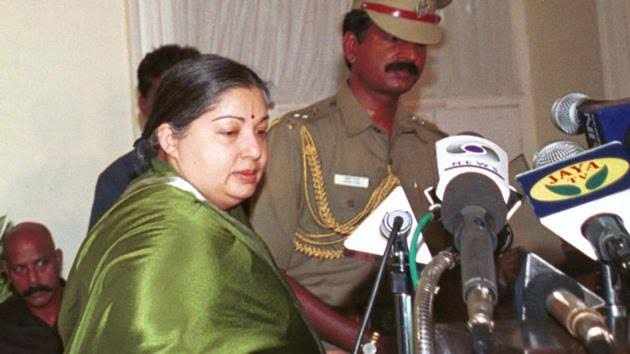
The 1991 Tamil Nadu Assembly election was one of the most dramatic and consequential elections in the state’s political history. Conducted during a period of national turmoil and political upheaval, the election resulted in a landslide victory for the alliance led by the All India Anna Dravida Munnetra Kazhagam under the leadership of J. Jayalalithaa. The outcome significantly altered the political balance in the state and marked the beginning of Jayalalithaa’s rise as a dominant political figure.
Political Background
The election took place after the dismissal of the government led by M. Karunanidhi of the Dravida Munnetra Kazhagam(DMK). In January 1991, the central government dismissed the DMK government, accusing it of failing to maintain law and order and alleging links with the Sri Lankan Tamil militant organization Liberation Tigers of Tamil Eelam (LTTE). Following the dismissal, President’s Rule was imposed in the state.
The political environment became even more intense after the assassination of former Prime Minister Rajiv Gandhi on May 21, 1991, during an election rally in Sriperumbudur near Chennai. The assassination, carried out by a suicide bomber associated with the LTTE, shocked the nation and had a profound impact on the election.
Electoral Alliances
In the 1991 election, the AIADMK led by Jayalalithaa formed a strong alliance with the Indian National Congress. This alliance benefited from a massive sympathy wave following the assassination of Rajiv Gandhi.
The DMK contested the election facing strong criticism and political isolation due to allegations linking the party to LTTE sympathies. Several other parties also contested the election, but the main battle remained between the AIADMK–Congress alliance and the DMK.
Campaign Themes
The campaign in 1991 focused heavily on issues of national security, law and order, and political stability. The AIADMK and Congress alliance emphasized the need for strong governance and pledged to restore stability in the state.
Jayalalithaa projected herself as a decisive and capable leader who could continue the legacy of M. G. Ramachandran, her political mentor. Her campaign highlighted welfare programs and development policies while also appealing to voters’ emotions during a period of national mourning.
The DMK, meanwhile, attempted to defend its record in governance and development but struggled to counter the strong political wave created by the tragic events surrounding Rajiv Gandhi’s assassination.
Election Results
The results of the 1991 election were a massive landslide victory for the AIADMK–Congress alliance. The alliance won an overwhelming majority in the Tamil Nadu Assembly, while the DMK suffered one of the worst electoral defeats in its history.
Jayalalithaa became Chief Minister for the first time in June 1991, marking the beginning of a new era in Tamil Nadu politics.
Political Significance
The 1991 election had long-lasting consequences for the state’s political landscape. It marked the emergence of Jayalalithaa as a powerful leader capable of commanding strong public support across the state.
The election also reinforced the trend of alliances between regional parties and national parties playing a decisive role in Tamil Nadu politics. The dramatic circumstances surrounding the election demonstrated how national events could significantly influence regional electoral outcomes.
Another significant aspect of this election was the consolidation of AIADMK as a dominant political force after the uncertainty that followed MGR’s death. Jayalalithaa’s sweeping victory established her authority within the party and helped transform her from a contested successor into the undisputed leader of the AIADMK, setting the stage for the intense political rivalry between her and Karunanidhi that would dominate Tamil Nadu politics for the next two decades.
Overall, the 1991 Tamil Nadu Assembly election remains one of the most pivotal and emotionally charged elections in the state’s history, shaping the course of politics in Tamil Nadu for decades to come.