


Zurich, June 22:
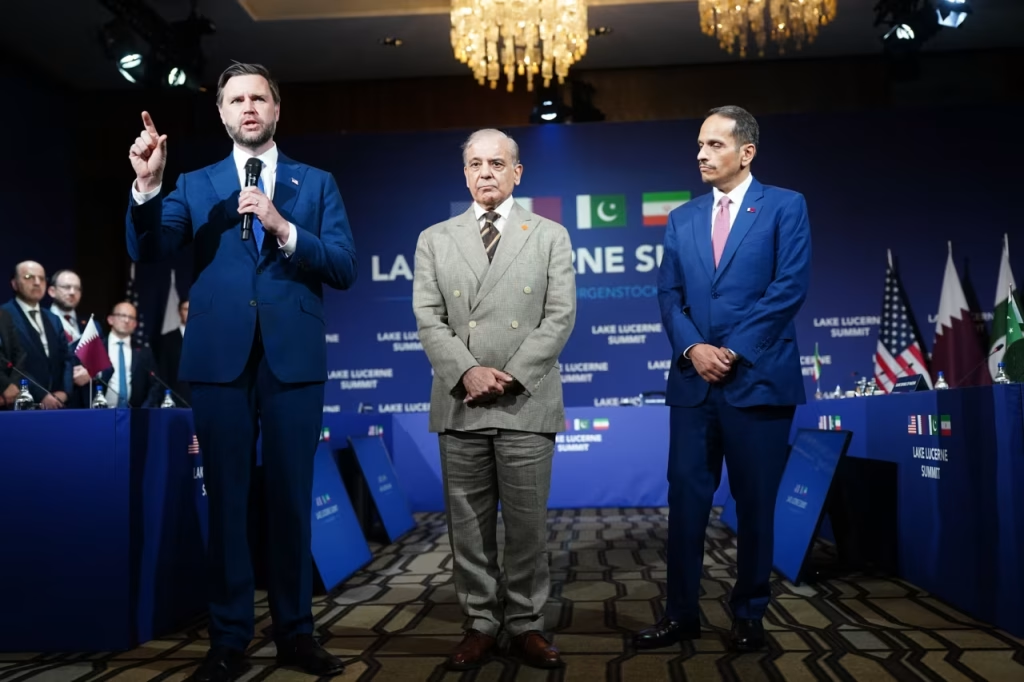
Senior delegations from the United States and Iran met on Sunday at the Swiss resort of Burgenstock for high-level talks aimed at advancing peace efforts in West Asia.
The discussions, known as the Lake Lucerne Summit, were led by US Vice President JD Vance and Iranian Parliament Speaker Mohammad Bagher Ghalibaf, with Pakistan Prime Minister Shehbaz Sharif and senior Qatari leaders acting as mediators.
The talks focused on implementing a Memorandum of Understanding (MoU) signed last week by US President Donald Trump and Iranian President Masoud Pezeshkian.
The agreement established a 60-day negotiation period to address key regional issues, including Iran’s nuclear programme, international sanctions on Tehran, and Israel’s military operations in Lebanon. Sharif signed the MoU as a guarantor.
Technical negotiations were originally scheduled to begin on Friday but were delayed due to renewed clashes between Israel and the Iran-backed Hezbollah group. Sunday’s meeting marked the first direct high-level US-Iran engagement in ten weeks, following unsuccessful talks held in Islamabad in April.
Other participants included US envoy Steve Witkoff, adviser Jared Kushner, Iranian Foreign Minister Abbas Araghchi, diplomat Esmaeil Baghaei, and Pakistan’s Chief of Defence Forces Asim Munir. Ahead of the talks, Vance described the meeting as “historic” and expressed hope that both sides could reshape regional relations and achieve lasting peace.
Iranian officials stressed that successful implementation of the MoU requires an end to conflicts across the region, particularly in Lebanon.
Mediators from Pakistan and Qatar also voiced optimism that the summit could produce a framework for peace, stability, and economic progress.
Lebanon and Iran’s nuclear programme are expected to dominate the negotiations. The talks are part of broader diplomatic efforts to reduce tensions involving the US, Iran, and Israel and to transform the fragile interim agreement into a durable peace settlement.
Discussions also touched on the Strait of Hormuz, a critical global energy route, amid conflicting claims over its operational status and future security.