


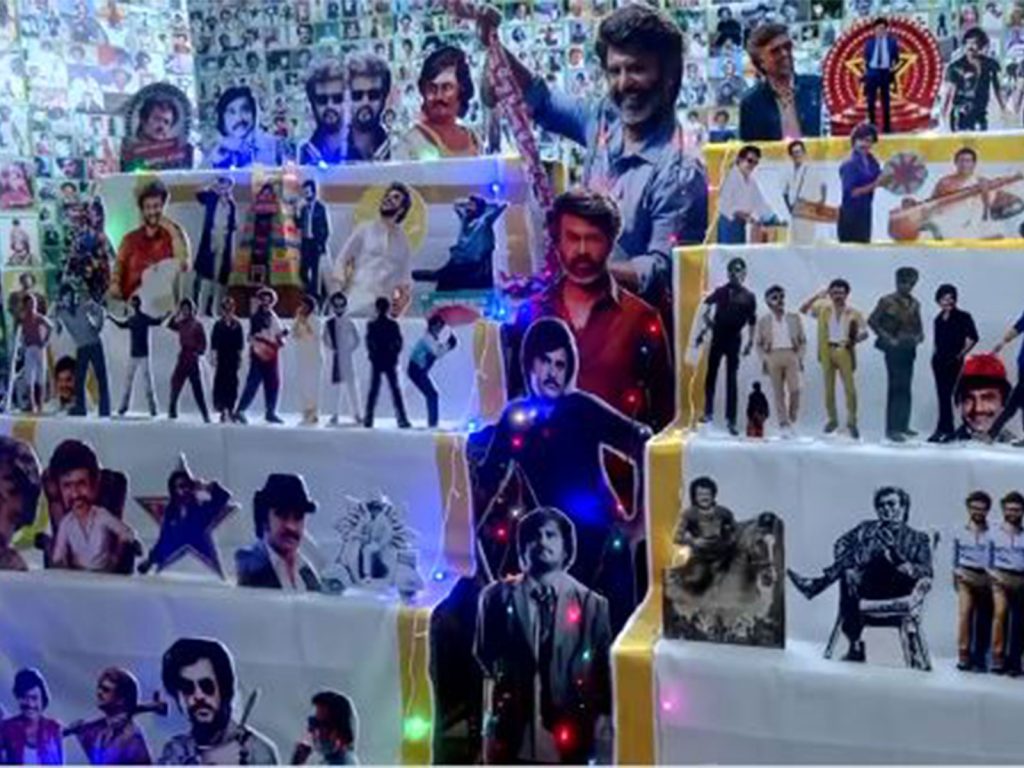
Navaratri kolu, traditionally associated with dolls depicting Hindu deities, mythological stories and scenes from everyday life, is increasingly becoming a platform for creative expression. In Tamil Nadu, where cinema has a deep influence on popular culture, film stars and their memorable characters are also finding a place on the festival steps.
The connection between Tamil cinema and Navaratri kolu was highlighted this year by a special display dedicated to superstar Rajinikanth at the Azhagumigu Sri Rajini Temple in Madurai. Organised by his devoted fan Karthik for the third consecutive year, the arrangement features more than 230 photographs and representations of the actor’s iconic characters, tracing his cinematic journey from Apoorva Raagangal to his recent films and upcoming projects.
The display goes beyond a conventional collection of film photographs. It brings together different stages of Rajinikanth’s career and celebrates the distinctive screen presence, style and characters that have made him one of Tamil cinema’s most recognisable stars. The arrangement also includes a portrait of the actor drawn on a leaf, adding an artistic touch to the tribute. Daily pujas and the distribution of prasadam accompany the display.
Karthik’s initiative illustrates how cinema fandom can find expression within a traditional cultural celebration. For many admirers, a favourite actor represents more than entertainment; the actor’s films, dialogues and memorable moments become part of their personal and collective memories. A cinema-themed kolu offers fans an opportunity to revisit those memories while sharing their enthusiasm with visitors.
The idea also reflects the flexibility of the kolu tradition. While dolls of gods and goddesses remain central to many displays, families increasingly explore themes involving heritage, social life, historical events, weddings and contemporary subjects. Cinema, with its larger-than-life characters and powerful visual imagery, lends itself naturally to such arrangements.
Tamil cinema has long drawn inspiration from mythology, devotion and religious traditions, while festivals have often provided opportunities for film-related celebrations. The relationship works both ways: films influence popular imagination, and audiences incorporate their favourite stars into personal celebrations. A kolu devoted to an actor is a striking example of how entertainment and cultural practices can overlap.
The Rajinikanth-themed display also comes amid continuing interest in the actor’s film career, including Jailer 2. For visitors, the collection provides a visual journey through several decades of his screen appearances, while for the organiser and fellow fans, it is an expression of sustained admiration.
Such displays raise an interesting question about how traditions evolve across generations. The core of Navaratri kolu remains the arrangement of dolls and the sharing of stories, devotion and hospitality. Yet the themes can change with the interests of the people who create them. Cinema-inspired kolu arrangements show how a familiar tradition can accommodate contemporary popular culture without losing its festive character.
As Navaratri celebrations continue to bring families and communities together, Tamil cinema’s presence on the kolu steps demonstrates the enduring bond between the screen and its audience. Whether through a collection of iconic characters or a carefully planned cinematic theme, the festival offers fans a creative way to celebrate the stars and stories that have become part of their lives.