

Anna Nagar: Gridlines, Gravitas and the Politics of Prestige

- Tamil
- Hindi
- Malayalam
- Kannada
- Telugu
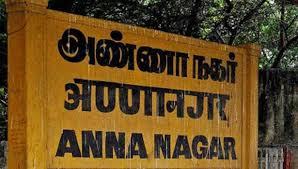
Constituency No. 21 | Chennai District | General
Anna Nagar is one of Chennai’s most distinctive electoral and urban identities — a township conceived in civic ambition, named after C. N. Annadurai, known affectionately as Arignar Anna (scholar poet). The name itself carries metaphorical weight: a tribute to a leader whose political vision intertwined social justice, linguistic pride and cultural renewal.
In this fastidious grid of avenues and apartments, citizens do not just vote; they evaluate identity, ideology and delivery with exacting precision.
Here, the Dravidian Idea — and its critics — have met gridlines and gravitas.
From Anna’s Ideals to Urban Geometry
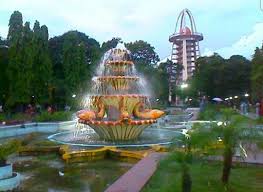
Anna Nagar was created in the late 1960s as a planned township, its broad avenues and right-angled intersections a stark contrast to the older, organic sprawl of Chennai. Streets such as 100-Feet Road, Second Avenue, Third Avenue and the surrounding ring of retail and residence have become symbols of middle-class aspiration.
The Anna Nagar Tower Park stands at the constituency’s core — a landscaped expanse crowned by its eponymous tower. On any morning, the park hosts brisk walkers, smartphone strategists, Tai Chi practitioners and campaign foot soldiers alike. Tower Park is more than a landmark; it is a civic agora, where policy talk mixes with brisk exercise and coffee plans.
The design of Anna Nagar reflects a belief that structure — both physical and social — can create citizen confidence. And confidence here is political currency.
Temple Bells and Urban Rituals
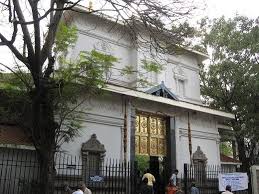
Urban streets do not sterilise devotion here. The Sri Ayyappan Temple draws a steady stream of devotees, especially in the Mandala season. Meanwhile, smaller neighbourhood shrines dedicated to Vinayagar, Mariamman and other village deities sit comfortably within the township’s planned symmetry.
During festivals such as Vinayaka Chaturthi and Navaratri, processions move through gridlines, with lights, music and temple cars weaving into the urban fabric. Community pandals and kolu displays along residential avenues are sites of both celebration and conversation — informal spaces where political preferences are as eagerly discussed as festival sweets.
Festivals here are disciplined rituals, an urban reinterpretation of classical devotion.
High-Profile Residents and Political Thermometers
Anna Nagar’s demographic tilt spans bureaucrats, corporate professionals, educators, artists and former office-bearers. It has housed senior civil servants, industrial leaders and political figures. The constituency’s electoral verdicts are therefore watched beyond party tally tables: they are interpreted as urban endorsements — a barometer of middle-class sentiment.
Political campaigns here are layered. They speak not only to caste and class identity, but to quality-of-life expectations, property value confidence, infrastructure performance and cultural priorities.
To win Anna Nagar is to earn a kind of urban imprimatur.
Karunanidhi’s 1980 Test: Narrow Verdict, Deep Echo
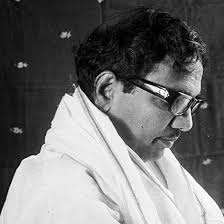
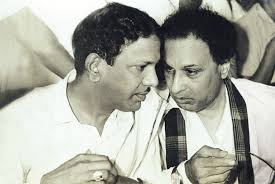
Probably the most storied episode in Anna Nagar’s political memory is the 1980 Assembly election, when M. Karunanidhi — at the height of Dravidian rivalry with M. G. Ramachandran (MGR) — contested here against H. V. Hande of the AIADMK.
That contest was a thriller at the arithmetic level. Karunanidhi won by just 699 votes, a hairline margin that has been discussed in political narratives ever since. The razor’s edge result underscored several realities:
* Even towering leadership figures had to confront urban voters’ scrutiny.
* MGR’s AIADMK dominance in state politics was formidable.
* Anna Nagar’s electorate was attentive, evaluative and not deferential.
That contest remains a foundational narrative because it symbolised how urban constituencies could temper political myth with measured arithmetic.
Electoral Ledger:
Anna Nagar’s electoral journey in recent cycles reflects competitive bipolar dynamics, urban consolidation and alliance impact.
2011
Winner: Gokula Indira S. (AIADMK) — 88,954 votes
Second: Arcot N. Veerasamy (DMK) — 72,189 votes
Third: V. Vetriselvan (DMDK) — 24,667 votes
Margin: 16,765 votes
2016
Winner: Mohan M. K. (DMK) — 70812 votes
Second: Gokula Indira S. (AIADMK) — 69726 votes
Third: Suresh K (BJP) — 8832 votes
Margin: 1086 votes
2021
Winner: M. K. Mohan (DMK) — 80,054 votes
Second: R. Gokula Indira (AIADMK) — 52,609 votes
Third: V. Ponraj (MNM) — 17522 votes
Margin: 27,445 votes
Under the DMK-led alliance (SPA), the margin widened decisively — reflecting consolidation of urban support and alliance arithmetic that resonated with local priorities.
Anna Nagar does not shift arbitrarily. It tightens under contest and moves decisively under coalition clarity.
Civic Anatomy: Expectations and Reality Checks
Anna Nagar’s urban electorate evaluates governance through tangible parameters:
Stormwater drainage performance during monsoon — clogged drains and waterlogging evoke immediate reactions.
Road and pavement maintenance — as a neighbourhood with heavy vehicle and pedestrian use, quality of upkeep matters.
Waste segregation and collection efficiency — no longer peripheral in urban civic contracts.
Public space management — parks, street lighting, safety for women and children on footpaths.
Civic associations here do not simply lobby; they audit performance.
Delivery is measured in timelines, not tracts.
Economy, Real Estate and Urban Confidence
Anna Nagar’s retail corridors host branded outlets, educational centres, specialty clinics and dining venues. Real estate valuations remain among Chennai’s highest outside the core business districts.
Market sentiment here matters politically. If infrastructure lags or utility rates rise, residents pay attention — and assess incumbency accordingly.
Property value and political value intersect.
Cultural Texture: Classical and Contemporary
This constituency participates in Chennai’s wider cultural calendar. During the Margazhi season, Carnatic concerts, sabhas and devotional recitals draw participation beyond locality. Community welfare associations often host lectures, public debates and citizen engagement forums.
Anna Nagar’s electorate is not only literate but culturally engaged. Political messaging must resonate with articulate, informed and media-aware citizens.
Noise does not win here; nuance does.
Urban Taste, Foodways and Identity

The cuisine of Anna Nagar reflects its cosmopolitan palate: from classic South Indian vegetarian meals to multi-cuisine restaurants and sleek cafés.
Fast-food outlets sit comfortably alongside filter-coffee joints and idli-sambar counters.
Seasonal festival foods — sweet pongal during Sankranti, murukku during Diwali — are shared with neighbours and friends. Food is a social signal of local identity.
Here, taste is urban, varied, social.
What Decides Here
Three determinants shape Anna Nagar’s electoral trajectory:
1. Urban Governance Delivery.
Performance on drains, roads and waste collection is non-negotiable.
2. Candidate Profile and Legacy.
High profile contenders face granular scrutiny.
3. Alliance Arithmetic.
Coalition clarity amplifies margins.
Anna Nagar voters do not defer to grandeur. They ask: Did you deliver?
Closing Frame
Tower Park’s silhouette fades into evening glow. Temple lamps flicker at dusk. Apartment balconies overlook avenues mapped with campaign posters. Conversations move from cultural sabhas to traffic bottlenecks, from property taxes to public safety.
Anna Nagar is not merely a constituency. It is an urban chronicle — of aspiration, architecture, debate and electoral arithmetic.
When Anna Nagar votes, it does so with the assurance of an urban community that knows its history and demands its future.
In this grid of gravitas, mandate is benchmarked, not broadcast.