

Aranthangi: Salt Wind, Sea Routes and a Veteran’s Footprint

- Tamil
- Hindi
- Malayalam
- Kannada
- Telugu
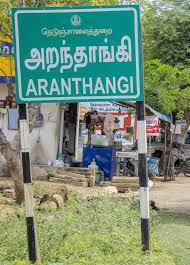
Constituency No. 183 | Pudukkottai District | General
Aranthangi sits closer to the coast than it advertises. Though not a seafront town itself, it belongs to the salt-tinged geography of south-eastern Tamil Nadu, where fishing hamlets, agrarian stretches and small market towns merge into one electoral canvas.
It is also a constituency once associated with S. Thirunavukkarasu, one of Tamil Nadu’s most seasoned political figures, whose journey across party lines and positions added a layer of prominence to this otherwise understated seat.
Aranthangi does not shout its importance. It accumulates it.
Between Coast and Canal

The constituency stretches across semi-rural terrain marked by paddy fields, groundnut cultivation and interior village clusters. Proximity to the Bay of Bengal influences weather patterns and occupational choices.
Fishing communities in the broader belt shape economic flows, even if the town centre itself remains inland.
Public markers include:
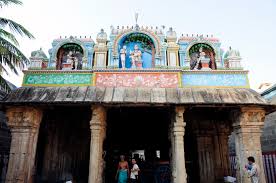
The historic Aranthangi Fort, a remnant of regional power struggles in earlier centuries.
Temple complexes such as the Sri Avudaiyarkoil Temple within reachable distance, drawing pilgrims and traders alike.
Weekly markets that bind agrarian and coastal produce into a single exchange system.
Water management through tanks and seasonal channels remains central. Rainfall inconsistency quickly becomes political conversation.
The Veteran’s Chapter

S. Thirunavukkarasu, a political figure who has traversed AIADMK, BJP and Congress affiliations over decades, once represented this seat. His tenure brought Aranthangi into sharper statewide focus.
His career reflects adaptability; Aranthangi’s electorate reflects scrutiny. Representation here has never been passive. Leaders are expected to be present, not merely prominent.
Political memory in this constituency includes both personal loyalty and pragmatic recalibration.
The Electoral Ledger:
Aranthangi’s recent contests have been competitive and decisive.
20112011
Winner: S. Rajanayagam (AIADMK) — 94,562 votes
Second: T. Muthuraja (DMK) — 78,345 votes
Third: P. Kumar (DMDK) — 24,771 votes
Margin: 16,217 votes
2016
Winner: Rathinasabhapathy E (AIADMK) — 69905 votes
Second: Ramachandran T (INC) — 67614 votes
Third: Loganathan P (CPI) — 6341 votes
Margin: 2291 votes
2021
Winner: T. Ramachandran (INC – DMK alliance) — 81,835 votes
Second: M. Rajanayagam (AIADMK) — 50,942 votes
Third: M.I. Humayun Kabir (Naam Tamilar Katchi) — 18,460 votes
Margin: 30,893 votes
The axis shifted, yet margins stayed substantial. Aranthangi does not favour knife-edge finishes.
Agriculture and Coastal Economy
Aranthangi’s voters straddle two economic worlds:
Agrarian families dependent on monsoon and tank irrigation.
Coastal communities tied to fishing cycles and marine trade.
Fuel price fluctuations, fishing regulations, crop insurance clarity and rural road strength influence sentiment.
In such constituencies, welfare implementation often weighs heavily. Ration delivery, housing schemes and healthcare accessibility determine loyalty at household level.
Food and Familiarity

Aranthangi’s culinary identity leans toward coastal Tamil Nadu staples — fish curries simmered with tamarind and red chilli, dried fish preparations, groundnut-based gravies, and millet dishes in interior villages.
Local eateries serve simple, robust meals. Politics here is discussed over stainless steel tumblers of tea in bus stands and market corners.
Community feasts during temple festivals reinforce networks that later reappear during campaigns.
Civic Demands
Interior road durability remains a frequent complaint. Drinking water supply in summer months tests administrative coordination. Access to higher education requires travel to Pudukkottai or beyond, prompting youth migration.
Urbanisation is gradual, not explosive. Infrastructure gaps surface slowly but persistently.
This is a constituency that values follow-through.
What Decides Here
Three determinants shape Aranthangi’s electoral future:
Water and Weather Stability.
Agrarian confidence anchors margin.
Coastal Policy Sensitivity.
Fishing rights and fuel costs influence turnout.
Organisational Reach.
Strong booth networks convert goodwill into votes.
Aranthangi has demonstrated loyalty, but never blind allegiance.
Closing Frame
The salt wind travels inland. Fort walls stand weathered but upright. Markets swell on designated days and fall quiet after dusk.
Aranthangi’s politics carries the same rhythm — steady, deliberate, and rarely theatrical.
It has hosted veterans. It has recalibrated loyalties. It continues to measure performance with patience.
When Aranthangi votes, it does not gamble. It chooses.