

Arcot: Where Empires Fell and Ballots Endure

- Tamil
- Hindi
- Malayalam
- Kannada
- Telugu
Constituency No. 37 | Ranipet District | General
Arcot is not merely an assembly constituency. It is a chapter in subcontinental history. Before ballots, before party symbols, before Dravidian realignments, Arcot was a theatre of imperial contest — a name that echoed through the Carnatic Wars and altered the trajectory of colonial power in South India.
Today, the cannons are silent. The fort walls stand weathered. But the electorate remains alert. Arcot does not forget its past. Nor does it romanticise it. It votes with memory and method.
Fort Walls and Fallen Nawabs
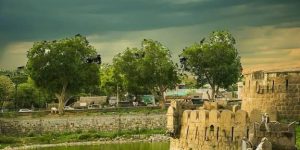
The Arcot Fort is not just masonry. It is history compressed into stone. In 1751, the Siege of Arcot became a decisive episode in the Anglo-French struggle for dominance in the Carnatic region. Robert Clive’s defence of Arcot marked a turning point in colonial consolidation.
Nearby stands the Delhi Gate, a remnant of Mughal-linked architecture that signals Arcot’s earlier Nawabi prominence. The town once functioned as capital of the Carnatic Nawabs. Persianate influences mingled with Tamil culture. Mosques and temples coexisted within fortified boundaries.
Arcot’s historical memory is layered — Mughal, Nawabi, colonial, post-colonial.
History here is not decorative. It is structural.
Mosques, Markets, Memory
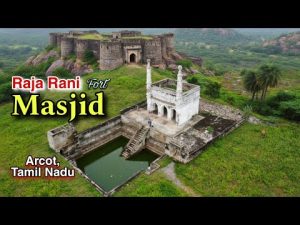
Arcot carries a significant Muslim population, shaping its cultural identity and political arithmetic. The town’s mosques — including centuries-old congregational spaces — anchor community life. Temple clusters serve parallel devotional networks.
Street markets bustle with traders selling spices, textiles and everyday goods. Small businesses form the economic backbone. The broader Ranipet industrial belt influences employment patterns, particularly through leather and ancillary manufacturing.
Arcot is neither fully rural nor fully industrial. It is transitional, layered and commercially alive.
Food of a Fort Town

Arcot’s culinary claim to fame is unmistakable — the Arcot Makkan Peda, a rich sweet with a crisp exterior and dense, milk-based interior soaked lightly in syrup. Unlike the syrup-heavy sweets of other regions, Makkan Peda is firm, textured and distinctive.
Local biriyani varieties reflect northern Tamil Nadu’s spice balance, different from Ambur’s measured heat or Dindigul’s tang.
Cuisine here is historical memory made edible.
Arcot’s recent electoral journey shows structured loyalty with occasional recalibration.
2011
Winner: R. Srinivasan (AIADMK) — 88,103 votes
Second: K. Elangovan (DMK) — 75,629 votes
Third: S. Babu (DMDK) — 24,816 votes
Margin: 12,474 votes
2016
Winner: J. L. Eswarappan (DMK) — 84182 votes
Second: Ramadoss K.V (ADMK) — 73091 votes
Third: G.Karikalan (PMK) — 35043 votes
Margin: 11091 votes
2021
Winner: J. L. Eswarappan (DMK) — 1,03,885 votes
Second: K.L. Elavazagan (PMK) – 83,927 votes
Third: R. Kathiravan (Naam Tamilar Katchi – NTK) – 12,088 votes
Margin: 19,958 votes
The advantage widened again. Consolidation returned.
Arcot’s verdicts have oscillated but remained decisive. It rarely produces knife-edge finishes.
Arcot benefits indirectly from the Ranipet industrial cluster. Employment in leather units and small manufacturing industries supplements trade and service-sector income. Highway connectivity strengthens commercial activity.
History may define Arcot’s name, but infrastructure defines its present.
Arcot’s social composition shapes candidate selection carefully. Representation, particularly in constituencies with significant minority populations, demands calibrated campaigning and coalition-building.
Alliance arithmetic matters. Consolidation within blocs determines margin.
Arcot’s electorate is attentive, not impulsive.
Three factors influence Arcot’s electoral direction:
Community Cohesion.
Fragmentation narrows advantage.
Urban Service Delivery.
Drainage, sanitation and road upkeep shape perception.
Economic Stability.
Industrial employment and small trade resilience sustain confidence.
Arcot’s history may be imperial, but its politics is municipal.
Fort walls crumble slowly. Empires fade. Nawabs recede into archives.
But ballots endure.
In a town where history once turned on cannon fire, it now turns on counted votes.
And when Arcot speaks, it does so with the calm authority of a place that has seen power rise and fall before.