

Athoor: Between Dindigul Rock and the Vaigai Winds

- Tamil
- Hindi
- Malayalam
- Kannada
- Telugu
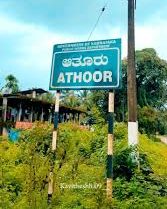
Constituency No. 129 | Dindigul District | General
Athoor lies in the eastern arc of Dindigul district, where the granite shadow of the famed Rock Fort fades into cultivated plains and semi-arid stretches leaning toward the Madurai region. It is neither as politically headline-grabbing as Dindigul town nor as temple-heavy as Palani, yet Athoor carries the steady pulse of interior Tamil Nadu — agrarian, caste-conscious, organisationally disciplined.
In Athoor, elections are not theatre. They are calibration.
Fields, Tanks and the Vaigai Influence
Though not directly perched on the Vaigai’s primary course, Athoor benefits from the broader irrigation network and tank systems that feed cultivation in this belt. Paddy, maize, cotton and pulses form the agrarian base. In drier tracts, groundnut and millets dominate.
Tank desilting, borewell viability and electricity supply for pump sets are recurring campaign themes. Rainfall variability sharpens attention to water policy.
Farmers here measure governance in irrigation days, not ideological speeches.
Temple Anchors and Village Deities
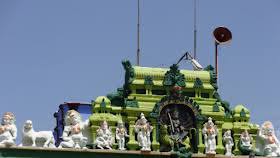
Athoor’s cultural fabric is stitched through Mariamman temples, Murugan shrines and Ayyanar sanctums at village perimeters. Annual temple festivals bring together dispersed settlements in ritual, music and shared meals.
The nearby spiritual gravity of Dindigul Rock Fort, though outside the constituency boundary, influences the region’s historic identity. Local Amman temples, however, remain Athoor’s everyday anchors.
Fire-walking ceremonies, village theatre performances and seasonal festivals structure social life more deeply than tourism or external spectacle.
Faith here is intimate, local and agrarian.
Proximity to Dindigul Town
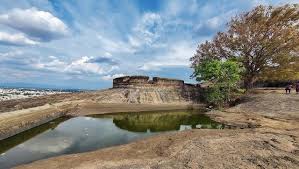
Athoor sits within commuting distance of Dindigul town, known for its lock industry and the imposing Rock Fort. Residents access education, healthcare and markets through that urban hub.
Road conditions linking interior villages to Dindigul are therefore politically sensitive. Bus frequency, pothole repair and rural transport subsidies surface frequently in local discourse.
Athoor is rural in composition but urban-linked in aspiration.
Electoral Ledger:
Athoor has witnessed competitive bipolar contests with disciplined margins.
2011
Winner: I. Periyasamy (DMK) — 86,432 votes
Second: S. Damodaran (AIADMK) — 83,091 votes
Third: K. Ramesh (DMDK) — 22,784 votes
Margin: 3,341 votes
2016
Winner: I. Periyasamy (DMK) — 121738 votes
Second: viswanathan R natham (AIADMK) — 94,591votes
Third: Packiya selvaraj MR. Prakash (DMDK) — 3741 votes
Margin: 27147 votes
2021
Winner: I. Periyasamy (DMK) — 1,35,571 votes
Second: S. Damodaran (AIADMK) — 1,08,705 votes
Third: M. Karthikeyan (Naam Tamilar Katchi) — 21,664 votes
Margin: 26,866 votes
The margin widened under alliance consolidation.
I. Periyasamy, a senior DMK leader with ministerial experience in past governments, has anchored the constituency’s political narrative for years. His presence ties Athoor closely to district-level leadership arithmetic.
Athoor does not swing erratically; it moves with calculated momentum.
Civic and Agrarian Priorities
Key recurring concerns include:
Irrigation tank restoration.
Road connectivity between villages and Dindigul.
Drinking water supply during peak summer.
Agricultural loan access and crop insurance settlement.
In drought-prone years, grievance sharpens quickly. In seasons of stable yield, confidence consolidates.
Delivery here must be visible at field level.
Folk Traditions and Pongal Cadence
Pongal celebrations remain central — cattle decoration, village games and communal feasts marking agrarian pride. Temple car festivals animate hamlets across the constituency.
Kabaddi tournaments and rural sports events draw youth participation. Folk songs during harvest seasons preserve agrarian memory.
Athoor’s cultural continuity tempers political contestation.
Cuisine and Dindigul Belt Influence
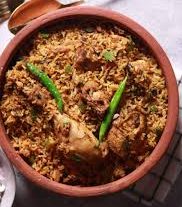
Though Athoor does not carry a standalone culinary brand, proximity to Dindigul brings the influence of its famed biryani culture into local eateries. Village households retain simpler agrarian fare — rice meals, tamarind gravies and pepper-spiced curries.
Food here is practical, rooted in routine labour.
Political Temperament
Athoor reflects the broader Dindigul region’s disciplined voter behaviour. Booth-level mobilisation, caste arithmetic and leader accessibility influence margins. Public meetings are often pragmatic rather than theatrical.
Electoral volatility is limited; consolidation is more common.
Athoor values continuity with accountability.
What Decides Here
Three determinants shape Athoor’s trajectory:
Irrigation Assurance.
Water stability shapes farmer sentiment.
Leadership Accessibility.
Senior leaders with sustained presence hold advantage.
Alliance Arithmetic.
Margins expand or narrow with coalition clarity.
Athoor does not chase political drama. It rewards measured governance.
Closing Frame
Tank waters shimmer under evening light. Temple drums echo through harvested fields. Buses move toward Dindigul town at dawn. Farmers gather near tea stalls discussing crop prices and assembly debates.
Athoor stands as a constituency of steady soil and structured choice — rural yet regionally tethered, cautious yet decisive.
When it votes, it does so with the patience of a tank awaiting monsoon — measured, observant and grounded.
In Athoor, mandate is earned quietly — and retained through presence.