

Bhavani: Where Rivers Meet and Mandates Merge

- Tamil
- Hindi
- Malayalam
- Kannada
- Telugu
Constituency No. 106 | Erode District | General
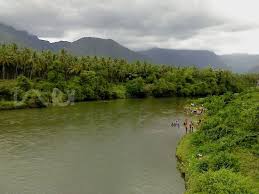
Bhavani is defined by confluence. Three rivers meet here — the Cauvery, the Bhavani and the invisible Amudha, believed in local tradition to join the flow at the sacred Sangam. Pilgrims gather where waters merge. Farmers watch the same currents with practical interest. Politicians study them as metaphor.
Bhavani is not merely a river town. It is a meeting point — of faith and farming, of cinema frames and electoral calculation.
Sangam and Sanctity

At the heart of Bhavani lies the Bhavani Sangameswarar Temple, located at the confluence of rivers. The temple, with origins traced to medieval periods, draws devotees year-round and swells during festival seasons.
The riverbank — known as the Sangam — is both sacred geography and public square. Ritual baths, community gatherings and political visits intersect here. Few constituencies possess such a visible natural and spiritual anchor.
Water defines identity in Bhavani.
River and Reel
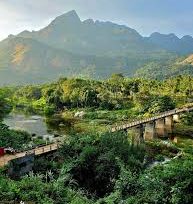
The riverbanks and temple precincts have long attracted filmmakers. Bhavani’s Sangam and surrounding stretches have served as shoot locations for Tamil cinema, lending the town visual familiarity beyond district boundaries.
The open riverbed during lean flow, the steps leading to the temple, the dramatic meeting of currents — these have framed song sequences and devotional scenes alike.
Cinema here has amplified geography into imagery.
Agriculture and Canal
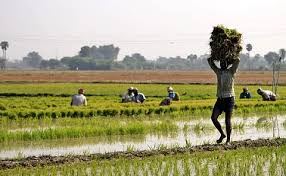
Beyond the temple town stretch fertile belts nourished by Cauvery irrigation. Paddy, turmeric and sugarcane cultivation sustain households. Canal maintenance and regulated water release are constant concerns.
Unlike drought-prone uplands, Bhavani benefits from river-fed systems — but that advantage brings dependency. Any upstream dispute or monsoon fluctuation is felt immediately.
Farmers in Bhavani vote with water levels in mind.
The Electoral Ledger:
Bhavani’s recent contests reflect western Tamil Nadu’s structured competition.
2011
Winner: P. Narayanan (AIADMK) — 1,04,396 votes
Second: M. Chinnasamy (DMK) — 83,145 votes
Third: S. Eswaran (DMDK) — 27,864 votes
Margin: 21,251 votes
2016
Winner: K. C. Karuppannan (AIADMK) — 85748 votes
Second: Sivakumar N (DMK) — 60861 votes
Third: Ramanathan K.V (PMK) — 20727 votes
Margin: 24887 votes
2021
Winner: K. C. Karuppannan (AIADMK) 100,915 votes.
Second:K. P. Durairaj (DMK) 78,392 votes.
Third: Sathya M.(NTK) — 10,471 votes
Margin: 22,523 votes
The axis shifted. The margin widened again.
Bhavani has oscillated but remains decisively bipolar. Third candidates register presence, rarely disruption.
Western Equation
Bhavani lies within the Kongu belt, where regional consolidation patterns often shape outcomes. Community alignments and booth discipline remain critical.
Western Tamil Nadu has demonstrated capacity for coordinated voting arcs. Bhavani reflects that pattern, though not blindly.
Margins tighten before they turn.
Textiles and Trade

Proximity to Erode’s textile and turmeric trade influences Bhavani’s economy. Small traders and transport operators link river agriculture to district markets. Turmeric processing units and agricultural exchange yards create seasonal economic spikes.
Connectivity to Erode and Salem ensures mobility, but infrastructure upkeep remains a constant demand.
Road quality affects both pilgrims and produce.
Cuisine and Custom
Bhavani’s culinary identity reflects Kongu flavours — arisi paruppu sadam, coconut-laden gravies, turmeric-infused dishes and sugarcane juice stalls lining festival routes. Riverbank vendors sell prasadam and snacks to visiting devotees.
Temple feasts during Aadi and Panguni draw extended families together. Politics circulates quietly through these gatherings.
Life here flows with the river’s rhythm.
Civic and Environmental Concerns
Riverbank erosion, sand mining regulation and flood preparedness surface periodically in public discussion. Temple crowd management during peak festivals tests administrative coordination.
Drinking water is abundant relative to arid belts, yet distribution infrastructure requires maintenance.
In Bhavani, environment and economy are intertwined.
What Decides Here
Three determinants shape Bhavani’s electoral future:
Irrigation Reliability.
Cauvery flow sustains agricultural confidence.
Regional Alignment.
Kongu consolidation patterns influence margins.
Urban Service Delivery.
Temple-town infrastructure cannot falter.
Bhavani does not produce dramatic landslides without structural shift. It calibrates.
Closing Frame
Three rivers meet at Bhavani. Currents merge without noise, yet their force is unmistakable.
Temple bells ring above flowing water. Film cameras have captured its silhouette. Farmers measure its depth. Politicians measure its margins.
Bhavani’s politics resembles its Sangam — convergence shaped by steady flow.
When this river town votes, it does so with clarity born of confluence.