

2006: The Return of Karunanidhi and the Era of Welfare Politics

🌐 Translate ▾
- Tamil
- Hindi
- Malayalam
- Kannada
- Telugu
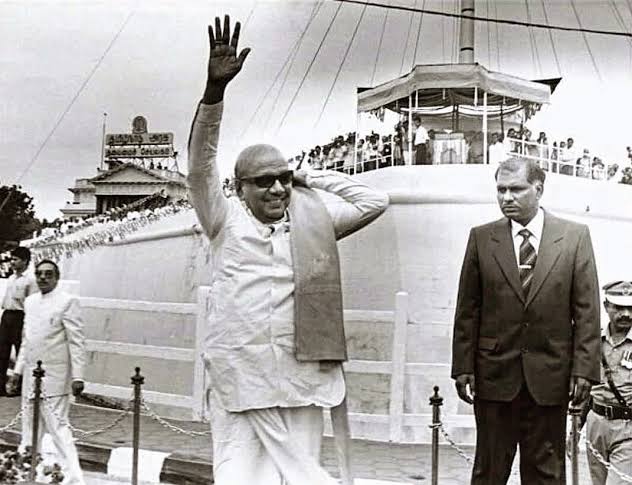
The 2006 Tamil Nadu Assembly election marked a significant chapter in the state’s political history as it brought the Dravida Munnetra Kazhagam (DMK) back to power under the leadership of M. Karunanidhi. The election also became widely known for the introduction of ambitious welfare promises that reshaped political campaigns and governance strategies in Tamil Nadu.
Political Background
From 2001 to 2006, Tamil Nadu was governed by the All India Anna Dravida Munnetra Kazhagam (AIADMK) led by J. Jayalalithaa. During her tenure, the government implemented several administrative reforms and development projects. However, the administration also faced criticism from opposition parties on issues related to governance, economic policies, and public welfare.
As the 2006 election approached, political competition between the DMK and AIADMK intensified. Both parties prepared strong alliances and launched extensive campaigns across the state.
Electoral Alliances
The DMK formed a broad alliance that included the Indian National Congress, Pattali Makkal Katchi (PMK), Communist Party of India, and Communist Party of India (Marxist). This coalition was designed to consolidate support among different social groups across Tamil Nadu.
The AIADMK contested the election with a smaller alliance but relied heavily on Jayalalithaa’s leadership and her party’s organizational strength.
Campaign Themes and Welfare Promises
The 2006 election campaign was notable for the scale of welfare promises made by the DMK. Karunanidhi’s manifesto included several innovative schemes aimed at improving the living standards of the poor and middle-class families.
One of the most widely discussed promises was the distribution of free colour television sets to households that did not own one. The party argued that access to television would help bridge the information gap and provide entertainment to economically weaker families.
The DMK also promised free gas connections and stoves for poor women, subsidized rice through the public distribution system, and land distribution to landless agricultural labourers. These promises attracted considerable attention and became central to the election campaign.
The AIADMK campaign focused on its record in governance, law and order, and economic management. Jayalalithaa emphasized administrative efficiency and criticized the DMK’s welfare promises as unrealistic and financially burdensome.
Election Results
When the results were announced, the DMK-led alliance secured a clear victory. However, the DMK itself did not obtain an absolute majority in the Assembly. Instead, it formed a minority government with the support of its alliance partners.
Karunanidhi was sworn in as Chief Minister for the fifth time, making him one of the longest-serving leaders in Tamil Nadu’s political history.
Political Significance
The 2006 election had lasting consequences for Tamil Nadu politics. It firmly established welfare-oriented election manifestos as a central feature of political competition in the state. After this election, both the DMK and AIADMK increasingly included large-scale social welfare schemes in their campaigns.
The election also demonstrated the growing importance of alliances in Tamil Nadu politics, with coalition partners playing a crucial role in determining electoral outcomes.
Another significant outcome of the election was the transformation of electoral campaigning in Tamil Nadu into a highly competitive welfare model. Political parties increasingly focused on direct benefit schemes aimed at improving household livelihoods, education access, and social security for marginalized communities. This welfare-driven political framework later became a defining characteristic of governance in the state.
Overall, the 2006 Tamil Nadu Assembly election marked the return of Karunanidhi to power and ushered in a new phase of welfare-driven governance that continues to influence the state’s political landscape today.