

2021: DMK Returns to Power After a Decade

🌐 Translate ▾
- Tamil
- Hindi
- Malayalam
- Kannada
- Telugu
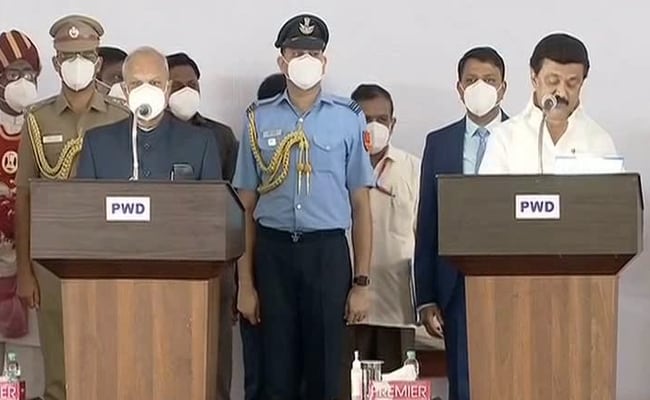
The 2021 Tamil Nadu Assembly election marked a major political transition in the state as the Dravida Munnetra Kazhagam (DMK) returned to power after ten years under the leadership of M. K. Stalin. The election was historically significant because it was the first major assembly contest in the state after the passing of two towering leaders of Tamil Nadu politics — J. Jayalalithaa and M. Karunanidhi.
Political Background
Tamil Nadu went to the polls in 2021 after the completion of the term of the All India Anna Dravida Munnetra Kazhagam(AIADMK) government that ruled the state from 2016 to 2021. Following Jayalalithaa’s death in December 2016, the AIADMK underwent a turbulent phase with internal leadership struggles and factional disputes.
Eventually, the party leadership consolidated under Chief Minister Edappadi K. Palaniswami and Deputy Chief Minister O. Panneerselvam. Despite internal challenges, the government implemented several welfare programs and infrastructure initiatives, including road development projects, irrigation schemes, and social welfare benefits.
However, the opposition DMK intensified its campaign by highlighting issues such as unemployment, economic challenges, governance concerns, and the need for administrative reforms.
Electoral Alliances
The 2021 election witnessed strong alliances on both sides. The DMK led the Secular Progressive Alliance, which included parties such as the Indian National Congress, Communist Party of India, Communist Party of India (Marxist), Viduthalai Chiruthaigal Katchi, and several regional groups.
The AIADMK led an alliance with the Bharatiya Janata Party, Pattali Makkal Katchi, and other smaller parties. This alliance aimed to retain power by highlighting development and welfare achievements.
Another notable contestant was the Makkal Needhi Maiam led by actor Kamal Haasan, which attempted to present itself as an alternative political force.
Campaign Themes
The 2021 campaign focused on governance, economic recovery, welfare programs, and job creation. Stalin led an extensive statewide outreach campaign titled “Ungal Thoguthiyil Stalin”, where he visited constituencies across Tamil Nadu to interact directly with citizens and gather their grievances.
The DMK manifesto promised several welfare measures, including financial assistance for women heads of households, improved healthcare infrastructure, job creation initiatives, and reforms in education.
The AIADMK campaign emphasized its achievements in infrastructure development, agricultural schemes, and welfare programs implemented during its tenure.
Election Results
The results of the election gave a clear mandate to the DMK-led alliance. The DMK alone secured 133 seats in the 234-member Tamil Nadu Assembly, while its alliance partners also won several seats. The AIADMK emerged as the principal opposition.
M. K. Stalin was sworn in as Chief Minister in May 2021, becoming the first member of his family to assume the position after Karunanidhi’s death.
Political Significance
The 2021 election marked the beginning of a new political era in Tamil Nadu with Stalin taking charge of the state’s governance. It symbolized a generational shift in leadership following the era dominated by Jayalalithaa and Karunanidhi.
The election also reaffirmed the continuing dominance of the Dravidian political framework in Tamil Nadu, with regional parties continuing to shape the state’s political landscape.
Another important dimension of the 2021 election was the consolidation of M. K. Stalin’s leadership within the DMK and the emergence of a new administrative style focused on governance reforms, social welfare expansion, and economic recovery after the COVID-19 pandemic. His victory strengthened the DMK’s organizational structure and positioned the party as the central force in Tamil Nadu politics for the coming decade.
Overall, the 2021 Tamil Nadu Assembly election represented both continuity and change — maintaining the state’s Dravidian political tradition while ushering in a new generation of leadership.