

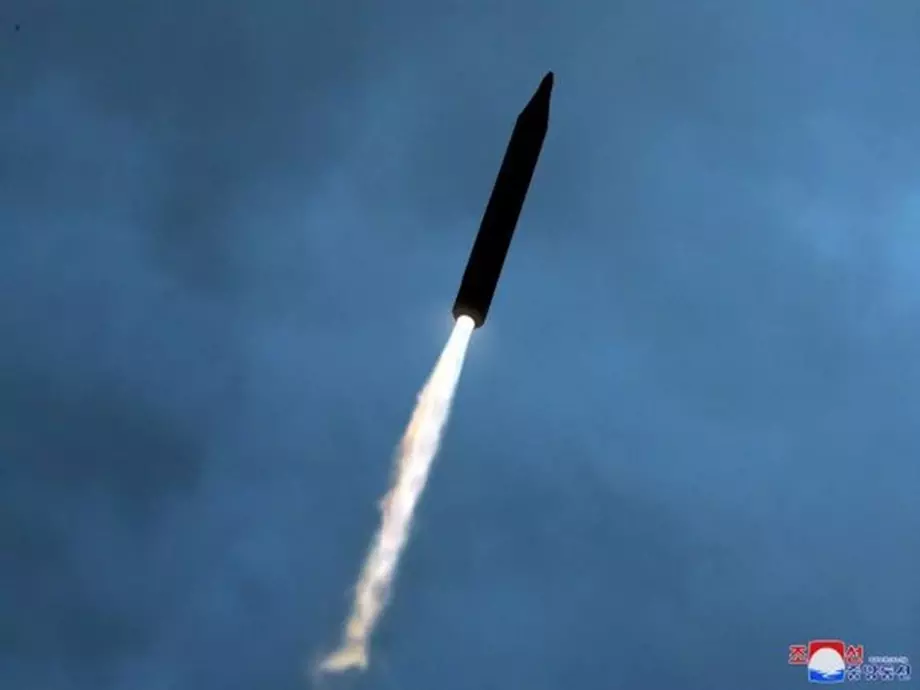
 North Korea fired a suspected intercontinental ballistic missile (ICBM) off its east coast on Wednesday, as leaders of South Korea and Japan were set to meet on the sidelines of a NATO summit to discuss threats, including the nuclear-armed North. The launch came after heated complaints from North Korea in recent days, accusing American spy planes of violating airspace in its economic zones, condemning a recent visit to South Korea by an American nuclear-powered cruise missile submarine, and promising to take steps in reaction. The suspected ICBM flew for 74 minutes to an altitude of 6,000 km (3,728 miles) and range of 1,000 km, Japan’s chief cabinet secretary Hirokazu Matsuno said, in what would be the longest ever flight time for a North Korean missile. Japan’s Coast Guard had predicted the missile would fall about 550 km (340 miles) east of the Korean peninsula. In April, North Korea test fired its first ever solid-fuel ICBM, one of around a dozen missile tests this year. Analysts believe the North’s ICBMs can fly far enough to strike targets anywhere in the United States, and the country likely has developed nuclear warheads that can fit on rockets. “It could be a second test of the solid-fuel Hwasong-18 ICBM, building on the results of its first launch,” said Kim Dong-yup, a professor at the University of North Korean Studies in Seoul. Yang Uk, a fellow at the Asan Institute for Policy Studies, said the latest test could be part of the North’s efforts to save face and retake the initiative after a failed launch of its first-ever spy satellite in May. Pyongyang’s accusations of U.S. airspace breaches this week, which Washington and Seoul dismissed as groundless, were likely to build justification for the launch, Yang said. Leif-Eric Easley, an international studies professor at Ewha Womans University in Seoul, said North Korea was following a pattern of staging weapons tests in time for diplomatic events, such as the planned South Korea-Japan talks.
North Korea fires suspected ICBM
 By Agency
🌐 Translate ▾
- Tamil
- Hindi
- Malayalam
- Kannada
- Telugu
Add A Comment